
Charle

About Charle
Posts by Charle Kuhlmann:



That’s a wrap on the CEF Municipal Webinar!
Thank you to everyone who joined us to unpack the Capital Expenditure Framework. From its place in the municipal planning chain, through strengthening its evidence base, financial sustainability and alternative funding options, to turning a ranked project list into a defensible, affordable budget scenario. A rich conversation on moving from framework to funded delivery.
Its CEF Webinar Day!
We’re live! Right now we’re moving through the Capital Expenditure Framework session by session. Today’s session covers everything from what a Capital Expenditure Framework actually means for your municipality, to how it connects to your planning cycle.
If you are registered, then we will see you in there shortly.
If you missed registration, pop us a message to share with you the link!
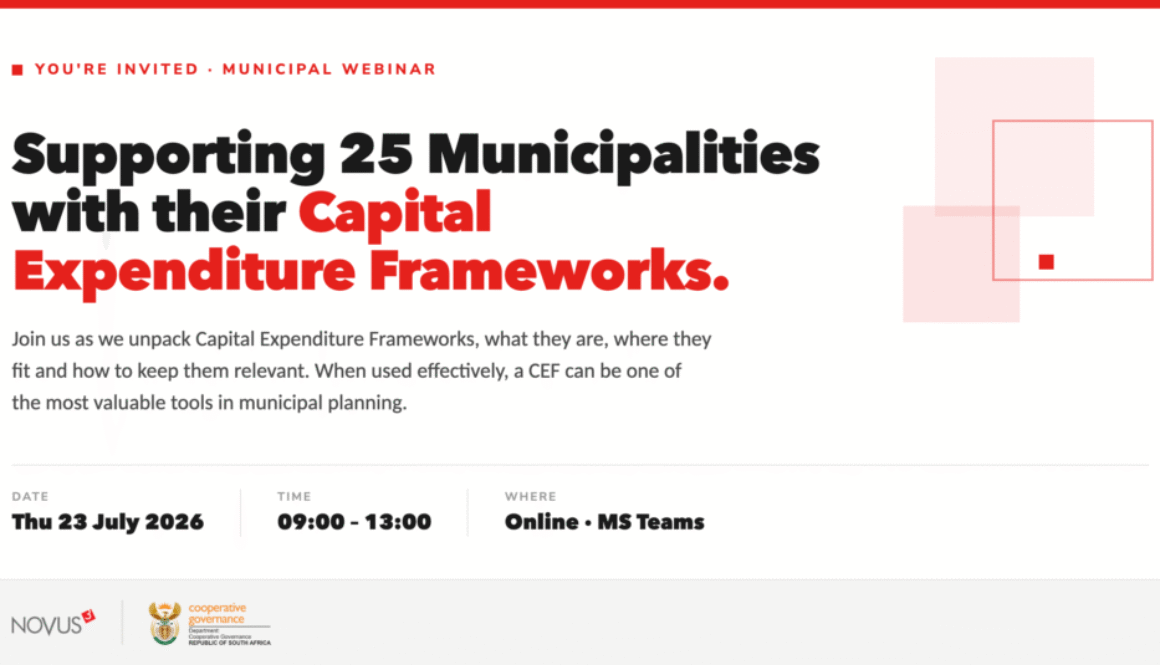
A smarter way to plan: 25 municipalities each with their own Capital Expenditure Framework.
Novus³ and the National Department of Cooperative Governance (DCoG) are hosting a free webinar for municipalities, provincial officials, and sector stakeholders on 23 July 2026. Whether your municipality has a Capital Expenditure Framework or you work in infrastructure planning, capital budgeting, consider this session relevant for you.
Details: 23 July 2026 · 09:00 – 12:45 · Virtual
Register here: https://forms.office.com/r/H9xbt4xukX
Tag a colleague who needs to be in the room.
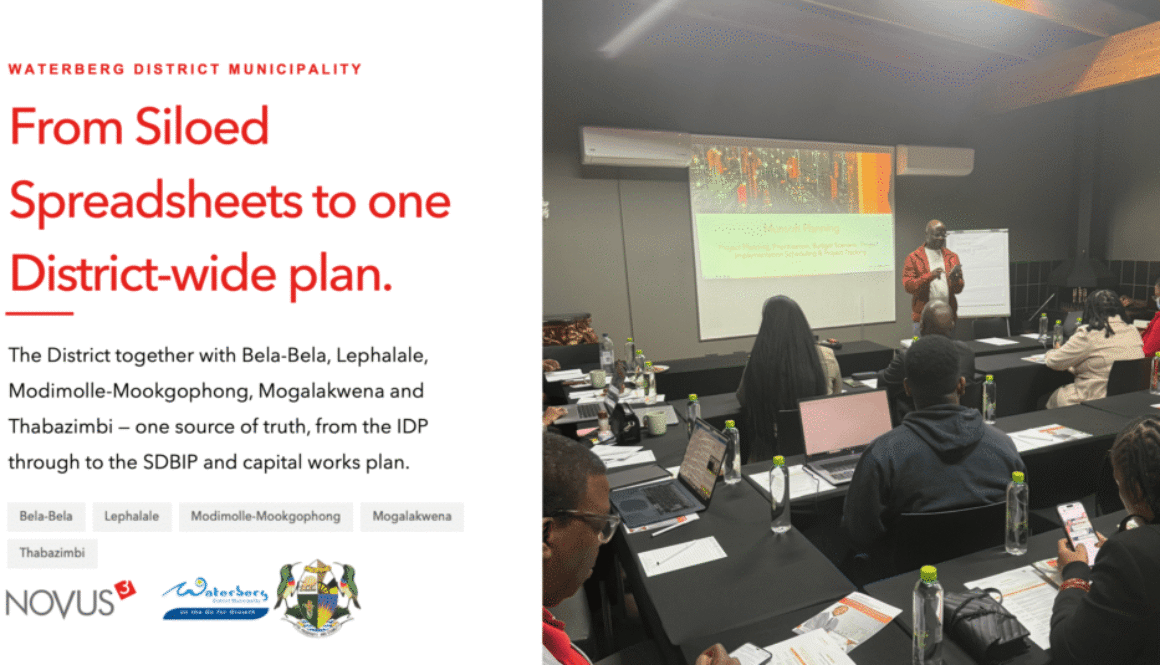
Waterberg Whole of District IDP Forum
The Waterberg family – the District together with the local municipalities of Bela-Bela, Lephalale, Modimolle-Mookgophong, Mogalakwena and Thabazimbi – sat around one table this week for a whole-of-district IDP Forum, facilitated and organised by Novus3 in partnership with the Waterberg District Municipality, Munsoft and its member municipalities. A whole-of-district approach means every project is captured to one standard — spatially located, mSCOA-tagged, prioritised, scheduled and budgeted in MTREF format — turning MFMA Section 52, 71 and 72 reporting from a burden into a by-product. One source of truth, from the IDP through to the SDBIP and the capital works plan, brought to life through interlinked dashboards: district overview, GIS map, capital by municipality, and the forward MTREF pipeline.
Novus3 was proud to be part of the pioneering work taking place across the Waterberg District. We were pleased to contribute our experience and lessons learned from developing numerous Capital Expenditure Frameworks (CEFs) and supporting the IDP process for municipalities across South Africa through our CP3 platform.
One connected and coordinated family of municipalities. One coherent Waterberg growth story.

Congratulations to Saldanha Bay & Swartland Municipalities on their recent SAPOA Awards!
We are excited to celebrate our clients Saldanha Bay and Swartland Local Municipalities on receiving recognition at the recent SAPOA Awards.
In the realm of local government, this is no small feat. These awards reflect the long-term value of strategic planning and the commitment to implementation excellence.
Through our Capital Expenditure Framework (CEF) offering, Novus3 has supported both municipalities in bridging the gap between long-term spatial and infrastructure planning and short-term budgeting cycles which enables more responsive, integrated and impactful development.
We remain committed to supporting municipalities in translating vision into action.

News Update: Novus3 at the Local Government National Indaba 2025
At the recent Local Government National Indaba, Novus3 contributed to a panel discussion titled:
“Exploring practical approaches to improving spatial planning and integration in addressing the legacy of fragmented development and inequality.”
The session focused on the challenges municipalities face in aligning spatial planning with broader development goals. Discussions highlighted the need for a more coordinated planning platform to streamline intergovernmental processes and reduce fragmentation. A strong case was made for institutionalising long-term priorities that extend beyond political cycles, ensuring continuity and stability in municipal planning.
The importance of spatial targeting also came to the fore but not just as a technical tool, rather as a strategic mechanism to align policy, planning and prioritisation. The conversation emphasised the need for municipalities to clearly articulate how projects are prioritised, and to ensure that investment needs are visible and collaborative across all spheres of government. Insights from this session will inform the upcoming White Paper on Local Government, contributing to the national reform agenda led by CoGTA.
We are proud to be part of shaping the future of local governance.
#LocalGovernmentIndaba #SACPLAN #Novus3 #COGTA #UrbanPlanning #SpatialIntegration #IGR #PolicyReform #MunicipalGovernance #DevelopmentPlanning #PublicSectorInnovation #WhitePaperOnLocalGovernment #StrategicPlanning #EveryMunicipalityMustWork #ResilientCities #IntegratedPlanning

We have moved!
We have moved! Come visit us at our new address: Fintech Campus, Cnr Illanga and Botterklapper Roads, Pretoria

The Next Step in Municipal Intelligence
At Novus3, we are committed to building tools that support smarter, more responsive local government. The CP³ AI Chatbot has already transformed how municipalities track and report on projects—but this is just the beginning. We are working towards a future where municipal teams no longer need to sift through spreadsheets or wait for monthly reports. Instead, they’ll simply ask a question like:
“Which projects in Ward 4 are at risk?” And receive an instant, visual response—powered by real-time data and analytics.
Our vision is to evolve the chatbot into a fully conversational assistant that understands complex, natural language queries and provides deeper insights.
This is the future of municipal intelligence: faster decisions, better planning, and stronger service delivery. For municipalities that have enabled this functionality in CP³, this is the next step in municipal intelligence: faster decisions, better planning, and stronger service delivery.
#FutureOfPlanning #AIForMunicipalities #SmartCities #PredictivePlanning #CP3Vision #MunicipalInnovation

How the CP³ AI Chatbot Supports Your Work
The CP³ AI Chatbot is designed to support a wide range of municipal functions by delivering real-time, actionable insights which are tailored to the needs of different roles within your municipality. Here’s how various municipal officials are already using it:
- Project Coordinators and PMU Officers monitor project timelines, budgets, and delivery progress
- IDP and Performance Management Officers generate exportable summaries, graphs, and maps for reporting and compliance
- Municipal Managers and Directors access quick, visual briefings ahead of council and portfolio committee meetings
- Risk and Internal Audit Officers identify delays, overspending, and compliance risks early
- Public Participation and Communications Units prepare clear, visual updates for community engagement
- Town Planners and SPLUMA Officers use live data to support spatial planning and development tracking
- Finance and Budget Officers review financial performance across departments in real time
- Cross-functional Planning Teams collaborate more effectively using shared, up-to-date project data
Whether you are planning, reviewing, or reporting, the chatbot helps streamline your work and improve collaboration across departments for municipalities that have enabled this functionality within their CP³ environment.
#UseCaseSpotlight #MunicipalTools #AIForMunicipalities #CP3Chatbot #SmartGovernance #DataDrivenDecisions

Vision and Build – Why We Created the CP³ AI Chatbot
Municipalities manage a wide range of projects across departments, each with its own timelines, budgets and risks. Reporting on this complexity has traditionally required hours of manual data gathering and formatting, especially in an environment already inundated with deadlines and legislative requirements.
Our goal with the CP³ AI Chatbot is to assist with that heavy lifting and provide real-time, visual insights that support better planning and decision-making. By integrating directly with your municipal project planning databases, the AI chatbot enables you to:
- Query live data from multiple departments
- Aggregate and analyse financial and physical performance metrics
- Generate dynamic visuals like tables, graphs, and maps which can be requested all on demand
Built for municipalities looking to enhance their CP³ environment with intelligent tools, the AI Chatbot helps teams work more efficiently, reduce reporting delays, and improve the visibility of project performance across the municipality.
#VisionAndBuild #MunicipalInnovation #AIPlanningTools #CP3Chatbot #SmartMunicipalities #DataDrivenPlanning

Got a Progress Report Due? Let the AI CP³ Chatbot Help
Compiling progress reports or tracking departmental performance can take up significant time especially when you are juggling tight deadlines or trying to meet legislative requirements. Therefore, the CP³ AI Chatbot is designed to support municipal teams by simplifying how you access, analyse and present your data. Whether you are preparing for a council meeting, tracking performance, or just trying to get a quick update, the AI chatbot connects directly to your municipal project data and provides you with the following:
- Instant tables, graphs, and maps – no more digging through spreadsheets
- Live updates on both financial and physical performance
- Automated summaries that help you build reports faster
You can ask it questions like, “How is the Roads Department performing this quarter?” or “Which projects are behind schedule?”, and get clear visual answers in seconds. It is like having a smart assistant that understands your data and helps you make sense of it—so you can focus on what matters: making informed decisions and delivering results.
Already available to municipalities that have opted to activate AI functionality in CP³, this tool is transforming the way teams interact with their data, making reporting faster, easier, and more insightful.
#SmartReporting #MunicipalSupport #AIinPlanning #CP3Tools #DataMadeEasy #LocalGovernmentInnovation

Your New AI Chatbot for IDP and Project Planning is LIVE!
This marks a significant technological advancement for local municipalities running the IDP and Project Planning Modules in CP³, enabling more dynamic and meaningful engagement with their system data. The AI Chatbot is specifically developed to assist municipal officials throughout their work with the IDP and Project Planning Modules by:
- Generating data tables, graphs, and helps with reports and data-driven analyses based on your CP³ system data.
- Acting as an assistant by providing content suggestions and summaries.
- Assists with monitoring to offer overviews of progress and data perspectives.
Start a conversation with your Novus3 or ERP representative to find out how you can onboard the AI Chatbot in CP³ today and discover how it can simplify your planning tasks, enhance your workflow, and help you get more out of your data effortlessly.


Going from Strength to Strength at Novus3
At Novus3, we believe that investing in our greatest asset – our people – is the foundation of sustainable success. We recently spent a meaningful day at the Menlyn Boutique Hotel, deepening our team connection through a Gallup StrengthsFinder session with the guidance of Dries Lombard, Director at Mitra OD Consulting.
It’s not every day that teams get the chance to pause and invest in understanding ourselves and the people we work with daily. That’s why we’re so grateful to be part of a workplace that creates space for opportunities like these.
Here’s to growing together, one strength at a time.
#StrongerTogether #Gallup #TeamWork #Novusians #OurPeople #OurStrength


Our Work Makes a Lasting Impact!
There are moments when the impact of our work shines through. The recent evaluation of the Merafong Spatial Development Framework and Capital Expenditure Framework, which was developed in collaboration with BCGA, scored an impressive 97% from SALGA, the South African Local Government Association. This is one of those moments!
This score isn’t just a number; it reflects the dedication, collaboration, and vision that went into shaping a more resilient and future-ready municipality.
To everyone who contributed: your work is making a difference.
#TheFutureMatters #OurWorkMatters #UrbanPlanning #MunicipalExcellence #SDF #CEF #Novus3 #BCGA #Collaboration #ImpactDriven

George Municipality Budget 2025/26: A Budget of Difference
Novus3 is extremely proud of the recognition given to us by Mayor Jackie von Brandis of George Municipality in her recent council address as part of the tabling of the budget (2025/26) speech. The role of Novus3’s CP3 system in supporting George Municipality in developing a defendable budget and capital projects pipeline for the next 10 years was specifically mentioned. She also referred to the prioritisation framework that was established through the use of CP3 and the role it played in fitting these priorities into an affordable envelope of expenditure.
Reciprocally, Novus3 is proud to be associated with a Municipality that is so well-run and responsive to its legislated mandate as well as to the varied needs of its constituents. We are looking forward to the journey with George as a leading example of how things can be done.
#Novus3 #CP3 #GeorgeLocalMunicipality #Planning #LocalGovernance #Budgets #Municipal

Shaping the Future of Municipal Governance
Novus3 was honoured to present at the Local Government Capacity Building Winter School, held at The Balalaika Hotel in Sandton from 02-04 June 2025, under the theme ‘Municipalities of Tomorrow. The event brought together visionary leaders and experts across sectors to engage on the strategic, fiscal and infrastructural priorities that will define South Africa’s local government future.
Our CEO, Bernard Van Biljon, discussed the role of Capital Expenditure Frameworks and the importance of project prioritisation and budget alignment, underscoring our commitment to supporting municipalities in adopting sustainable practices through actionable financial strategies.
Through engaging sessions on decision making, scenario planning, reporting, and infrastructure funding, we reaffirmed the importance of collaborative, data-driven frameworks in strengthening municipal resilience.
We extend our gratitude to the organisers, INCA, and the associated support from AFD and SECO, as well as to our fellow delegates, for an energising and future-focused forum. The conversations don’t stop here — let us continue building capacity for the municipalities of tomorrow.
#ICBF2025 #MunicipalitiesOfTomorrow #INCA #CP3 #Novus3 #AFD #SECO

Team Novus3 Takes the Track!
We traded project planning for speed and dashboards for drift as our team hit the go-kart track for a fun day out! Some of us channelled our inner Mario & Luigi — because who says data-driven folks can’t have a little Super fun? From racing go-karts to racing toward smarter budgeting solutions for municipalities, we know how to navigate every twist and turn. Whether it’s helping clients stay on track with their project planning or building data dashboards that power better decisions, we keep things moving forward! #TeamDayOut #MarioKartIRL #DataDashboards #BudgetNinjas #WorkHardPlayHard

Wishing you a Prosperous and Successful 2025!
“It always seems impossible until it’s done.” — Nelson Mandela
As we draw inspiration from one of our greatest leaders, let us be reminded that the new year offers us fresh opportunities each day to make a positive impact in our workplaces, families and communities. At Novus3, we are excited to continue this journey alongside you as we push boundaries, innovate beyond our limits, and celebrate our collective achievements.
Here’s to a fantastic 2025 filled with growth, prosperity, and shared success!
Compliments of the New Year to you and your loved ones, let’s make this year one to remember!
#HappyNewYear #Welcome2025 #Gratitude #NewBeginnings #CheersTo2025 #ClientAppreciation #Teamwork #Growth #NewOpportunities #CelebratingSuccess

Happy Holidays from all of us at Novus3!
As we wrap up 2024, the Novus3 team would like to take a moment to share our appreciation for our valued clients, trusted business partners and amazing colleagues. Throughout the year, your support and collaboration have been instrumental to our growth at Novus3, and we are truly thankful to be surrounded by such excellence. As one chapter ends, another begins, and we are excited about what the future holds as we continue our journey together in 2025.
Please note that our team will be on a summer break from 16 December 2024 but will be back in full action on 6 January 2025.
Wishing you all a joyful and restful holiday season with your loved ones.
#HappyHolidays #ThankYou #Gratitude #2024Success #BusinessPartners #ClientAppreciation #Teamwork #CheersTo2025 #CelebrateSuccess #HolidayCheers

Enhancing Good Governance in Municipalities with CP3
Good governance is essential for effective municipal management and CP3 provides a suite of administrative features designed to support this goal. Through features like Single Sign-On, role management, user tracking, audit trails, financial system integration, and capital planning tools, CP3 ensures transparency, accountability, efficiency, and security in municipal operations. Here is how these features contribute to good governance:
- Strengthen Security and Controlled Access: Single Sign-On simplifies access by using a single set of credentials, while role management ensures users have only the necessary permissions. Together, they reduce the risk of unauthorised access, minimise data breaches, and streamline user interactions.
- Transparency and Accountability: User Tracking enables administrators to monitor system activity, ensuring officials fulfil their responsibilities and keep data up to date. In addition to this, audit trails record every action, linking changes to specific users. This detailed documentation promotes accountability, helps resolve errors, and ensures regulatory compliance.
- Efficient Financial Management and Planning: Integration allows seamless data exchange between CP3 and the Financial Management System, eliminating redundant entries and keeping budget information current for accurate financial management. Capital Planning tools centralise project registration and prioritisation, aligning projects with municipal objectives and supporting strategic budget allocation.
- Compliance and Audit Trials : Audit Trails and User Tracking provide comprehensive logs of user actions, making it easier for municipalities to demonstrate compliance during audits and maintain transparency in operations.
The administrative features of CP3 foster good governance by ensuring secure access, transparent operations, efficient resource management, and compliance. This integrated approach empowers municipalities to manage their resources effectively, make informed decisions, and maintain public trust.
#MunicipalBudgeting #CapitalProjectManagement #CP3 #Novus3 #mSCOA #FinancialManagement #MunicipalReform #MFMA #PublicSectorInnovation #IDP #FundingSources #SpatialPlanning #SpatialReporting #ResponsiveBudgeting #PublicSectorFinance #ServiceDelivery #Accountability #Transparency #SmartPlanning #EffectiveManagement

Audit Trials in CP3: Ensuring Transparency and Accountability
Audit trails is a crucial feature of the CP3 system, designed to ensure transparency, accountability, and security within municipal operations. With comprehensive audit trails, administrators can monitor and record every user action within the system, creating a detailed log that tracks changes and updates. This functionality is vital for maintaining the integrity of client’s processes and ensuring compliance with regulations.
Every action, whether it is an update to a project, budget allocation, or changes in user permissions, is logged in detail. This transparency helps to keep all processes open and traceable, fostering a culture of accountability within the municipality. Considering that audit trails link specific actions to individual users, it makes it clear who made changes and when. This accountability helps in holding officials responsible for their actions, promoting more responsible system usage.
Municipalities often need to demonstrate transparency and accountability in their daily operations and budgetary processes. Audit trails provide a detailed history of system interactions, making it easier for auditors to investigate and trace actions that took place on the platform. This functionality helps to clarify decision-making processes and verify that procedures were followed, supporting thorough reviews without the need to rely solely on user-reported information.
Connect with us today to implement audit trails in your system and gain peace of mind knowing your actions are fully traceable and secure.
#MunicipalBudgeting #CapitalProjectManagement #CP3 #Novus3 #mSCOA #FinancialManagement #MunicipalReform #MFMA #PublicSectorInnovation #IDP #FundingSources #SpatialPlanning #SpatialReporting #ResponsiveBudgeting #PublicSectorFinance #ServiceDelivery #Accountability #Transparency #SmartPlanning #EffectiveManagement

Simplify Access and Boost Security with Single Sign On
Single Sign-On (SSO) simplifies access for CP3 users who need temporary or one-time system entry, allowing them to log in with a single set of credentials. This reduces the complexity of access management and makes it easier for administrators to monitor and track authorised CP3 users. By minimising password-related support requests, SSO also lowers IT support costs and frees up resources for other essential tasks.
Centralised authentication through SSO reduces the risk of password fatigue and weak practices, while facilitating stronger security measures like multi-factor authentication (MFA). This streamlines access for municipal officials, ward councillors, and community members, eliminating the need for repeated logins and improving their user experience. Less time spent on login issues allows users to focus on their tasks, boosting efficiency across the municipality
By implementing SSO, CP3 administrators ensure secure, efficient user management and maintain system integrity, while providing seamless access to authorised users.
#MunicipalBudgeting #CapitalProjectManagement #CP3 #Novus3 #mSCOA #FinancialManagement #MunicipalReform #MFMA #PublicSectorInnovation #IDP #FundingSources #SpatialPlanning #SpatialReporting #ResponsiveBudgeting #PublicSectorFinance #ServiceDelivery #Accountability #Transparency #SmartPlanning #EffectiveManagement

2024 Gauteng City Region Urban Festival: A Reflection on Spatial Transformation and Inclusive Growth
At the 2024 Gauteng City Region Urban Festival, our team had the privilege of serving as panellists, contributing to a vibrant discussion on “Spatial Planning and Urban Development – Adaptive Legislation for Spatial Transformation.” This event provided an unparalleled platform to address pressing urban development challenges and highlight practical solutions for cities today.
During the session, we explored how adaptive legislation catalyses spatial transformation, equitable urban growth, and inclusivity. The panel examined how targeted spatial planning, modern technology, and adaptive policies allow cities to address historical inequalities, reshape urban landscapes, and make resilient, fair budget and land use planning decisions.
A central theme of the discussion was the flexibility a data-driven approach provides in the context of adaptive legislation, which empowers cities to be more responsive to development needs and more proactive towards growth.
Our team contributed insights into how technology can support adaptive legislation, enhance spatial targeting strategies, and leverage the local government accountability cycle, the IDP process and budget policies as tools for meaningful spatial transformation. Sustainable urban growth, another focal point, highlighted how cities can meet current demands while safeguarding the needs of future generations—balancing economic development, social equity, and environmental sustainability for a resilient urban future.
#GRC #SALGAGauteng #CoGTA #MogaleCity #IDP #IntegratedDevelopmentPlanning #localgovernment #LGAC #spatialtransformation #spatialplanning

It’s World GIS Day!
Whether it is exploring the intricate patterns of urban development, analysing environmental changes, or mapping the spread of diseases, GIS empowers us to visualise data in a spatial context.
Novus3 celebrates these advancements and hopes that the realm GIS inspires the next generation of geospatial leaders.

Mastering Role Management with CP3: Full Control Over User Permissions and Access
Role management can be challenging because poorly defined or outdated permissions can lead to security risks, inefficiencies, and compliance issues within municipalities. CP3 simplifies role management, giving you comprehensive control over user permissions and access levels. With CP3, you can easily assign and manage user roles, ensuring that each individual has the appropriate level of access based on their responsibilities. This includes not just user roles but also permissions for units and departments, which directly impacts how users interact with the system.
By defining roles and permissions, you can tailor access to fit the needs of different users, units, and departments. This level of control helps maintain security, ensures proper data handling, restriction of access to sensitive information and streamlines system interactions. It also ensures data integrity by limiting which users can edit, delete or view data, ensuring that only authorised users make changes. This helps maintain the accuracy and reliability of information within the CP3 system.
Whether you’re setting up new users or adjusting permissions, CP3 makes it straightforward for administrators to effortlessly manage who can view, edit, or manage various aspects of the system. This way, you can ensure that everyone has the right access to perform their tasks effectively and securely, whilst promoting accountability and auditability effortlessly.
#MunicipalBudgeting #CapitalProjectManagement #CP3 #Novus3 #mSCOA #FinancialManagement #MunicipalReform #MFMA #PublicSectorInnovation #IDP #FundingSources #SpatialPlanning #SpatialReporting #ResponsiveBudgeting #PublicSectorFinance #ServiceDelivery #Accountability #Transparency #SmartPlanning #EffectiveManagement

It’s World Town Planning Day!
Novus3 salutes the profession that blends complex processes to build integrated, fair, and vibrant communities for all.
Cheers to shaping a better world, one city at a time!

System Integration with CP3: Seamlessly Connect with Your Financial Management System
Looking to streamline your workflow and unlock cost savings with effortless Financial Management System (FMS) integration?
By connecting CP3 with your FMS as a sub-module, you enable a smooth exchange of critical information, which simplifies processes and enhances efficiency. Users can focus on their core tasks without worrying about redundant data entry or discrepancies between systems. This integration ensures that all budgetary information is up-to-date and accurately reflected across various platforms, making financial management more cohesive and effective.
Some of the key benefits of connecting the core FMS with CP3, includes the reduction of manual work and the inevitable errors due to human interaction. Having this integration can also ensure near up-to-date financial information across both systems which assists officials with accurate decision-making. This integration creates a more efficient, transparent, and cohesive financial management environment.
#MunicipalBudgeting #CapitalProjectManagement #CP3 #Novus3 #mSCOA #FinancialManagement #MunicipalReform #MFMA #PublicSectorInnovation #IDP #FundingSources #SpatialPlanning #SpatialReporting #ResponsiveBudgeting #PublicSectorFinance #ServiceDelivery #Accountability #Transparency #SmartPlanning #EffectiveManagement

It’s World Cities Day!
Novus3 applauds cities embracing innovative 21st-century technology to guide urban development towards sustainability, equity, and enhanced livability.
Happy World Cities Day to the beating urban hearts of culture, innovation and diversity!

User Tracking Made Simple with CP3: Empowering Administrators with Comprehensive Insight
CP3 simplifies user tracking for administrators, providing you with powerful tools to monitor system usage and data completeness. The dedicated dashboards, accessible exclusively to admin users, offer detailed insights into system activity. You can see who is using the system, how often they log in, and the specific times and days they are active. This level of detail is crucial for ensuring accountability, as project managers are responsible for populating their projects accurately and timely, especially during project preparation phases which is crucial before the annual budget is drafted.
Beyond tracking usage, the dashboards provide a clear view of data completeness. Administrators can quickly identify which data is missing or needs to be updated, and follow up with project managers accordingly. This includes tracking if projects need spatial tagging or if there is missing budgetary information.
The user activity dashboard also offers various analytical perspectives, such as current logins vs. the previous fiscal year, logins by month and the most active units. The benefit of having access to these activity dashboards, is to monitor to ensure participation from all users whilst also identifying which units or users may require additional support. This information is crucial to the municipality as it can drive collaboration and get people together using a practical tool. Last but not least, these insights help you manage system usage effectively and ensure that all required data is properly populated, making project management more effective and accurate.
#MunicipalBudgeting #CapitalProjectManagement #CP3 #Novus3 #mSCOA #FinancialManagement #MunicipalReform #MFMA #PublicSectorInnovation #IDP #FundingSources #SpatialPlanning #SpatialReporting #ResponsiveBudgeting #PublicSectorFinance #ServiceDelivery #Accountability #Transparency #SmartPlanning #EffectiveManagement

Novus3 at the Eastern Cape Regional Working Session
NOVUS3 facilitated a working session in the Eastern Cape.
It was clear from the interactive session that in general, the capital works plan and SDBIP creation processes are being done manually. The primary input to these documents is cumbersome spreadsheets. In addition, project lists are ad-hoc, often outdated and lack specific context on a five-to-ten-year plan. Probably the most concerning finding is that most municipalities’ IDP projects are not aligned with the projects in the approved budget, nor can direct evidence be provided for any such alignment. This indicates a material gap in compliance with the mSCOA regulation. The NOVUS3 product suite directly addresses this gap.
The National Treasury will regulate the minimum mSCOA business processes and system requirements in 2025/26. It is in all municipalities’ best interest to fast-track implementation and urgently address the gaps in it as it relates to IDP and planning. NOVUS3 is leading the charge in IDP, capital projects, prioritisation of projects, budget scenario planning and project management as it relates to the mSCOA business processes. The planning module integrates into all municipal ERP environments and ticks two of the boxes on Circular 80’s thirteen business processes on mSCOA compliance. It furthermore contributes essential information required for some of the remaining business processes.
Reach out to us to get more information or for assistance in fast-tracking your municipality’s msCOA journey towards compliance, efficiency and sustainability.
#Novus3 #CP3 #eIDP #Circular80 #mSCOA #OnlineIDP #ProjectPlanning #ProjectManagement #Compliance

Streamlining Capital Planning with CP3: A One-Stop Solution for Administrators
How does CP3 make capital planning straightforward and efficient for administrators?
As an administrator, you know the challenges of managing diverse capital needs and ensuring that every detail is accounted for. Information may be scattered across different systems (or spreadsheets), making it difficult to collate a reliable and representative view of capital needs and progress. With CP3, you have a centralised portal that streamlines the registration and management of all capital projects. Projects no longer reside on a diversity of spreadsheets stemming from various origins.
Admin users prioritise control, oversight, and user-friendliness to ensure their teams operate efficiently. CP3 provides a robust solution that empowers you to take command of the entire capital planning process. With intuitive tools at your fingertips, you can quickly customise project priorities and streamline budget allocations, allowing your team to focus on what matters most.
The user-friendly interface ensures that all team members can easily navigate the system, fostering collaboration and enhancing productivity. Near real-time tracking of project progress allows you to maintain oversight, ensuring that everything stays on schedule and within budget.
Lastly, by prioritising transparency and accountability through various features and sub-modules, CP3 not only meets your administrative needs but also drives successful outcomes for your municipality.
Stay tuned for our series on how CP3 can be the right tool to help you confidently guide your team in effective capital management, turning challenges into opportunities for growth and improvement.
#MunicipalBudgeting #CapitalProjectManagement #CP3 #Novus3 #mSCOA #FinancialManagement #MunicipalReform #MFMA #PublicSectorInnovation #IDP #FundingSources #SpatialPlanning #SpatialReporting #ResponsiveBudgeting #PublicSectorFinance #ServiceDelivery #Accountability #Transparency #SmartPlanning #EffectiveManagement

CP3 in Action: Empowering Admins to Manage with Ease
If you have been with us for a while, you have probably come across our bespoke system, CP3. For those who are new to our platform, CP3 stands for collaboration, planning, prioritisation, and performance—the four pillars around which our solution is designed. CP3 is designed to help you plan, manage, and track a multitude of projects across complex and integrated organisations such as municipalities. We have already shown you the many ways CP3 benefits the typical user. Now, for a limited series only, we are shifting the spotlight to our admin users. In the upcoming series, we will explore how easily CP3 can integrate and enhance your existing workflows, making management smoother and more efficient.
Here are some topics that you can expect in the next few posts:
- How CP3 Makes Capital Planning Easy: A breakdown of how our system simplifies the capital planning process, helping you stay on top of this complex and important process.
- User Tracking Made Simple: Monitor who is using the system and how frequently they are logging in. The data provides you with interesting insights that can often be related to performance issues.
- System Integration (FMS): Integrate CP3 seamlessly with your Financial Management System (FMS) – no manual or human intervention should be required.
- Role Management: Learn how to responsibly assign and manage user roles, giving you full control over permissions and levels of access.
- Single Sign-On: Simplify user access and enhance security with our no-mess-no-fuss single sign-on functionality.
- Audit Trail: Track and log system activity and maintain transparency with a detailed audit trail.
This series is all about making life easier for administrators, showing how CP3 can be customised to fit your needs and improve your day-to-day operations. Stay tuned!
#MunicipalBudgeting #CapitalProjectManagement #CP3 #Novus3 #mSCOA #FinancialManagement #MunicipalReform #MFMA #PublicSectorInnovation #IDP #FundingSources #SpatialPlanning #SpatialReporting #ResponsiveBudgeting #PublicSectorFinance #ServiceDelivery #Accountability #Transparency #SmartPlanning #EffectiveManagement

Novus3 at #CIGFARO 2024!
Our CEO, COO (Products and Advisory), and CCO represented us at #Cigfaro 2024 in Durban. As always, the event was one for the books. Novus3 had the opportunity to meet with some of our trusted partners (#Munsoft, #BCX as depicted in our photos) and many of our clients. It was a great opportunity to get a real-time pulse-check on the local government’s supportive financial industry. New friendships and acquaintances were made and Novus3 is excited about the new opportunities that this may represent.
#Novus3 #FinTech #Innovation #Munsoft #BCX #Cigfaro2024

Streamlining Responsibility in Municipal Projects: CP3’s Role in Enhancing Function and Accountability
To effectively handle the new requirements that have been initiated by National Treasury’s industry consultations, it is crucial to implement a system that manages administrative tasks and data, including user administration and coordination among various role players. This will ensure accurate tracking, reporting of investment progress, and seamless collaboration among stakeholders.
It might seem straightforward, but knowing who is responsible for each capital project is crucial for effective planning and execution. CP3’s project module simplifies the responsibility assignment and management of municipal capital needs with its intuitive user interface and role managed centralised platform.
Why is identifying and assigned responsibility so important? It ensures accountability, transparency, and effective management, leading to improved project outcomes and ultimately service delivery and growth. By clearly defining user roles, municipalities can enhance security, and ensure that each project is managed by the appropriate personnel.
Novus3 enhances this process with CP3 by offering several key capabilities that streamline operations. Admin users can easily manage permissions through the User Management Portal, while project managers benefit from the Project Contact Registry for efficient communication. Additionally, the Budget Office connects seamlessly with the MSCOA Function Segment, ensuring comprehensive financial oversight.

It’s World Architecture Day!
Novus3 honours the artistry, design and innovation that architects bring to our world.
Happy Architecture Day to those visionaries who transform spaces, cities and urban centres into living and beautiful masterpieces!

Thrilled to Present at the Western Cape Capital Expenditure Framework (CEF) Community of Practice!
Our team at Novus3 had the honour of presenting at the CEF Community of Practice, a fantastic initiative by the Western Cape Province to encourage collaboration, knowledge sharing, and innovation in planning practices among their municipalities.
Novus3 delved into the complex and exciting world of budget scenario modelling – a critical component in the Annual Integrated Development Plan (IDP) process for municipalities. The careful development and appraisal of various capital budget scenarios are key to effective planning and sustainable budgeting. Novus3 explained the various approaches to create these budgeting scenarios – these can be used in isolation or in combination with others to achieve the best outcomes:
- Incremental Budgeting
- Zero-Based Budgeting
- Performance-Based Budgeting
- Programme Budgeting
- Multi-Year Budgeting
- Outcome-Based Budgeting
- Priority-Based Budgeting
At Novus3, we’ve refined these approaches into a streamlined, system-supported process that enables municipalities to apply these methodologies to thousands of capital projects in seconds. This solution addresses project status and priority and considers expenditure requirements and funding availability – all in one powerful system-driven framework.
We were grateful for this engagement opportunity which provided valuable insights from the various municipalities that attended. Thank you to everyone involved for a productive and inspiring session!
#CapitalBudgeting #CEF #Novus3 #MunicipalPlanning #BudgetScenarioModelling #IntegratedDevelopment #InnovativePlanning #Collaboration #SmartCities #CP3

Are we there yet – do we know when capital projects will be completed?
With the introduction of the “Strategic and IDP Planning” business process, this update aims to improve the monitoring of capital projects by aligning project planning with the IDP goals and detailing and standardising various key data. With these comprehensive data points, stakeholders can more effectively track and evaluate the progress of capital investments. As part of the requirements from National Treasury’s industry consultations, a shift is being considered for the inclusion of monitoring and evaluation mechanisms in municipalities. A crucial feature of the Strategic and IDP project planning, project prioritisation, project budgeting and project performance monitoring processes as prescribed by National Treasury as part of Circular 80 is the inclusion of detailed timelines and completion dates for each project. By setting clear milestones and deadlines, municipalities ensure that all their projects stay on schedule and within budget. There are various calls from National Government and from the private sector alike, that every cent needs to be spent optimally and efficiently within our local government space.
Accurate project completion timelines are more than just dates—they’re the cornerstone of effective municipal capital expenditure management. Understanding and having real-time sight over project timelines and cashflows helps avoid the pitfalls of unspent budgets or the irresponsible fast-tracking of budget expenditures towards the end of the financial year. This readiness is crucial for meeting service delivery commitments and achieving fiscal responsibility.
With Novus3’s CP3 system, municipalities gain an edge in project management. The intuitive interface captures all project needs, including detailed timelines, seamlessly integrating this information from your preceding planning and budgeting processes. CP3’s capability to align with National Treasury’s requirements ensures that municipalities can not only track project progress but also provide evidence-based reports in line with the specific reporting requirements of National Treasury.
Stay ahead of the curve and make informed decisions with accurate timelines and efficient capital project budgeting!
#MunicipalBudgeting #CapitalProjectManagement #CP3 #Novus3 #mSCOA #FinancialManagement #MunicipalReform #MFMA #PublicSectorInnovation #IDP #FundingSources #SpatialPlanning #SpatialReporting #ResponsiveBudgeting #PublicSectorFinance #ServiceDelivery #Accountability #Transparency #SmartPlanning #EffectiveManagement

Empowering Our Partners to Develop Tomorrows Stars
Novus3 had a very productive day with our sibling company – Munsoft Advisory – providing their consultants with in-depth training and insights into the Municipal IDP process. By understanding the full value chain provided by the Munsoft Planning module (also known as CP3), advisors can work with municipalities to prioritise their spending needs proactively. Budgets can be planned and stress-tested to avoid findings from the Auditor General pro-actively. Furthermore, the many issues related to the responsible and real-time tracking of implementation once budgets have been allocated are dealt with and clients are given the assurance of a marked improvement in their performance going forward. Thank you #MunsoftAdvisory for embarking on this journey with us!
#Munsoft #MunsoftAdvisory #MunsoftPlanning

Where does the money come from? Funding source as a capital project requirement
As part of National Treasury’s revision of the mSCOA framework, the new business process , known as “Strategic and IDP Planning” , emphasises the identification and documentation of funding sources for each project, ensuring a clear connection between the IDP objectives and the financial resources allocated. By specifying the funding sources alongside other critical project details, this requirement from NT enhances the ability to track and manage investment progress.
This raises the question, why is this requirement from National Treasury so critical? The answer is simple: Effective financial management in municipalities requires a deep understanding of various funding sources. Given the diversity of funding rules and regulations, including borrowings, grants, and self-funding, it is crucial for municipalities to track the flow of money and allocate resources efficiently, especially during financial pressure. Projects often draw from multiple funding sources simultaneously, making it challenging to ensure that strategic planning, prioritization, budgeting, and performance monitoring are aligned with these varied funding streams. Dealing with these complexities, especially with the added demands of Circular 80 and the recently released requirements from National Treasury’s industry consultations, can feel overwhelming given the immense pressure on officials to meet all the requirements.
This is where Novus3’s CP3 system plays a crucial role, offering a solution to meet National Treasury’s requirements. CP3 addresses these challenges by integrating and managing all funding sources within a unified system. By linking capital projects directly to their respective funding origins, CP3 ensures a clear and compliant budgeting process. This integration allows CFOs to manage and allocate resources effectively, supporting strategic financial planning and ensuring adherence to National Treasury requirements.
With CP3, municipalities gain the clarity and control needed to navigate complex funding landscapes and achieve optimal financial outcomes.
#MunicipalBudgeting #CapitalProjectManagement #CP3 #Novus3 #mSCOA #FinancialManagement #MunicipalReform #MFMA #PublicSectorInnovation #IDP #FundingSources #SpatialPlanning #SpatialReporting #ResponsiveBudgeting #PublicSectorFinance #ServiceDelivery #Accountability #Transparency #SmartPlanning #EffectiveManagement

Happy Heritage Day!
Today, we embrace and celebrate the rich diversity of our different cultures, traditions and religions. Cheers to Ubuntu, our strength is in our unity in diversity!

Forging Future Partnerships One Certificate at a Time
Novus3 continues to be humbled by our partners’ extraordinary efforts to collaborate with us and bring our industry-leading IDP solutions to municipalities. Recent consultations by National Treasury with the industry, as well as recent audits conducted by the Auditor General, highlighted the critical importance of forward planning, and spending our public money optimally. Thank you #Munsoft, for meeting these challenges head-on in partnership with us, and bringing the right solutions to our clients when they need it most.
#TierOneSalesRewards #AwardingExcellence #Munsoft #MunsoftPlanning

GPS coordinates – Essential for municipal capital projects
The newly refined business process now known as “Strategic and IDP Planning”, which was initiated during National Treasury’s industry consultation highlights a few important concepts worth exploring. As part of the business process requirement, project planning is now seen as an important direct linkage to a municipality’s IDP objectives. Within this business process, municipalities are now expected to ensure a standardisation of detailed data collection per project and one such important requirement is the ward location and GPS coordinates of spatial-related projects.
The accurate integration of project level spatial data (GPS coordinates) is crucial for municipalities to optimize resource allocation and service delivery. By using GPS coordinates, municipalities can:
- Precisely locate projects, ensuring accurate budgeting and planning;
- Improve accountability by tracking project locations and progress;
- Improve spatial planning and spatially responsive resource allocation;
- Enhance transparency and community engagement by providing clear, accessible data on project locations, and;
- Facilitate better coordination among departments and stakeholders.
Novus3’s CP3 system enables project managers to pinpoint precise project locations using points, lines, or polygons. Our user-friendly interface allows even non-GIS experts to identify affected locations accurately, ensuring spatially accurate financial reporting and correct mSCOA region segment data.
#MunicipalBudgeting #CapitalProjectManagement #CP3 #Novus3 #mSCOA #FinancialManagement #MunicipalReform #MFMA #PublicSectorInnovation #IDP #FundingSources #SpatialPlanning #SpatialReporting #ResponsiveBudgeting #PublicSectorFinance #ServiceDelivery #Accountability #Transparency #SmartPlanning #EffectiveManagement

Novus3’s CP3 system provides a scope builder that simplifies Municipal Capital Project Budgeting
National Treasury (NT) initiated an industry consultation to update the business processes and system requirements of the mSCOA framework. As part of this process, they have refined the former business process into 13, well-defined business processes – one of these is called “Strategic and IDP Planning”. This update from NT provides a direct link to the Integrated Development Plan (IDP) objectives with project planning. It furthermore prescribes the inclusion of detailed data requirements per project such as asset class, ward location, funding source, GPS coordinates, completion dates, and responsible departments. Access to this data by municipalities and by NT enables meaningful tracking of investment progress measured against the stated objectives of each municipality.
Fortunately, the architectural journey of Novus3’s CP3 solution began several years ago with the foresight to incorporate these requirements, particularly the ability to unpack project scope in line with mSCOA. We recognise the importance of accurate reporting on asset class and sub-class for effective financial tracking, regulatory compliance, and optimised resource allocation. Proper classification enhances transparency and accountability while supporting informed decision-making in municipal budgeting.
The CP3 solution offers municipalities a seamless and efficient means of complying with National Treasury’s requirements. This solution eliminates the time-consuming, spreadsheet-based workarounds, which can lead to late nights and non-compliant outputs. The mSCOA-aligned classification is integrated into our system’s “scope builder”, ensuring that projects are aligned with mSCOA classifications from the “wish-list” stage, preparing them for a successful journey toward project maturity.
#MunicipalBudgeting #CapitalProjectManagement #CP3 #Novus3 #mSCOA #FinancialManagement #MunicipalReform #MFMA #PublicSectorInnovation #IDP #FundingSources #SpatialPlanning #SpatialReporting #ResponsiveBudgeting #PublicSectorFinance #ServiceDelivery #Accountability #Transparency #SmartPlanning #EffectiveManagement
Essential Updates and Solutions for Modernising Local Government
National Treasury has implemented Integrated Financial Management and Internal Control System processes for local government. Key to this is the implementation of the Regulation of a Standard Chart of Accounts, commonly referred to as the Municipal Standard Chart of Accounts (mSCOA). mSCOA makes provision for a uniform and standardised financial transaction classification framework as per the Municipal Regulations and Standard Chart of Accounts as gazetted on 22 April 2014 (Gazette No 37577). These mSCOA Regulations, which were mandated for municipal compliance by July 1, 2017, have laid the foundation for transforming local government financial management. Despite this progress, audits and assessments reveal that many municipalities are not fully adhering to the required standards set forth in MFMA Circular No. 80 (March 8, 2016).
To address this, National Treasury initiated an industry consultation to refine the business processes and system requirements of the mSCOA framework. This initiative aims to ensure that mSCOA reforms are implemented effectively, which is essential for:
- Modernising local government business processes;
- Enhancing ITC and control environments, and;
- Improving financial management and oversight.
With mSCOA regulation, municipalities can expect benefits like accurate financial reporting, improved transparency, smart policy decisions, and improved service delivery. Stay tuned to learn how Novus3’s products and solutions are designed to meet these requirements, ultimately helping municipalities operating more efficiently.
#MunicipalBudgeting #CapitalProjectManagement #CP3 #Novus3 #mSCOA #FinancialManagement #MunicipalReform #MFMA #PublicSectorInnovation #IDP #FundingSources #SpatialPlanning #SpatialReporting #ResponsiveBudgeting #PublicSectorFinance #ServiceDelivery #Accountability #Transparency #SmartPlanning #EffectiveManagement

REMINDER! Table Budget Process timetable in Council
Submit the Table Budget Process timetable to your council soon!
Leverage CP3 to streamline your annual budget approval procedure!

Happy Women’s Day!
Today we celebrate the strength, resilience and achievements of South African women. To those who continue breaking barriers, inspiring change, and empowering each other. Thank you to the phenomenal women, for shaping our past, present and future!

Happy Mandela Day!
Happy Mandela Day!
As we remember one of our most extraordinary leaders, let us strive to model his values and characteristics in our everyday life. Today, let’s be inspired by Madiba’s spirit and take action for positive change in our communities.
#Novus3 #MandelaDay #SouthAfrica #PositiveChange

It’s Chartered Accountants Day!
Novus3 celebrates the dedication and expertise of chartered accountants across the world. Your commitment to financial integrity, precision and ethical practice ensures the smooth functioning of businesses and economies in our cities.

Happy Youth Day!
As we remember the Youth of our past, we pay tribute to their resilience and courage.
We also honour the Youth of today. May this generation inspire positive change and shape a brighter future for all.

REMINDER! Approve annual budget by Council resolution
Approval for the Annual Budgets is on the horizon through your council resolution!
Leverage CP3 to streamline your annual budget approval procedure!

It’s Climate Change Awareness Month!
Together, we can make a difference in the fight against climate change! Let’s create a healthier world where our actions today shape a better tomorrow.

Happy Voting Day!
Today, let us honour our right to vote and celebrate the chance to shape the future of our nation. Let your voice be heard, South Africa!
#Novus3 #VotingDay #MakingADifference #Freedom #SouthAfrica

It’s Africa Day!
Novus3 commemorates the beauty, diversity and unity of the African continent and her people.
Let us remember and honour our shared history, and embrace our rich cultures, whilst working together towards a brighter future.

REMINDER! Council to consider annual budget for approval
Council approval for the 2024/25 Budgets is imminent!
Leverage CP3 to streamline your annual budget approval procedure!

Navigating Municipal Processes with Visibility
Within the context of local government, visibility is essential to achieving a municipality’s envisioned goals and objectives. But what exactly do we mean by visibility? In this context, visibility encompasses not only the accessibility of comprehensive data across all municipal departments but also the path this data takes in driving the municipality towards its desired aims and objectives.
Access to data often goes unnoticed, yet it plays a crucial role in the realm of municipal development. Data can be viewed as the compass which guides decision-makers towards the most impactful projects, ensuring that resources are allocated where they’re needed the most. CP3 enables visibility through the following:
Strategic Allocation of Resources: With CP3’s prioritisation module, a municipality is armed with accurate data, mapping out areas in need of infrastructure development, social services, or economic stimulus. With this knowledge at hand, resources can be strategically and spatially targeted, maximising their impact and fostering sustainable growth.
Catalyst for Economic Growth: Economic prosperity is a result of deliberate actions and targeted capital investments. By leveraging on data-driven insights from CP3’s budget scenario tool, municipalities can identify and plan for short, medium and long term opportunities to stimulate economic activity, attract investments and encourage local businesses. This tool provides municipalities with a window into long-term financial planning and infrastructure projects, enabling them to ensure that their goals and objectives are met by exploring various scenarios within the budget scenario tool.
Eradicating Backlogs: Every municipality faces its share of challenges, from infrastructure deficits to social inequalities. However, when municipalities are enabled with the right data and a platforms like CP3, which has a commitment to visibility and transparency, these challenges become opportunities for transformation. By prioritising projects based on their potential to address backlogs, improve quality of life and provide access to basic services, municipalities can make significant strides towards a brighter future for all.
By embracing visibility through evidence-based outcomes and harnessing the power of data, municipalities can pave the way for a future where every community thrives, every citizen is heard, and every promise is fulfilled. Let’s champion transparency, visibility, and data accessibility by using CP3 in your municipality today! Contact us today, to start journey with Novus3.
#MunicipalGovernance #Visibility #DataAccess #Transparency #CommunityEngagement #CP3 #LocalGovernance #Development #Collaboration #Transparency #CommunityEngagement #DataDriven #SustainableDevelopment #Innovation #Accountability #Empowerment #Efficiency #RegionalPartnerships #LocalVoice #ProgressMonitoring #Budgeting #SystemSupport #CapacityBuilding #Partnerships #LocalisLekker

Happy Workers Day!
Today, we honour the hardworking individuals whose contributions drive our economy forward.
Thank you for your invaluable contributions.
#Novus3 #WorkersDay #JobsForAll #MakingADifference #Economy #Empowerment #SouthAfrica

Proper Planning Prevents Poor Performance
With the municipality’s vision and mandate in place, achieving it necessitates strategic planning and steadfast consistency. Every day, adhering to a strategic approach is important to realise the envisioned goals. Effective planning serves not only to help prevent undesirable outcomes but also to ensures alignment with the established mandate. This alignment ensures that progress and processes remain consistent with the municipality’s objectives throughout the long-term journey. So what does proper planning entail?
Proper planning encompasses a solid long-term vision, coordinated and consistent actions, and continuous monitoring and evaluation to steer towards the fulfilment of the municipality’s vision and mandate.
Referring back to the earlier post, proper planning involves detailed project preparation and long-term strategizing. The saying “Fail to Plan = Plan to Fail” rings particularly true in the context of municipalities and public services. Consistency in planning and monitoring is crucial to ensure that progress aligns with the vision, but also that the incremental everyday efforts toward achieving the mandate’s goals and objectives are on track.
Consistency is primary across various aspects of operations, including administration, management, and reporting. It extends to the tedious execution of day-to-day implementation actions, ensuring a harmonised approach towards achieving goals. In addition to this, embracing data standardisation emerges as a critical measure, facilitating enhanced management practices. By prioritising consistency in operations and actions, while adhering to standardised data practices, municipalities can effectively navigate challenges and drive sustained progress towards their objectives.
Need help with consistent and responsive planning tooling in your unit or department? Feel free to reach out to us at info@novus3.co.za!
#CP3 #LocalGovernance #Development #Collaboration #Transparency #CommunityEngagement #DataDriven #SustainableDevelopment #Innovation #Accountability #Empowerment #Efficiency #RegionalPartnerships #LocalVoice #ProgressMonitoring #Budgeting #SystemSupport #CapacityBuilding #Partnerships #LocalisLekker

Happy Freedom Day!
Let us take a moment to cherish the liberty to dream, speak and be ourselves. As we celebrate this wonderful day in South Africa, may our choices and actions be guided by the pursuit of freedom for all.
#Novus3 #FreedomDay #SouthAfrica #CelebratingFreedom

How to Achieve Vision through Long-Term Planning
All around South Africa, municipalities are expected to provide basic services and infrastructure to communities. Even with concerted efforts to integrate and adopt a developmental approach to planning, the reality remains that responses to on-the-ground issues tend to be reactive rather than proactive. This raises the question of the significance of long-term planning and collaboration, whether in spatial development, infrastructure, or financial realms.
Long-term planning is the roadmap that guides a municipality toward its vision. It involves setting goals, developing strategies, and allocating resources over an extended period, aligning all efforts towards that desired outcome. Therefore, the vision serves as the ultimate goal, whilst long-term planning outlines the steps needed to reach it. Without a clear vision, long-term planning lacks direction, and without long-term planning, the vision remains an abstract idea without a concrete path to realisation.
Long term planning is initiated through understanding the municipality’s demand over the next 10 years and more. Once a municipality understands this demand, it can start drilling down on the details ensuring that project preparation is done thoroughly and projects can be implemented when ready. This project preparation pipeline is facilitated through CP3’s planning module. In addition to this, it is crucial to ensure that all capital projects are spatially targeted, maximizing impact where it’s needed most.
Even though long-term planning provides the overarching framework, it is the short-term implementation that brings the plan to life. Short-term actions are the building blocks that contribute to the larger goals outlined in the long-term plan. Each short-term goal achieved represents progress toward the vision. Without effective short-term implementation, long-term plans may stagnate or fail to materialise. Conversely, without a long-term plan, short-term actions may lack cohesion and direction, leading to inefficiency or misalignment with the overall vision.
Contact us now to use CP3 to coordinate long-term planning, medium-term strategies, and short-term tactics to unlock the full potential of our municipalities!
#CP3 #LocalGovernance #Development #Collaboration #Transparency #CommunityEngagement #DataDriven #SustainableDevelopment #Innovation #Accountability #Empowerment #Efficiency #RegionalPartnerships #LocalVoice #ProgressMonitoring #Budgeting #SystemSupport #CapacityBuilding #Partnerships #LocalisLekker

The Importance of Vision, Consistency and Visibility in your Municipality
Municipalities often face challenges with the delivery of efficient, cost-effective and sustainable services. In part, this can often be attributed to short-comings in their capital planning processes. Some of the typical symptoms of this conundrum are suboptimal resource allocation, delayed projects, and encumbered overall development. Within this high pressure environment, it is easy to lose sight of the importance of the municipality’s Vision in this process. The application of our resources in line with a practical and attainable Vision is important. In addition, the process need to be applied with Consistency and Visibility.
Vision: The Vision and its underlying goals and objectives must be followed by a clear plan towards attaining these goals. This vision informs the municipality’s mandate, ensuring that the municipality’s actions and service delivery directly speaks to the stated vision and its underlying goals and objectives.
Consistency: Consistent delivery and fulfilment of a clearly defined mandate is what sets great municipalities apart from the rest. Whether it’s in policy-making, infrastructure development, or community engagement, staying committed to your vision and mandate consistently and sustainably and being able to provide verifiable evidence there-off is important.
Visibility: Transparency and visibility on our actions and underlying motives lead to trust and a sense of inclusivity within our communities. When trust starts to form the bedrock between the municipality and its rate payers, partnerships and a willingness to contribute and help are more likely to take hold. Many good examples of this can be seen among our top municipalities.
Keep an eye out on our next few posts as we unpack these three pillars and their importance in good planning practises within municipalities. You will also have insight as to how Novus3 together with our toolbox CP3 can enable your municipality to further incorporate these pillars into your everyday processes.
#CP3 #LocalGovernance #Development #Collaboration #Transparency #CommunityEngagement #DataDriven #SustainableDevelopment #Innovation #Accountability #Empowerment #Efficiency #RegionalPartnerships #LocalVoice #ProgressMonitoring #Budgeting #SystemSupport #CapacityBuilding #Partnerships #LocalisLekker #CEFs #Frameworks

The mechanics of getting a Capital Expenditure Framework (CEF) done
What are the core components of a CEF? The CEF plays a dual role, acting not only as a guiding investment framework but also as a rationale for capital investment planning. Within the framework, a CEF should be updated on a yearly basis as it is intrinsically linked to the municipal budgeting process, and provides a municipality with invaluable insights in the form of proactive long-term planning, data validation, project synchronisation and prioritisation.
The initial development process of a CEF comprises of several sub-processes, each interacting with another at some point in the process of compiling a CEF. These four sub-processes were traditionally managed in isolation which was a symptom of a silo-based approach, however through the CEF, an integrated approach to municipal planning and finance is realised. These four sub-processes include:
- Spatial Structuring – where the spatial realities are observed, and the structuring elements are defined. This is done through a detailed socio-economic assessment and an evidence-based functional-area identification process is concluded;
- Infrastructure Demand – where a population-based demand model indicates the programmatic need for various infrastructure services and facilities and informs subsequent prioritisation;
- Financial Modelling – where the financial sustainability of the municipality is determined considering various historical trends and assumed future-based realities which enables the identification of an affordability envelope over the planning horizon, and;
- Collaborative Planning – where a centralised project-level prioritisation rationale and multi-criteria assessment framework allow for iterative scenario planning and programme compilation;
It is important to that a CEF serves as the nexus where numerous planning endeavours converge, ensuring that implementation and development is not a haphazard and responsive pursuit but rather a guided framework which is marked by strategic coherence, spatial awareness, financial sustainability, and socio-economic sensitivity.
#DDM #CP3 #LocalGovernance #Development #Collaboration #Transparency #CommunityEngagement #DataDriven #SustainableDevelopment #Innovation #Accountability #Empowerment #Efficiency #RegionalPartnerships #LocalVoice #ProgressMonitoring #Budgeting #SystemSupport #CapacityBuilding #Partnerships #LocalisLekker

Novus³ ’s Role in Framing your Capital Expenditure Frameworks (CEFs): Capital Projects and Prioritisation in the CEFs
Ever wondered how to turn your municipal vision into tangible projects that align with strategic, spatial, financial, and socio-economic considerations? At Novus³, our role in the Capital Expenditure Frameworks (CEFs) journey is instrumental in transforming plans into reality, ensuring a solid foundation for defendable, rational decision-making. In the realm of CEFs, project prioritization takes centre stage. Novus³ specialises in this specialised area, facilitating a process that, when executed thoughtfully, leads to the implementation of capital projects in perfect alignment with the municipality’s overarching objectives.
- Unpacking the Spatial Vision: We dissect the Spatial Development Framework (SDF) to identify the spatial vision, and more so, to identify the municipal spatial structuring elements and priority development areas.
- Integrated Demand Gathering: We rationalise all capital demand in one succinct structure as it helps to understand the current known demand within the municipality. The CEF provides insights not only from a modelled demand perspective but also from a known-demand perspective – which represents all the registered capital community needs, sector master plans and the like.
- Prioritisation Model: Based on a municipality’s unique conditions, needs, and strategic vision, we work with the municipality to compile a prioritisation rationale that is measurable and transparent. Once the rationale is defined, it is converted into a prioritsation model that identifies how each capital project aligns with the strategy of the municipality.
- Affordability Planning: From the long-term financial plan, our team identifies what is sustainable affordable over the analysis period, and start to craft an implementation plan that falls within the limitations of financial affordability
- Implementation Roadmap: The last component of the CEF’s we develop is the Capital Expenditure Implementation Programme (CEIP) which outlines the medium-term implementation plan, in alignment with the Medium-Term Expenditure Framework (MTEF). The synchronisation of the implementation roadmap with the expenditure framework is pivotal in ensuring that through daily operations working towards a better future, the municipality still work towards the same shared vision and strategy.
Novus³’s expertise goes beyond consultancy – it’s a partnership dedicated to shaping the future of municipalities. With our comprehensive CEFs, we transform vision into action, ensuring that every project undertaken contributes meaningfully to the growth and development of your community.
#DDM #CP3 #LocalGovernance #Development #Collaboration #Transparency #CommunityEngagement #DataDriven #SustainableDevelopment #Innovation #Accountability #Empowerment #Efficiency #RegionalPartnerships #LocalVoice #ProgressMonitoring #Budgeting #SystemSupport #CapacityBuilding #Partnerships #LocalisLekker


Navigating through the Legislative Requirements of the Capital Expenditure Frameworks (CEFs)
Why do we need a CEF? The CEF concept is rooted in legislation, particularly the Spatial Planning and Land Use Management Act (SPLUMA) of 2013, section (21)(n). This framework aligns with the constitutional mandate for municipalities to prioritise basic needs, promote social and economic development, and structure their administration, budgeting, and planning processes accordingly.
Novus³’s expertise in CEF is informed by the evolution of aligning municipal spatial planning, infrastructure planning and financial planning – starting with the South African Constitution’s emphasis on aligning planning and budgeting processes. Local municipal planning is a complex and highly regulated process in South Africa with multiple pieces of legislation prescribing and governing this space.
When one studies the legislative cornerstones for local government planning in South Africa, it becomes clear that a Capital Expenditure Framework is a vital component to the larger strategic planning mechanisms in a municipality. The following is of importance:
- The Constitution of South Africa demands planning and budgeting processes in local government (Constitution of South Africa, Act 108 of 1996);
- The Constitution of South Africa demands local government be developmental and resource-efficient (Constitution of South Africa, Act 108 of 1996);
- An IDP is deemed as the principal, single, inclusive and strategic planning instrument of a municipality and it should comprise a financial plan as well as an SDF (Municipal Systems Act, 32 of 2000);
- The municipal budgeting process cannot stand alone from the IDP process (Municipal Finance Management Act, 56 of 2003), and;
- The SDF must contain a CEF that is spatially referenced (Spatial Planning and Land Use Management Act, 16 of 2013).
The legislative framework for local government planning in South Africa underscores the indispensable role of a Capital Expenditure Framework. It serves as a pivotal component, facilitating comprehensive and strategic spatial, infrastructure and financial planning,
#DDM #CP3 #LocalGovernance #Development #Collaboration #Transparency #CommunityEngagement #DataDriven #SustainableDevelopment #Innovation #Accountability #Empowerment #Efficiency #RegionalPartnerships #LocalVoice #ProgressMonitoring #Budgeting #SystemSupport #CapacityBuilding #Partnerships #LocalisLekker

A valued collaborator: Thank you Ranyaka!
We are immensely grateful to our collaborator Ranyaka for their invaluable contributions to the IDP and Local Government Accountability Cycle masterclass! Their insights and expertise have truly enriched the learning experience for all attendees. Thank you for generously sharing your time and knowledge with us! We look forward to more collaborations in the future!
#Novus3 #IDP #CEF #CapitalPlanning #CEF #LTFP #LocalGovernment #Prioritisation #Masterclass #SuccessManagement #LGAC #Stellenbosch #Munsoft #Ranyaka

REMINDER! Table draft budget in Council
The submission of Draft Budgets at your Council is approaching soon!
Leverage the Budget Scenario module in CP3 to streamline and enhance your draft budget process!
IDP Masterclass: Expert Panel Discussion
We are excited about the valuable perspectives provided at the IDP and Local Government Accountability Cycle Masterclass panel discussion.
#Novus3 #IDP #CEF #CapitalPlanning #CEF #LTFP #LocalGovernment #Prioritisation #Masterclass #SuccessManagement #LGAC #Stellenbosch #Munsoft #Rankanya

Exploring the benefits of Capital Expenditure Frameworks (CEFs) in the Municipal Environment
In the challenging environment of municipal governance, the need for a strategic and sustainable approach to infrastructure investment has never been more crucial – we simply have to make the right choices from the onset. Moreover, those choices absolutely need to be the most effective choices with the biggest overall impact. Fortunately, the Spatial Planning and Land Use Management Act (SPLUMA), 2013 (Act 16 of 2013) provides us with a solution.
A Capital Expenditure Framework is a strategic tool used in municipal planning to guide the allocation of resources for long-term investments. It serves as an important component within the municipal planning landscape, mandated by SPLUMA. Under the SPLUMA legislation, municipalities are required to develop a Municipal Spatial Development Framework (MSDF) that “determine a Capital Expenditure Framework for the municipality’s development programs, depicted spatially”..
What is a Capital Expenditure Framework, why do we need them and how can Novus³ help? Capital Expenditure Frameworks are a comprehensive, long-term view of a municipality’s infrastructure investment needs, and how to prioritise and finance them sustainably.
To better understand CEF’s, one can think of them as a strategic tool available to municipalities to quantify the investment needs over the next ten years, and how to finance capital expenditure so that it aligns with the municipality’s long-term financial strategy.
This framework is adaptable to changing realities, priorities and circumstances – which renders it important to review a CEF frequently. This is to ensure that municipal investment initiatives, through the Medium Term Revenue and Expenditure Framework (MTREF) is focussed and aligned with the bigger strategic intent of the municipality.
The most exciting element of a Capital Expenditure Framework is that it practically enables and engage three key disciplines in municipalities to work together; that is infrastructure planning, urban planning and financial planning – the result of such a collaborative effort is extraordinary as it fosters a common understanding and appreciation for work done by different disciplines, reduce duplication of work, and creates a framework for continued collaboration around a joint vision.
At Novus³, we recognize the critical role CEFs play in integrated planning. We believe that understanding this framework is fundamental to navigating the challenges and seizing unique opportunities within a municipality effectively. We are committed to empowering municipalities through insightful strategies and innovative solutions. Our expertise in crafting and implementing Capital Expenditure Frameworks ensures that your municipality is not just prepared for the present but is also strategically positioned for sustainable growth.
#CP3 #LocalGovernance #Development #Collaboration #Transparency #CommunityEngagement #DataDriven #SustainableDevelopment #Innovation #Accountability #Empowerment #Efficiency #RegionalPartnerships #LocalVoice #ProgressMonitoring #Budgeting #SystemSupport #CapacityBuilding #Partnerships #LocalisLekker #CEFs #Frameworks

Measuring Success with CP3: Key Indicators for DDM Progress Monitoring
Capital projects only have a lasting and evidential impact if they are successfully and timeously implemented. Capital projects provide tactile evidence to communities on how vision was turned into reality. Within the District Development Model, CP3 plays a pivotal role in making this transformation efficient and effective through the monitoring and evaluation modules.
CP3 reinforces accountability within the DDM by promoting transparency at every stage of implementation. It streamlines capital budgeting processes, ensuring that financial resources are allocated to projects that align with the DDM’s vision. CP3 empowers municipalities to optimize their funding sources, making every budgeted rand count. With CP3’s support, the DDM’s vision becomes tangible, driving meaningful change in communities. It provides tools and processes to monitor progress and ensure that resources are used responsibly.
With CP3, there is a clear roadmap for evaluating the impact of the DDM’s projects and initiatives, ensuring that municipalities and organisations stay on course to achieve the objectives set out by the DDM.
#DDM #CP3 #LocalGovernance #Development #Collaboration #Transparency #CommunityEngagement #DataDriven #SustainableDevelopment #Innovation #Accountability #Empowerment #Efficiency #RegionalPartnerships #LocalVoice #ProgressMonitoring #Budgeting #SystemSupport #CapacityBuilding #Partnerships #LocalisLekker

Data-Driven Progress: Enhancing DDM Outcomes through CP3 Technology
Data-driven progress is the masthead of successful development and smart decisions. CP3 leverages technology to enhance the District Development Model outcomes. By using the outcomes-based enriched data provided by CP3, embedded dashboards, maps and reports enable municipalities and districts to make informed and defendable decisions. With CP3’s technological support, officials can navigate the complexities of development with precision, ensuring that every action taken aligns with the DDM’s goals. Through data-driven decision-making, the following can be achieved:
Enhanced Decision-Making Accuracy: Data-driven decisions through CP3 dashboards enable improved accuracy of decision-making. The data provided in the CP3 dashboards provide real-time, accurate and comprehensive insights. This accuracy results in informed decision-making that aligns with the stated goals and objectives of each municipality as well as those of the district where they reside.
Efficient Resource Allocation: Through the business intelligence provided by the bespoke CP3 dashboards, officials and decision-makers are empowered to appraise and focus on relevant trends and areas of improvement. In turn, this allows for the efficient allocation of budget and human resources. This directly results in cost savings, improved productivity and a strategic allocation of resources to projects and initiatives in the DDM that yield the highest returns.
#DDM #CP3 #LocalGovernance #Development #Collaboration #Transparency #CommunityEngagement #DataDriven #SustainableDevelopment #Innovation #Accountability #Empowerment #Efficiency #RegionalPartnerships #LocalVoice #ProgressMonitoring #Budgeting #SystemSupport #CapacityBuilding #Partnerships #LocalisLekker

REMINDER! Table Adjustments Budget in Council
It’s time to present Adjustment Budgets at your Council soon!
Employ CP3’s Budget Adjustment Module (BAM) module to facilitate and enhance your municipal adjustment budget process!

Unlocking the Power of Priority: Capital Projects and Prioritisation in the District Development Model
In the heart of the District Development Model’s transformative journey lies the point in which capital projects take centre stage in driving change and shaping the landscape of progress. The District Development Model has its sights set on economic development and job creation, identifying and harnessing each district’s unique potential through infrastructure projects, skills development, and support for local businesses.
At the core of the District Development Model’s transformative journey lies the pivotal role of capital projects in driving change and shaping the landscape of progress. With a laser focus on economic development and job creation, the model aims to unearth and leverage the distinctive potential of each district. This is achieved through CP3’s prioritisation model, where
strategic and spatial prioritisation is applied to all infrastructure and non-infrastructure projects, and initiatives. With CP3, the District Development Model is not just a plan; it’s a dynamic force sculpting a future of sustainable growth and prosperity. Some important concepts to note:
Strategic Prioritisation: With CP3’s prioritisation model, the DDM’s magic lies in strategic prioritisation. Every district crafts a visionary “One Plan,” a roadmap that strategically aligns capital projects with the unique needs and potential of the community. This is then translated within the framework of the prioritisation model in CP3.
Spatial Targeting: The DDM isn’t just about doing more; it’s about doing what matters most and where the value can be added. Capital projects aren’t just about bricks and mortar; they’re about improving lives. Spatial targeting involves putting communities at the forefront, ensuring that projects meet the real needs of the people they serve. Using spatial tests, prioritisation can be applied to those areas and communities that need it the most. Therefore, the investment in capital projects ensures a ripple effect, creating jobs, boosting local economies, and laying the foundation for sustained growth
#DDM #CP3 #LocalGovernance #Development #Collaboration #Transparency #CommunityEngagement #DataDriven #SustainableDevelopment #Innovation #Accountability #Empowerment #Efficiency #RegionalPartnerships #LocalVoice #ProgressMonitoring #Budgeting #SystemSupport #CapacityBuilding #Partnerships #LocalisLekker

News Update: mSCOA version 6.8 updated on CP3!
News Update: National Treasury has released mSCOA version 6.8! Now, all municipalities that use CP3 can draft and present a budget compliant with mSCOA 6.8 standards.
To find out more about the CP3 mSCOA update, feel free to reach us at info@novus3.co.za.

Advisory Services and Synergy in Action: Municipalities Collaborating for District-Wide Development via CP3
One of the biggest challenges faced by the District Development Model is the collaboration between different entities across the municipalities. Therefore, unlocking district-wide collaboration requires municipalities and other governmental entities to join forces in a synergistic ‘dance’. CP3 facilitates this cooperation, through a capital planning forum which serves as a unifying rallying point within the District Development Model. Through this capital planning forum, municipalities are enabled to pool their resources, expertise and experience, thus breaking down silos and promoting collaborative proactive planning. With CP3, municipalities are better equipped to work together, ensuring that development initiatives are synchronised for maximum impact.
#DDM #CP3 #LocalGovernance #Development #Collaboration #Transparency #CommunityEngagement #DataDriven #SustainableDevelopment #Innovation #Accountability #Empowerment #Efficiency #RegionalPartnerships #LocalVoice #ProgressMonitoring #Budgeting #SystemSupport #CapacityBuilding #Partnerships #LocalisLekker

Building a Strong Foundation: Integrating IDPs and Capital Budgets into DDM
The District Development Model has its sights set on economic development and job creation, identifying and harnessing each district’s unique potential through infrastructure projects, skills development, and support for local businesses.
Furthermore, CP3 enables municipalities to align and integrate their strategic goals with their financial plans. This ensures that every budgeted rand is directed toward projects that have the most impact, but at the same time can be afforded. All projects derived from the Integrated Development Plan (including the wish-list projects) are uploaded to CP3, ensuring that all of the municipalities’ demand is considered in the process of developing an implementation plan. Having this type of visibility, holds municipalities accountable to communities, by ensuring that challenges and service delivery setbacks as captured by the wish lists, are eventually considered through capital projects and thereafter, implementation. Therefore, CP3 lays the groundwork for sustainable and impactful development, where resources are allocated wisely to build a stronger, more vibrant future.
#DDM #CP3 #LocalGovernance #Development #Collaboration #Transparency #CommunityEngagement #DataDriven #SustainableDevelopment #Innovation #Accountability #Empowerment #Efficiency #RegionalPartnerships #LocalVoice #ProgressMonitoring #Budgeting #SystemSupport #CapacityBuilding #Partnerships #LocalisLekker

Unlocking District-Wide Development: How CP3 Activates the District Development Model
The District Development Model (DDM) in South Africa is creating regional efficiencies and much needed capacity to address challenges in the local government environment. the outcome is a single, strategic “One Plan” for each district. By syncing plans and budgets, the One Plan aims to cut through red tape, eliminate duplication, and supercharge progress in vital areas like healthcare, education, water, and sanitation.
CP3 has been applied in the development of one of the first One Plans that was developed in South Africa and was shown to be a vital enabler for the expedient development and delivery of a sustainable District Development Model. CP3 provides a single rallying point for municipalities within the district to register their catalytic projects, monitor implementation progress and appraise business intelligence through dashboards.
All spheres of government are considered and included in the process. CP3, therefore, empowers municipalities to bridge the gap of working in silos by facilitating efficient collaboration and transparency. With CP3’s collaborative capabilities, we are in a position to unlock the full potential of the DDM, by promoting synergistic cooperation among stakeholders in both the public and private sectors. The next few posts will introduce you to how CP3 can assist in providing innovation, collaboration and transparency, for South Africa’s District Development Model.
#DDM #CP3 #LocalGovernance #Development #Collaboration #Transparency #CommunityEngagement #DataDriven #SustainableDevelopment #Innovation #Accountability #Empowerment #Efficiency #RegionalPartnerships #LocalVoice #ProgressMonitoring #Budgeting #SystemSupport #CapacityBuilding #Partnerships #LocalisLekker

REMINDER! The deadline for submitting the Mid-Year Budget and Performance Assessments is approaching.
The deadline for submitting the Mid-Year Budget and Performance Assessments is approaching.
Leverage CP3 to streamline your annual budget approval procedure!

Welcoming 2024 with Open Arms!
🎉 Welcoming 2024 with Open Arms! 🎉
As we step into the New Year, the Novus³ team is thrilled and ready for another year of exciting collaborations and achievements.
Here’s to fresh opportunities, shared successes and a prosperous journey ahead! Let’s make 2024 an unforgettable chapter in our partnership and collaboration together.
Happy New Year, everyone! 🥂🎆
#NewYear2024 #Collaboration #Novus3 #CP3 #ExcitingTimesAhead #Novus3 #AdvisoryServices #CP3 #Budgets #SoftwareSolutions #PeopleOrientated #LetsMakeADifference #CEF #Capex #ValueAdd #CP³Modules #CP3Functions

Happy Festive Season
🌟✨ Happy Festive Season! 🌟✨
As the year draws to a close, we want to take a moment to express our heartfelt gratitude to all our amazing clients, valued business partners and dedicated colleagues. Your unwavering support and collaboration have been the driving force behind our success this year.
Wishing you all a holiday season filled with abundant health, joy, happiness and continued success as we embrace the New Year!
Just a quick heads up: The Novus³ team will be taking a well-deserved break from 22nd December 2023 and we’ll be back in action on 8th January 2024.
Enjoy the festive magic and here’s to an incredible year ahead! 🎉🥂
#HappyHolidays #SeasonsGreetings #CheersToSuccess #Novus3 #AdvisoryServices #CP3 #Budgets #SoftwareSolutions #PeopleOrientated #LetsMakeADifference #CEF #Capex #ValueAdd #CP³Modules #CP3Functions

Efficiency and cost savings with Municipal Dashboards
In the municipal environment where cost savings are essential, the use of management and operational dashboards becomes a game-changer, offering efficiencies beyond measure. 🚀
These dashboards not only provide insights but instil good data management practices, which, in turn, lead to better operational practices and ultimately, superior service delivery. 💡
One remarkable example is the use of implementation progress tracking. By implementing this feature across multiple municipalities, we were able to identify lagging projects and intervene proactively before the adjustment budget period. 📈
While the intent of formal (excel) reporting through section 71 reports (and others) aims to enable such processes, a robust platform like CP³, dashboards, and advanced analytics offer a human interface, seamlessly integrating complex data and maintaining governance protocols.
Embrace the future of efficient governance through CP³ Analytics, where data-driven decision-making fuels cost savings and in so doing enables better service delivery. 🧩💪
#CP3 #Efficiency #CostSavings #MunicipalDashboards #DataManagement #AdvancedAnalytics #ImplementationProgress #GovernanceProtocols #DataDriven #Innovation #LocalGovernment #ServiceDelivery #SmartCities #ProgressTracking

Novus³ presented at the prestigious Munsoft Annual General Meeting!
The Novus³ team was invited to present at the prestigious Munsoft Annual General Meeting (AGM). The event took place from the 3rd – 5th December at Monte Casino. Our CEO, Bernard van Biljon, challenged the audience to think about how important it is to set service delivery priorities in a financially constrained environment. Bernard spoke on the challenges posed by limited resources and ways of navigating these limitations, ensuring optimal service delivery. Our COO (Products), James Scheepers placed the importance of vision, consistency and visibility to achieve enhanced sustainable service delivery on the agenda. During his talk, James emphasised the significance of proactive planning, transparency and accountability.
#Novus³ #CP³System #Innovation #MunsoftAGM #EmpoweringStrengtheningMunicipalities #AccountableServiceDelivery #Elections2024 #erp #financialmanagement #fms #mscoa #municipalities #novus3 #munsoft #proudlysa #localislekker

Data-Driven Decision-Making in Municipalities
In today’s digital age, data-driven decision-making is not just a buzzword; it’s the lifeline of effective governance. Local governments are embracing this transformation and at the heart of it, lies the made-for-purpose dashboards.
Using CP³ Analytics, dashboards provide quick access to actionable insights, enabling local governments to make informed choices. However, it is important to remember that while dashboards offer valuable data, it is the dedicated workforce of municipalities that needs to take action. 🤝
Better data, when displayed in a more consumable and understandable fashion, leads to better decisions, better insights and as a result – service delivery. The real magic happens when these insights are acted upon. 🚀
So, let’s champion data-driven decision-making, bridging the gap between information and action, and ensuring that our communities receive the best services possible. 💡
Start the conversation with us today, to onboard CP³ Analytics!
#CP3 #LocalGovernance #Innovation #Development #Collaboration #Transparency #DataDriven #SustainableDevelopment #Dashboards #Accountability #Empowerment #Efficiency #LocalVoice #ProgressMonitoring #Budgeting #SystemSupport #CapacityBuilding

Novus³ at the African Organisation of English-speaking Supreme Audit Institutions (AFROSai-E) conference!
We are thrilled to share that Novus³ showcased the innovative CP³ system at the AFROSai-E conference!
The CP³ system focuses on assuring donor confidence through its emphasis on good governance, meticulous project preparation and implementation. It also enables effective tracking of strategic outcomes. Attendees were enlightened on how CP³ brings efficiency to the forefront, ensuring a seamless experience in collecting, prioritising and reporting project needs. This cutting-edge solution empowers organisations to make informed budgetary decisions whilst allocating resources strategically.
Novus³ is proud to pave the way for efficiency and informed decision-making. Join us on this transformative journey, where CP³ reshapes the African landscape, provides assurance to funders and ushers in a new era of strategic resource allocation!
#Novus³ #CP³System #Innovation #FinancialManagement #AuditConference

Novus³ at the African Organisation of English-speaking Supreme Audit Institutions (AFROSai-E) conference!
We are thrilled to share that Novus³ showcased the innovative CP³ system at the AFROSai-E conference!
The CP³ system focuses on assuring donor confidence through its emphasis on good governance, meticulous project preparation and implementation. It also enables effective tracking of strategic outcomes. Attendees were enlightened on how CP³ brings efficiency to the forefront, ensuring a seamless experience in collecting, prioritising and reporting project needs. This cutting-edge solution empowers organisations to make informed budgetary decisions whilst allocating resources strategically.
Novus³ is proud to pave the way for efficiency and informed decision-making. Join us on this transformative journey, where CP³ reshapes the African landscape, provides assurance to funders and ushers in a new era of strategic resource allocation!
#Novus3 #CP3System #Innovation #FinancialManagement #AuditConference

Enhancing Transparency with Municipal Dashboards
Municipalities are often required to report to various Provincial and National Departments, with data drawn from the same database but presented in different formats for various users.
But what if we could streamline this process and enhance transparency in a whole new way?
CP³ enables a single platform that not only reports to Provincial and National Departments but also to the ultimate beneficiaries – the citizens themselves! 🏢🏙️ With municipal dashboards, this vision becomes a reality. Now, rate-payers can stay informed about budgets, projects, and city initiatives, fostering trust, and collaboration in local governance. 🤝
Join us in embracing the future of transparency and citizen engagement with municipal dashboards using CP³ Analytics! 💡
#CP3 #LocalGovernance #Innovation #Development #Collaboration #Transparency #DataDriven #SustainableDevelopment #Dashboards #Accountability #Empowerment #Efficiency #LocalVoice #ProgressMonitoring #Budgeting #SystemSupport #CapacityBuilding

Introduction to Dashboards in Municipalities
An at-a-glance, visual representation of the way things are – our human brains are wired to respond to quick and easily understood visual inputs. The word “dashboards” has various associations and maybe most foremost among these in most people’s minds, we associate dashboards with vehicles. It is not surprising that the automotive industry was the 1st to cotton onto the usefulness of making good decisions based on a fleeting glimpse towards an appropriate readout on a dashboard.
Therefore we asked the logical question: “Why change something so obvious fit-for-purpose?” Is the municipal space not wrought with heavy loads of useful data, yearning for the appropriate at-glance dashboard? Novus3 has therefore immersed ourselves in using our deep knowledge of useful financial and decision-making data to carefully craft the most appropriate “at-a-glance” dashboards. Our clients are under increasing pressure from all quarters to make good decisions without the benefit of having loads of time to do so.
We have packed this value in our standalone application called CP³ Analytics. The positive feedback that we have received from our users includes that this solution excels at conveying the right information at the right level to the right people.
Key Benefits of CP³ Analytics in a Municipality:
🧐 Gain Insights: Near real-time, actionable insights into the performance of local municipalities, enabling timeous and better decision-making and problem-solving.
📈 Visualise Data: Easy-to-understand, re-imagined data presentation, enabling the quick identification of trends, patterns, and/or anomalies.
📌 Monitor Progress: Track progress towards goals and KPIs and easily identify areas and thresholds that require improvement or attention.
🤝 Improved Collaboration: Selective sharing with relevant stakeholders, including municipal officials, department heads, councillors and/or rate-payers, to facilitate and enhance collaboration and transparency.
📣 Enhanced Accountability: Monitor municipal performance and improve transparency towards stakeholders, including rate-payers and other oversight bodies where deemed necessary.
⚙️ Streamline Operations: A comprehensive overview of KPIs; dashboards can help municipalities identify areas where processes and resources can be streamlined and optimised.
⏱️ Save Time and Resources: Dashboards wrap the process of data collection, analysis and reporting, saving municipalities the time and resources that can be redirected towards other priority areas.
Embrace the future of local governance with dashboards through CP³ Analytics! 🚀
#CP3 #LocalGovernance #Innovation #Development #Collaboration #Transparency #DataDriven #SustainableDevelopment #Dashboards #Accountability #Empowerment #Efficiency #LocalVoice #ProgressMonitoring #Budgeting #SystemSupport #CapacityBuilding #SmartCities #LocalGovernment #BigData

Could municipalities mitigate risks associated with capital investment using CP³’s risk reporting features?
CP³ serves as an invaluable tool for municipalities in the identification and mitigation of risks associated with capital investment. By providing officials with a platform to analyse data on various risks such as cost overruns, schedule delays, and project readiness. CP³ empowers municipal officials to respond to the risks identified. This proactive approach substantially increases the success rate of capital project delivery.
#SmartCities #Municipalities #Cities #IntermediateCities #SouthAfrica #UrbanPlanning #InclusiveCities #SocialJustice #EconomicEquity #SustainableCities #ResilientCities #NationalDevelopmentPlan #Novus3 #AdvisoryServices #CP3 #Budgets #SoftwareSolutions #PeopleOrientated #LetsMakeADifference #CEF #Capex #ValueAdd #CP3Modules #CP3Functions

Is it possible to leverage data-driven analysis to identify infrastructure investment needs accurately with CP³?
CP³ empowers municipalities to accurately identify areas requiring capital investment through data-driven analysis and spatial targeting. Municipal officials, in collaboration with infrastructure experts and professionals, conduct assessments on the condition of various infrastructure elements. Once these assessments are done, CP³ enables municipalities to make effective investment strategies to address the short-comings that were identified through these assessments. This ensures the efficient allocation of resources, allowing municipalities to prioritise areas in need and optimise the impact of their capital investments. By using CP³, municipalities can direct their resources towards the most critical infrastructure needs.
#SmartCities #Municipalities #Cities #IntermediateCities #SouthAfrica #UrbanPlanning #InclusiveCities #SocialJustice #EconomicEquity #SustainableCities #ResilientCities #NationalDevelopmentPlan #Novus3 #AdvisoryServices #CP3 #Budgets #SoftwareSolutions #PeopleOrientated #LetsMakeADifference #CEF #Capex #ValueAdd #CP3Modules #CP3Functions

Can we support your municipality to gain valuable insights into the impact of capital investment decisions with CP³?
CP³ provides municipalities with valuable insights into the impact of their capital expenditure decisions. CP3 provides visually appealing and easy-to-interpret dashboards and associated reports, to facilitate the tracking of key performance indicators and data trends, CP³ enables municipalities to evaluate the effectiveness of their spending. This empowers officials to make informed decisions and optimise future expenditure strategies. Using CP³, municipalities can continually assess the outcomes of their capital investments, identify areas for improvement, and refine their approach to ensure maximum impact and alignment with their goals and objectives.
#SmartCities #Municipalities #Cities #IntermediateCities #SouthAfrica #UrbanPlanning #InclusiveCities #SocialJustice #EconomicEquity #SustainableCities #ResilientCities #NationalDevelopmentPlan #Novus3 #AdvisoryServices #CP3 #Budgets #SoftwareSolutions #PeopleOrientated #LetsMakeADifference #CEF #Capex #ValueAdd #CP3Modules #CP3Functions

Can we track catalytic and capital project progress effortlessly using CP³’s smart monitoring capabilities?
CP³, through a data-driven and evidence-based approach, empowers municipalities with comprehensive monitoring capabilities, allowing them to track the progress of capital projects in real-time. By providing visibility into project schedules, delivery milestones, progress, expenditure and potential risks, CP³ enables municipalities to make informed decisions and take tactical and proactive measures to ensure the minimisation of unspent or abortive budgets.
#SmartCities #Municipalities #Cities #IntermediateCities #SouthAfrica #UrbanPlanning #InclusiveCities #SocialJustice #EconomicEquity #SustainableCities #ResilientCities #NationalDevelopmentPlan #Novus3 #AdvisoryServices #CP3 #Budgets #SoftwareSolutions #PeopleOrientated #LetsMakeADifference #CEF #Capex #ValueAdd #CP3Modules #CP3Functions

Is it possible to link smart city initiatives to a budget, especially if such initiatives are cross-cutting and involve various departments and role players in municipalities?
Through CP³, smart city initiatives seamlessly integrate into the local government’s accountability cycle as provided by National Treasury. By formulating comprehensive budgets that encompass the expenses of all projects and involving pertinent departments and stakeholders, CP³ ensures meticulous financial planning that harmonises with available funding sources and affordability constraints.
#SmartCities #Municipalities #Cities #IntermediateCities #SouthAfrica #UrbanPlanning #InclusiveCities #SocialJustice #EconomicEquity #SustainableCities #ResilientCities #NationalDevelopmentPlan #Novus3 #AdvisoryServices #CP3 #Budgets #SoftwareSolutions #PeopleOrientated #LetsMakeADifference #CEF #Capex #ValueAdd #CP3Modules #CP3Functions #FMS #Munsoft

Can we utilise smart city technology to address climate change challenges, and create sustainable, resilient municipalities?
CP³ provides crucial support to municipalities in aligning their initiatives with Economic, Social, and Governance goals. Through the utilisation of CP³, officials can assess the alignment of investment initiatives and their alignment with climate change targets and objectives. This enables the development of implementation strategies that are responsive to pro-sustainable development. With CP³ as a tool embedded and integrated with the daily planning and operational actions of smart municipalities, it is possible to enhance efforts in promoting environmental responsibility and long-term resilience.
#SmartCities #Municipalities #Cities #IntermediateCities #SouthAfrica #UrbanPlanning #InclusiveCities #SocialJustice #EconomicEquity #SustainableCities #ResilientCities #NationalDevelopmentPlan #Novus3 #AdvisoryServices #CP3 #Budgets #SoftwareSolutions #PeopleOrientated #LetsMakeADifference #CEF #Capex #ValueAdd #CP3Modules #CP3Functions

Is it possible to develop a focused implementation plan through smart city technology?
CP³ supports municipalities to determine the most effective approach for implementing their initiatives in the most cost-effective and affordable manner. Whether through a dedicated implementation plan and/or through onboarding existing plans, CP³ provides officials with the means to develop a comprehensive an realistic implementation roadmap. By using CP³, municipalities can make informed decisions, effectively allocate resources, and track the progress of their initiatives, ultimately driving the successful implementation of their smart city vision.
#SmartCities #Municipalities #Cities #IntermediateCities #SouthAfrica #UrbanPlanning #InclusiveCities #SocialJustice #EconomicEquity #SustainableCities #ResilientCities #NationalDevelopmentPlan #Novus3 #AdvisoryServices #CP3 #Budgets #SoftwareSolutions #PeopleOrientated #LetsMakeADifference #CEF #Capex #ValueAdd #CP3Modules #CP3Functions

Unlocking Smart Potential: Can CP³ drive municipalities towards smart transformation?
CP³ serves as a transformative smart city tool, propelling municipalities toward the realm of efficient smart planning, budgeting and ultimately operations. Through CP³’s capabilities, municipalities gain the means to discern the optimal approach between city-wide strategies and sector-specific tactics for their various ventures. CP³ empowers planners and officials to delineate precise scopes and targets to achieve better service delivery. This process lays the groundwork for crafting impactful strategies that facilitate seamless implementation, charting the course towards enhanced delivery excellence.
#SmartCities #Municipalities #Cities #IntermediateCities #SouthAfrica #UrbanPlanning #InclusiveCities #SocialJustice #EconomicEquity #SustainableCities #ResilientCities #NationalDevelopmentPlan #Novus3 #AdvisoryServices #CP3 #Budgets #SoftwareSolutions #PeopleOrientated #LetsMakeADifference #CEF #Capex #ValueAdd #CP³Modules #CP³Functions

Is it possible to link your intended interventions with existing plans and policies to a smart city solution?
CP³ facilitates the streamlining and the alignment of smart city interventions with established plans and policies, playing a crucial role in guiding the transformation of municipalities. CP³ enables the consolidation of all implementation requirements embedded within policies, plans, and programs. The central repository created by CP3, efficiently houses investment and implementation needs, offering a comprehensive overview for effective decision-making. CP³ is a vital instrument in the inventory of a “smart-city” that ensures a systemised, evidence-based and impactful development approach for municipalities.
#SmartCities #Municipalities #Cities #IntermediateCities #SouthAfrica #UrbanPlanning #InclusiveCities #SocialJustice #EconomicEquity #SustainableCities #ResilientCities #NationalDevelopmentPlan #Novus3 #AdvisoryServices #CP3 #Budgets #SoftwareSolutions #PeopleOrientated #LetsMakeADifference #CEF #Capex #ValueAdd #CP³Modules #CP³Functions

Can you use smart city technology to achieve the vision and objectives of your municipality?
CP³ enables municipalities to evaluate parity between the intent of their objectives and their overarching vision. With the help of CP³ , decision-makers can test budget outcomes against their stated vision and IDP objectives. Municipalities can therefore appraise how well the objectives and intended outcomes of those initiatives are being realised. CP³ facilitates the harmonisation of all investment requirements and projects with the broader objectives of the municipality. Through CP³, smart municipalities can ensure that their initiatives are guided by a distinct development vision. This process also aligns with the intention of key municipal legislation as contained in the Municipal Finance Management Act (MFMA) and Spatial Planning and Land Use Management Act (SPLUMA).
#SmartCities #Municipalities #Cities #IntermediateCities #SouthAfrica #UrbanPlanning #InclusiveCities #SocialJustice #EconomicEquity #SustainableCities #ResilientCities #NationalDevelopmentPlan #Novus3 #AdvisoryServices #CP3 #Budgets #SoftwareSolutions #PeopleOrientated #LetsMakeADifference #CEF #Capex #ValueAdd #CP³Modules #CP³Functions

Exploring Smart City Technology in Municipalities by using CP³: Unlocking Urban Innovation
Welcome to our new series dedicated to unravelling the dynamic realm of smart cities and their synergy with CP³. As urban landscapes evolve with technological advancements, we delve into how municipalities can harness the potential of the Fourth Industrial Revolution (4IR) through CP³. Join us in this series in exploring the fusion of innovation, efficient budgeting, and strategic resource allocation that propels municipalities towards a smarter and more sustainable future.
#SmartCities #Municipalities #Cities #IntermediateCities #SouthAfrica #UrbanPlanning #InclusiveCities #SocialJustice #EconomicEquity #SustainableCities #ResilientCities #NationalDevelopmentPlan #Novus³ #AdvisoryServices #CP³ #Budgets #SoftwareSolutions #PeopleOrientated #LetsMakeADifference #CEF #Capex #ValueAdd #CP³Modules #CP³Functions

REMINDER: Table Budget Process timetable to be submitted to your council soon!
Reminder: Table Budget Process timetable to be submitted to your council soon. Use CP3 to assist with your annual budget approval process. Contact us today to find out how!

Using CP3 Dashboards as a Tool in Spatial Transformation
CP3 Dashboards assist municipalities as a much needed lens in affecting effective spatial transformation. It provides a visual representation and meaningful blends of complex data related to urban development and planning. The CP3 dashboards display real-time data in an easy-to-understand format, allowing officials to monitor key performance indicators and to impactful, make data-driven decisions.
One way that dashboards assist in spatial transformation is by providing a platform for data sharing and collaboration among different stakeholders. By sharing data across departments and organizations, municipalities can ensure that their investments in urban development align with the needs and aspirations of the communities they serve. This leads to more inclusive and sustainable development that benefits all residents.
Dashboards also assist in spatial transformation by promoting greater transparency and accountability in the planning and decision-making process. By providing real-time data on municipal investments and their impact on communities, dashboards ensure that resources are directed towards areas and communities that are most in need, and that investments are made in a way that is fair and equitable.
In addition, dashboards facilitates effective and impactful in spatial transformation by promoting greater efficiency and effectiveness in the planning and decision-making process. By providing a centralised platform for data analysis and decision-making, dashboards can help to streamline processes and reduce bureaucracy, allowing municipalities to respond more quickly and effectively to the needs of their communities.

How can CP3 , assist as a tool in spatial transformation in South Africa?
CP3 is a powerful tool developed by Novus3 that can assist in spatial transformation in South Africa. CP3, which stands for Collaboration, Planning, Prioritisation and Performance. One of the key strengths of CP3 is its ability to unlock collaboration and enhance efficiency in the decision-making process. By providing a platform for different stakeholders to share their capital projects and Wishlist projects, CP3 ensures that municipal investments align with the needs and aspirations of the communities they serve. This leads to more inclusive and sustainable development that benefits all residents.
CP3 facilitates transparency and guide change management by providing access to real-time data and performance indicators. By monitoring key performance indicators and using data to guide decision-making, municipalities can ensure that their investments are targeted towards areas and communities that are most in need. This assists in enhancing greater equity and social justice in South African cities where we are involved.
By ranking projects based on their spatial attributes, CP3’s prioritisation model provides municipalities with the tooling to make data-driven decisions about where to invest their resources. This can help to ensure that investments are targeted towards areas that are most in need, and that resources are directed towards the projects that will have the greatest impact on the community.
In addition, using spatial attributes in the prioritisation model promotes greater equity and social justice in South African cities in the budgeting outcomes. By directing resources towards priority development areas, municipalities can help to address spatial inequalities and ensure that all residents have access to the resources and services they need to thrive.
Overall, CP3 is powerful tool for promoting spatial transformation in South Africa by promoting collaboration, efficiency, transparency, and data-driven decision-making. By using CP3 as part of their spatial transformation efforts, municipalities create more just and equitable cities that work for all South Africans.

How can spatial transformation be used as a tool to address spatial inequality ?
Spatial transformation can be used as a tool to address spatial inequality by promoting more inclusive and sustainable development in urban areas. Spatial inequality is often the result of historical patterns of exclusion and discrimination that have led to unequal access to services and infrastructure in certain neighbourhoods and communities. Spatial transformation seeks to address these inequalities by promoting more equitable access to services and infrastructure, as well as promoting more inclusive and sustainable development that benefits all residents of urban areas. By breaking down the barriers that separate communities and promoting more equitable development, spatial transformation can help to create more just and equitable cities in South Africa.
One way spatial transformation can address spatial inequality is by focusing on historically marginalised neighbourhoods and communities. This can be done in CP3, where municipalities can direct resources towards these capital projects in such areas, by investing in infrastructure and services. Spatial transformation can help to bridge the gap between these communities and more affluent areas.
Another way spatial transformation can address spatial inequality is by promoting more inclusive and sustainable development. This can be achieved by ensuring that development is planned and implemented in a way that benefits all residents, regardless of their income or social status. For example, new housing developments can be designed to include a mix of housing types and income levels, or public transportation can be improved to provide better access to jobs and services for all residents.
In summary, spatial transformation can be used as a tool to address spatial inequality by focusing on historically marginalised neighbourhoods and communities, promoting more inclusive and sustainable development, and promoting greater participation and engagement in the planning process. By doing so, spatial transformation can help to create more just and equitable cities in South Africa.

How can Spatial Targeting assist in Spatial Transformation?
Spatial targeting can assist in spatial transformation by directing resources towards specific geographic areas or communities that are in need of investment and support. By doing so, spatial targeting can help to break down the spatial inequalities that are often the result of historical patterns of exclusion and discrimination. In one of our previous posts, we introduced spatial transformation as a process aimed at creating more just and equitable cities by promoting more inclusive and sustainable development. This is done by directing resources towards historically marginalised neighbourhoods.
In addition to this, spatial targeting can help to promote more effective and efficient use of resources by focusing investments in areas where they will have the greatest impact. One of the way CP3 does this, is through the prioritisation module. Using spatial attributes, the system can identify areas or communities that are in need of specific types of services or infrastructure, thus informing municipalities where to allocate resources so that its done through a targeted and deliberate way that maximizes their impact. Finally, spatial targeting can also help to promote greater participation and engagement in the budgeting process by involving communities in the decision-making process. By working with local communities to identify their needs and priorities, municipalities can ensure that their investments align with the needs and aspirations of the people they serve.
By using CP3 and the approaches mentioned, municipalities can help to promote more just and equitable cities that work for all South Africans.

Spatial Targeting
Spatial transformation is a critical process in South Africa aimed at promoting more equitable and sustainable development in urban areas. One of the key tools used to achieve this goal is spatial targeting, a budgeting approach that directs resources towards specific geographic areas or communities in order to address spatial inequalities and promote more equitable service delivery.
By targeting resources towards areas and communities that are most in need, municipalities can help to break down the barriers that separate communities and promote more inclusive and sustainable development across South Africa. Spatial targeting is an essential part of the larger spatial transformation process that seeks to create more just and equitable cities.
For example, using CP3, a municipality is able to use the system for spatial targeting by allocating resources towards historically marginalised neighbourhoods that lack basic services like water and sanitation, or towards areas with high levels of unemployment and poverty that require targeted job creation initiatives. By directing resources in this way, municipalities can help to address the legacy of spatial inequality and promote more inclusive and sustainable development for all.
However, spatial targeting is just one of many tools that municipalities use to promote spatial transformation. Other approaches, such as participatory budgeting and performance-based budgeting, are also used to ensure that resources are allocated in a transparent and accountable manner that meets the needs of all stakeholders.
Together, having CP3 as a tool in your toolbox can help your municipality to create more effective and responsive budgeting processes that promote equitable and sustainable development in South Africa. By continuing to invest in spatial transformation and spatial targeting, we can build a brighter future for all South Africans.

Introduction to Spatial Transformation
South Africa is currently undergoing a process of spatial transformation aimed at creating more inclusive and equitable cities. The legacy of apartheid, which entrenched spatial patterns of urban segregation and inequality, continues to shape the urban landscape of South Africa. However, through spatial transformation, the country is working to change this reality and build a brighter future for all its citizens.
Spatial transformation involves changing the way cities are planned and designed to promote greater social, economic, and environmental justice. This includes initiatives such as affordable housing projects, mixed-use development, improved public transportation networks, and the provision of basic services and infrastructure.
The goal of spatial transformation is to create more inclusive, sustainable, and resilient cities that promote social and economic equity. By breaking down the barriers that separate communities and creating more opportunities for all, South Africa aims to build a brighter and more prosperous future for its citizens.
Spatial transformation is a key priority of South Africa’s National Development Plan, which seeks to build a more equal and just society by 2030. The government has established various policies and programs to promote spatial transformation, such as the Integrated Urban Development Framework and the National Spatial Development Framework.
However, spatial transformation is a complex and ongoing process that requires the participation and collaboration of a wide range of stakeholders, including government, civil society, and the private sector. By working together, we can build more inclusive, equitable, and sustainable cities for all South Africans. This is an ongoing journey of which Novus3, though our software tools and advisory services, are excited to be a part of.

Monitoring and Evaluation and CP3
As a municipal official, you know that managing capital projects can be a complex and time-consuming process. With so many moving parts, it can be challenging to keep track of project progress, financial performance, and resource allocation.
CP3 is a cutting-edge tool that makes it easier to manage capital projects effectively. Using sophisticated reporting frameworks, it allows for a strategic overviews of financial and physical progress, you can quickly get a bird’s eye view of your projects’ status. CP3 allows you to monitor and track progress in real-time to ensure the achievement of project deliverables and outputs. You can identify patterns or issues in the capital budgeting process and make data-driven decisions to improve project outcomes.
One of the key advantages of CP3 is that it provides a detailed project plan outlining the approved budget allocated with quarterly and monthly planned cashflows with measurable targets. This feature ensures that you have all the information you need to make informed decisions about your projects. The SDBIP Project Scheduling and Cashflows also help you to monitor progress effectively and report financial progress through full integration with the municipality’s financial system.
CP3’s visual representations of planned vs actual progress of capital projects provide an intuitive way to track the status of your projects. With a simple glance, you can see how far along each project is, which ones are ahead of schedule, and which ones are behind. You can also understand spatially where each project is and how it is faring in terms of progress. This makes it easier to identify areas where you need to intervene and make changes to improve outcomes.
Another benefit of CP3 is its ability to help you manage demand effectively. With the demand management plan and capital works plan, you can prioritize projects and allocate resources based on their importance to the community. This ensures that you’re investing in the right projects at the right time and helps you to achieve your goals more efficiently.
In conclusion, CP3 is an essential tool for managing capital projects effectively. With its strategic overviews of financial and physical progress, detailed project plans, and visual representations of progress, you can monitor and track progress in real-time, identify patterns and issues, and make data-driven decisions to improve project outcomes. So why not join the many municipal officials already using CP3 and take your project monitoring and evaluation to the next level?
#CP3 #ProjectMonitoring #ProjectEvaluation #MunicipalProjects #EfficientManagement #RealTimeMonitoring #CapitalProjects #SDBIP #EfficientPlanning #VisualRepresentations #EffectiveManagement #JoinTheMovement

Budget Scenarios and CP3
Budget planning can be a daunting task, especially for municipalities with limited resources and competing priorities. It is crucial to prioritize projects and allocate funds effectively to meet the needs of the community. One of the challenges that municipalities face is creating different budget scenarios that align with their strategic objectives. This is where the CP3 tool comes in.
CP3 is a powerful budget planning tool that allows municipalities to create different budget scenarios based on specific criteria, such as project score, budget, status, and portfolio. The tool helps to identify the optimal scenario that aligns with strategic objectives and allocate funds accordingly. This ensures that the municipality’s needs are met and that projects are prioritized effectively.
The funding envelope is another critical component of budget planning, as it provides a clear understanding of how much money is available each year. CP3 helps to use the funding envelope to create budget scenarios that align with strategic objectives, ensuring that the right projects receive funding.
CP3 is also essential in preparing a long-term project pipeline. The tool allows municipalities to proactively plan for the next 10 years, ensuring that they are prepared for future needs. This ensures that the municipality is using its resources effectively and efficiently, and that the community’s needs are met.
In summary, CP3 is a powerful budget planning tool that helps municipalities prioritize projects and allocate funds effectively. By creating different budget scenarios based on specific criteria, such as project score, budget, status, and portfolio, municipalities can identify the optimal scenario that aligns with their strategic objectives. This ensures that the right projects are receiving funding and that the community’s needs are being met. Additionally, CP3 prepares a long-term project pipeline, allowing municipalities to proactively plan for the future.
If you’re involved in budget planning for your municipality, you know how important it is to prioritize projects and allocate funds effectively. CP3 is the hammer which you use to drive the nail home! This powerful budget planning tool allows you to create different budget scenarios based on specific criteria and identify the optimal scenario that aligns with your strategic objectives. CP3 is where you prepare a long-term project pipeline, ensuring that your municipality is prepared for future needs. So, if you want to ensure that your community’s needs are met and that your resources are used effectively, check out CP3 today!
#Novus3 #AdvisoryServices #CP3 #Budgets #SoftwareSolutions #PeopleOrientated #LetsMakeADifference #CEF #Capex #ValueAdd #CP3Modules #CP3Functions
CP3 and Prioritisation
Prioritisation is a crucial decision-making tool in every aspect of life, whether it’s going on a road trip or running a municipality. In business and local government, the limited resources and mandate make prioritisation an essential process to achieve a common goal. It helps organizations to use their time and resources wisely, and with the right approach, it can make the complex consideration process effortless.
The Constitution of South Africa emphasizes using the available resources towards a common goal, and the Integrated Development Plan (IDP) has legal status embedded in the constitution. Prioritization is also a fundamental process in the complex history of legislation concerning Budgeting and Planning. The point at which Budget reforms and planning legislation converge, brings about the process of prioritization.
To ensure that the prioritisation process is effective, it needs to be participative, transparent, and adaptable. Participative means that it should involve collaboration and decision-making with all stakeholders. Transparency gives comfort that the approach is not a black-box solution, and adaptability ensures that the process responds to the changing environment.
Prioritisation should be approached in a multi-dimensional manner to consider all perspectives. The CP3 prioritisation module helps to configure a multi-criteria framework, structured in a logical manner using the modified PESTLE method (PESTFE method), which scores a project against different perspectives. The model relies heavily on the input data captured on the system, which uses multiple tools to interpret the data, allowing for evidence-based planning.
The CP3 prioritisation model is customizable to reflect the specific and bespoke priorities of your municipality. It uses the PESTFE method to score projects on different dimensions. As an output, CP3 ranks projects based on scoring across this multi-criteria framework, both spatially and non-spatially. CP3 makes prioritization an effortless process, enabling municipalities to allocate their resources effectively to achieve their goals.
If you’re involved in decision-making for your municipality and you wish to ensure that you’re using your resources wisely, then consider using CP3’s prioritization module as one of the steps in becoming a smart municipality. With its multi-criteria framework and evidence-based planning approach, you can make complex consideration processes effortless and transparent. So why wait?! See how it can help you allocate your resources more effectively?
#Novus3 #AdvisoryServices #CP3 #Budgets #SoftwareSolutions #PeopleOrientated #LetsMakeADifference #CEF #Capex #ValueAdd #CP3Modules #CP3Functions

Making strategic decisions using Prioritisation
Strategic decision-making is key to achieving long-term goals and success! It’s about making the right choice at the right time with the right tools. For example, imagine you’re running late for a meeting and there’s an accident on your usual route. If you don’t check your GPS, you could end up sitting in traffic for hours, causing you to be unproductive for the rest of the day. By using the GPS, you could have avoided the accident completely thus using a tool to make a strategic decision. There are many reasons to make strategic decisions such as organization learning, focusing on long-term objectives, and using systems for smarter outcomes.
One way of making strategic decisions is by the using the process of prioritisation. Prioritisation is a key strategic decision-making tool that can help municipalities allocate resources effectively to achieve their goals. When a municipality faces multiple projects that require attention, it becomes necessary to prioritize them to ensure that the resources are used most effectively. Prioritisation helps in understanding which projects have the highest impact and which ones are more urgent.
Prioritising projects can also help a municipality avoid wasting resources and time on less important projects. By focusing on the most important projects, they can allocate their resources effectively and ensure that they are making the most of their limited resources.
Furthermore, prioritisation ensures that the municipality is more transparent and accountable to its stakeholders. The stakeholders can see how the municipality is Prioritising its projects and can provide feedback on whether they agree with the priorities or not. This can help build trust between the municipality and its stakeholders.
Ultimately, prioritisation is an essential tool for municipalities to achieve their objectives. It helps to ensure that they are allocating their resources effectively, avoiding waste, and building trust with their stakeholders. So, if you are a municipality or involved in a project that requires prioritization, connect with us so we can enable you with CP3 to ensure you making the right strategic decisions to achieve success in your IDP journey.
#Novus3 #AdvisoryServices #CP3 #Budgets #SoftwareSolutions #PeopleOrientated #LetsMakeADifference #CEF #Capex #ValueAdd #CP3Modules #CP3Functions

Using CP3 to capture your IDP needs
As an IDP official, you know how complex the planning and budget process can be. There are numerous projects to consider, community participation to factor in, and lists of tasks emanating from various sources. Multiple strategies and sector plans speak to different agendas, and other functions of the municipality, such as tourism and LED plans, can create additional work. All of these elements can sit in their respective “corners,” reinforcing a silo mentality and making it challenging to develop a cohesive and comprehensive budget plan.
This is where CP3 comes in. CP3 is a web-based platform that was specifically designed to help solve the issues we have described. It serves as a powerful new way to develop capital budgets, providing a platform where budgetary discussions can be held based on the principles and objectives of the strategic plan, as opposed to the subjective opinion of individuals.
With CP3, you consolidate all project demand and implementation data into one accessible place. This eliminates the need for multiple spreadsheets with different versions floating around to be consolidated. The platform creates a project pipeline that standardizes data to enable better decision-making. It collect projects from various sector plans, community participation, and other sources into a centralized repository of capital needs. The projects are collected with various data attributes, including location and financial mSCOA segments, providing a complete picture of the capital needs of your organization.
CP3 provides an innovative solution to help you align your capital budget with planning objectives. The platform enables you to create strategy-led budgets that are informed by everything that’s on the table. By getting all the information onto one central platform, you can ensure that the decisions that will be made are based on a comprehensive understanding of your organization’s needs.
We are excited to share more information about CP3 with you, including demonstrations and presentations that will showcase how the platform can assist you with creating a comprehensive, strategy-led budget plan. If you’re ready to simplify your budget planning process and achieve your goals more efficiently, try CP3 today by connecting with us on our social media platforms.
#Novus3 #AdvisoryServices #CP3 #Budgets #SoftwareSolutions #PeopleOrientated #LetsMakeADifference #CEF #Capex #ValueAdd #CP3Modules #CP3Functions

Automating the Local Government Accountability Cycle with CP3
Are you familiar with the Local Governmental Accountability Cycle (LGAC) as provided in National Treasury’s Circular? Let’s break it down!
Within the LGAC, there are different segments that work together for effective planning and prioritisation of community needs. The IDP is the strategy that outlines the unlimited needs and wants of the community. It’s the first step in the accountability cycle and serves as the demand segment. Next, there’s the SDF and Budget, which are part of the budgeting and prioritisation segment. These segments help to prioritize the community’s needs and allocate resources accordingly. Then there’s the monitoring and evaluation segment, which ensures that everything is on track and goals are being met.
So how can CP3 assist with the LGAC? By automating it to help your municipality thrive.
CP3 which stands for Collaboration, Planning, Prioritization, and Performance, is a system that automates the accountability cycle, making the entire process more efficient and effective.
By getting the IDP process right, you set yourself up for success in the other segments of the LGAC. So, let’s work together to make sure we have an integrated and effective planning process that prioritises the needs of our communities!
#Novus3 #AdvisoryServices #CP3 #Budgets #SoftwareSolutions #PeopleOrientated #LetsMakeADifference #CEF #Capex #ValueAdd #CP3Modules #CP3Functions

Novus³ presents at CIGFARO, highlighting the link between of Circular No. 124, the Local Government Accountability Cycle, and decision support systems, like CP³.
Exciting news! The Novus³ team recently had the honour of presenting at the CIGFARO Gauteng Branch Conference 2023, alongside our sibling company, Munsoft. The focus of the presentation was to emphasise the significance and interconnection between Circular No. 124, the Local Government Accountability Cycle, and our cutting-edge decision support solution, CP³.
Circular No. 124 has emerged as a pivotal instrument in addressing the persistent challenges faced by municipalities in revenue generation and collection. It offers conditional debt relief through a robust framework for accountability and financial management. During our presentation, we showcased how CP³ plays a vital role in enabling municipalities to align their capital budgets with strategic planning objectives, thus driving effective project management. With CP³’s capabilities, municipalities can foster accountability, transparency, and deliver enhanced services to their communities.
Together, let’s harness the power of CP³ to drive revenue recovery, bolster financial management and transform municipalities into beacons of progress.
#Novus³ #CIGFARO #Circular124 #CP³ #MunicipalFinance #Accountability #NationalTreasury #MFMA

Planning, strategising, coordination, prioritisation
Have you ever wondered what it takes for a municipality to balance competing needs and create integrated, socially and economically viable communities? Let’s take a closer look:
It’s all about planning, strategising, and coordinating effectively while factoring in multiple issues across multiple scales. With multiple projects, activities, and programs, it’s essential to prioritize competing needs from communities and various sectors while keeping in mind the municipality’s ultimate objective.
However, the consequences of not getting it right can be severe. From reduced or underspending of grant funding to service delivery protests, silo-based planning, and not being able to defend the budget, there’s a lot at stake. That’s why it’s crucial to have a highly consultative process requiring effective coordination between different role players.
On the other hand, the benefits of getting it right can be substantial. A sustainable and responsive budget, funded projects that generate revenue over time, alleviating undue pressure on officials who have to generate evidence and spend long hours on spreadsheets, and addressing backlogs in a balanced and sustainable manner are just some of the positive outcomes.
Stay tuned to find out how we can work together to create a successful and balanced Integrated Development Plan that benefits everyone!
#IDP #municipality #communitydevelopment #planning #coordination #Novus3 #AdvisoryServices #CP3 #Budgets #SoftwareSolutions #PeopleOrientated #LetsMakeADifference #CEF #Capex #ValueAdd #CP3Modules #CP3Functions

REMINDER: 2023/24 Budgets are about to be approved at your Council soon!
Reminder: 2023/24 budgets are nearing approval at your Council. Optimize the process with CP3, so contact us today to find out how!

Steps to an IDP
In order to develop and implement a successful Integrated Development Plan (IDP) for your municipality, here are some key steps to keep in mind:
Step 1: Preparation and planning: To start, you’ll need to identify the resources and capacity needed for the IDP process and establish a project team with representatives from all relevant departments and stakeholders.
Step 2: Consultation and engagement: Next, it’s essential to engage in extensive consultation and engagement with the community and all relevant stakeholders to identify development priorities and ensure that the plan reflects their needs and priorities.
Step 3: Drafting and adoption of Budget: Once community needs and priorities have been identified, the plan must be drafted, taking into account all relevant policy and legislative frameworks, and adopted by the municipal council.
Step 4: Community Consultation Process: An additional community consultation process takes place once the budget has been drafted for the review of the community.
Step 5: Implementation: After the plan has been adopted, it must be implemented by relevant departments and stakeholders, with clear timelines and responsibilities for each action. Regular monitoring and evaluation ensure that progress is being made towards achieving the plan’s objectives and strategies.
Step 6: Monitoring and evaluation: Finally, ongoing monitoring and evaluation are necessary to assess progress and identify areas for improvement. Setting clear targets and indicators, collecting data to measure progress, and reporting regularly to the municipal council and the community can help ensure success.
By following these steps and engaging with your community, your municipality can develop and implement a successful IDP that reflects the needs and priorities of the local community.
#IDP #municipality #communityengagement #success
#Novus3 #AdvisoryServices #CP3 #Budgets #SoftwareSolutions #PeopleOrientated #LetsMakeADifference #CEF #Capex #ValueAdd #CP³Modules #CP3Functions

The laws that govern an IDP
An Integrated Development Plan (IDP) is not just a helpful tool for your municipality, but a legal requirement as well. That’s right, according to the Local Government Municipal Systems Act (No. 32 of 2000) and the Municipal Finance Management Act (No. 56 of 2003), your municipality is required by law to develop and maintain an IDP.
The purpose of the IDP is to provide a strategic framework for the development of your municipality, and to outline the objectives and strategies for amongst others socio-economic development. However, it’s not just about meeting legal requirements. The IDP must be developed in consultation with the community and all relevant stakeholders, ensuring that it reflects the priorities and needs of the local community.
The IDP must also give guidance and effect to other municipal planning documents, such as the Spatial Development Framework (SDF) and respective Sector Plans. By aligning with these plans, your municipality can ensure that it is working towards a common vision and objectives that are in line with national and provincial policies and strategies.
Furthermore, the IDP must be reviewed annually to ensure that it remains relevant and effective, and it must be approved by the municipal council before it can be implemented. This ensures that your municipality is accountable to its citizens and is working towards the common good.
In short, the laws that govern the IDP are designed to ensure that your municipality has a comprehensive and integrated approach to planning and development. By following these laws and engaging with your community, you can ensure that your municipality is on the right track towards sustainable and effective development.
#IDP #legislation #municipality #sustainabledevelopment #communityengagement #Novus3 #AdvisoryServices #CP3 #Budgets #SoftwareSolutions #PeopleOrientated #LetsMakeADifference #CEF #Capex #ValueAdd #CP3Modules #CP3Functions

Introduction to the Integrated Development Planning
Let’s talk about the Integrated Planning Development Process!
In our country, there are many government entities with different goals and objectives. But as the sphere of implementation, it’s up to the municipality to coordinate and integrate those goals while promoting social and economic development and putting the needs of the community first within a 5-year term. And how do we do that, you ask? Through the Integrated Development Plan!
IDPs (Integrated Development Plans) which are a strategic planning document used by municipalities. Essentially, they contain the vision, objectives, development goals, strategic plans, and actions needed to achieve those plans. The IDP also outlines the available resources to fund these plans and sets out what can be achieved in the short and long term. The IDP has a significant impact on the proposed budget of the municipality together with the monitoring of implemented projects through the SDBIP.
It’s important to note that IDPs are not just a platform to note community grievances, nor are they solely driven by one unit or department. In fact, IDPs are an integrated process that is legislated and has legal status on how a municipality should plan, and respond to all mandated requirements, while showing how they spend their money.
In addition, the IDP sets out spatially where these plans will be implemented, so it’s a critical tool in ensuring the municipality’s resources are being allocated effectively. Overall, IDPs play a significant role in shaping how our communities develop and grow, so it’s worth knowing more about them!
#IDP #municipality #communityplanning #integratedprocess #policyframework
#Novus³ #AdvisoryServices #CP³ #Budgets #SoftwareSolutions #PeopleOrientated #LetsMakeADifference #CEF #Capex #ValueAdd #CP³Modules #CP³Functions

Taking a Journey with Novus3
Hey there, fellow IDP officials!
As we embark on this journey together, we want to emphasize just how crucial your role is in the success of your municipality. As the official responsible for planning, participation, and strategizing, you are at the forefront of shaping the future of your community.
We understand that the journey ahead may seem uncertain and even daunting at times. With rapidly changing social, economic, and environmental factors, it can be challenging to keep up with the pace of change. That’s why we’re here to support you every step of the way.
Our goal is to provide you with the tools, knowledge, and resources needed to craft an effective and sustainable Integrated Development Plan. By working together, we can develop a plan that reflects the unique needs and priorities of your community, while also complying to all of the required and relevant legal and policy frameworks that is involved in this process.
We believe that the journey ahead is an exciting opportunity to make a real difference in your community. By the time we reach the end of this journey, you’ll be able to see the bright and inviting light ahead. Your IDP will be a blueprint for the future of your municipality, setting out clear objectives and actions that will help your community thrive.
So, let’s get started on this journey together, shall we?
Let’s work collaboratively to create a brighter future for your community, one that is built on a solid foundation of effective planning, strategic thinking, and sustainable development.
#IDP #municipality #communityplanning #sustainabledevelopment #effectiveplanning #strategicthinking #Novus3 #AdvisoryServices #CP3 #Budgets #SoftwareSolutions #PeopleOrientated #LetsMakeADifference #CEF #Capex #ValueAdd #CP3Modules #CP3Functions

Using PESTLE for Prioritisation: A Sustainable Approach
When it comes to prioritising projects, it’s important to have a clear and structured way of assessing their impact on the community and the environment. That’s why we recommend using a modification of the “PESTLE” method as part of a multi-criteria assessment framework, in conjunction with the CP3 suite.
PESTLE stands for Political, Economic, Sociocultural, Technological, Legal, and Environmental factors. CP3 modified this approach for local government by replacing the “L” with and “F”, which represents the word “Finance”. By taking these factors into account, we can evaluate a project’s potential impact on the triple bottom line (economic, social, and environmental), as well as its compliance with ESG (Environmental, Social, and Governance) criteria.
Here are some of the benefits of using PESTFE in the prioritisation process:
- It provides a structured way of thinking about the external factors that may affect a project’s success.
- It helps to identify potential risks and opportunities associated with a project, and to develop mitigation strategies.
- It encourages a holistic and sustainable approach to decision-making, by taking into account the social and environmental impact of a project, as well as its financial viability.
- By using PESTFE as part of a multi-criteria assessment framework, we can ensure that all projects are evaluated against the same criteria, and that the most impactful and sustainable projects are prioritised.
- Most importantly, it provides an objective and transparent method which is principle-based. When the outcomes from the model is not optimal, the respective criteria of the POSTFE model can be debated instead of the individual merits of individual projects that are not necessarily directly comparable.
CP3 is a powerful tool that enables the easy configurable adoption of the principles encapsulated in the PESTFE-based prioritisation process. These criteria gets set up in a bespoke manner to refelect the needs of each municipality – there is no “one size fits all” generic solution, and that is the key! By using CP3, project scoring and ranking is automated based on alignment and responsiveness of the municipality’s own unique set of objectives.
In summary, using the PESTFE method as part of a multi-criteria assessment framework, in conjunction with CP3, is a sustainable and effective way of prioritising projects that takes into account their impact on the community, the environment, and the economy.
#Novus3 #AdvisoryServices #CP3 #Budgets #SoftwareSolutions #PeopleOrientated #LetsMakeADifference #CEF #Capex #ValueAdd #CP3Modules #CP3Functions

Prioritisation in the world of Spatial Targeting
Spatial targeting is a concept that has gained significant attention in the field of urban planning and development. It refers to the process of prioritizing projects and initiatives based on their location and the needs of the surrounding community. By using location data as input to the overall strategy of the Integrated Development Plan and the Spatial Development Framework (SDF) of a municipality, local governments can ensure that resources are allocated in a way that meets the needs of the community in a strategic and efficient manner.
One of the key benefits of spatial targeting is that it enables municipalities to identify areas of high need and allocate resources accordingly. By analysing location data, municipalities can identify areas that are most in need of investment and development. For example, a municipality might prioritise projects that improve access to public transportation in areas that are underserved by current options. By targeting investments in this way, municipalities can ensure that resources are being used in a way that maximizes their impact on the community.
Another benefit of spatial targeting is that it enables municipalities to identify areas of potential conflict or overlap between different projects. For example, if two proposed projects are located in close proximity to each other, a municipality might choose to prioritise one over the other in order to avoid duplication of effort and resources. By analysing location data and applying spatial criteria to the Prioritisation process, municipalities can ensure that projects are being developed in a coordinated and efficient manner.
In addition, spatial targeting enables municipalities to ensure that projects are being developed in a way that is consistent with their overall development strategy. By incorporating the principle of spatial targeting, municipalities can ensure that projects are being developed in areas that are consistent with their overall development goals. For example, a municipality might prioritise projects that promote mixed-use development in areas that have been identified as growth nodes in the SDF.
Overall, the use of spatial criteria in the Prioritisation process is essential for local governments to ensure that resources are being allocated in a strategic and efficient manner. By using location data as input to the overall strategy of the SDF, municipalities can ensure that projects are being developed in a way that meets the needs of the community and is consistent with their overall development goals.
#Novus3 #AdvisoryServices #CP3 #Budgets #SoftwareSolutions #PeopleOrientated #LetsMakeADifference #CEF #Capex #ValueAdd #CP3Modules #CP3Functions

Using prioritisation to reflect on budget decisions
Local government entities face the challenge of allocating resources to projects that address the diverse needs of their communities while working within budget constraints. To do this effectively, they must develop a prioritisation model that aligns capital demand projects with the strategic objectives of the municipality. This requires the use of a multi-criteria assessment framework that considers a range of factors, including environmental, social, economic, and governance objectives.
A multi-criteria assessment framework is a tool that helps local governments to evaluate the relative merit of different capital demand projects in a systematic and transparent manner. It does this by comparing each project against a set of pre-determined criteria that reflect the strategic priorities of the municipality. The framework considers multiple factors that are critical for project success, including cost, impact on the environment, and social and economic benefits. By using a multi-criteria assessment framework, municipalities can make informed decisions that maximize the impact of their investment in capital demand projects.
Capital demand is a term used to describe the total amount of funding required to complete all capital projects that a municipality has identified as priorities. Capital projects are typically infrastructure and public works projects that require significant investment, such as the construction of roads, bridges, and community centres. Capital demand can often exceed available funding, which means that municipalities must prioritise which projects to fund and which to postpone or cancel.
To address this challenge, we applied a multi-criteria assessment framework to assess all capital demand projects against the strategic objectives of the municipality. By doing so, we were able to identify the projects that would have the most significant alignment with the municipality’s strategic objectives. We then compared the results of the prioritisation model to the current funded budget to determine whether funds were being allocated to the priorities of the municipality.
Our study highlights the importance of using a multi-criteria assessment framework to guide budget decisions. By applying this framework to all capital demand projects, local governments can ensure that they are allocating resources to the projects that will have the most significant strategic impact. This approach provides a transparent and objective basis for decision-making that maximizes the impact of public investment in capital projects.
#Novus3 #AdvisoryServices #CP3 #Budgets #SoftwareSolutions #PeopleOrientated #LetsMakeADifference #CEF #Capex #ValueAdd #CP3Modules #CP3Functions

Unlocking Efficiency in Municipal Grant Funding with CP3 Prioritisation Model
We solved the challenge of identifying the most eligible capital projects for the Integrated Urban Development Grant (USDG) within a metropolitan municipality. Our parameters were to find the top 100 projects that were best aligned to the USDG eligibility model, with the potential to double the impact of the grant within the municipality.
To achieve this, we applied the USDG-eligibility Prioritisation Model using CP3, developed by Novus3. This model interpreted the criteria of the USDG Framework, enabling the identification of the most eligible and least eligible capital projects within the municipality for USDG funding.
The results showed that the USDG projects identified by human judgement scored lower in terms of the USDG-eligibility model. By using the CP3 model, the municipality can fund projects with much higher alignment to the USDG framework than they are currently funding, unlocking a variety of socio-economic spin-offs when considering the rest of the municipality’s capital expenditure budget.
The application of CP3 in this context enabled the municipality to optimize decision making, which is one of the many applications of the CP3 suite within the municipal space. With the use of CP3, we were able to identify the best-aligned projects to the objectives of the Integrated Urban Development Grant, allowing the municipality to efficiently allocate resources and maximize the impact of their grant funding.
#Novus3 #AdvisoryServices #CP3 #Budgets #SoftwareSolutions #PeopleOrientated #LetsMakeADifference #CEF #Capex #ValueAdd #CP3Modules #CP3Functions

Prioritisation in Action: Identifying Climate Responsive Capital Projects
Climate change is one of the most pressing global challenges of our time and local governments have a critical role to play in addressing it. Municipalities are uniquely positioned to take action on climate change by implementing policies and projects that reduce emissions and build resilience to the impacts of a changing climate. However, with limited resources, it is crucial for municipalities to prioritise projects that will have the greatest impact on their communities.
We used CP3’s Prioritisation module to identify projects that best align with a municipality’s climate change response strategy. By applying a data-driven approach to prioritisation, we were able to identify projects that would have the greatest alignment with the strategic vision as well as the investment intent of the C40-programme.
Through our analysis, we were able to identify several projects that had the potential to significantly respond to the objectives of both the municipality and the C40-programme. This included initiatives that respond to vulnerable communities through housing provisioning, initiatives that responds to water scarcity, initiatives that responds to more efficient transportation and initiative’s that created more vibrant and resilient communities. By prioritising these initiatives, we were able to advise on how additional resources were aligned in the most effective way possible and that the municipality was taking meaningful action to address climate change.
#Novus³ #AdvisoryServices #CP³ #Budgets #SoftwareSolutions #PeopleOrientated #LetsMakeADifference #CEF #Capex #ValueAdd #CP³Modules #CP³Functions
v


Prioritisation and Decision Making: Using CP3 to Make Data-Driven Decisions
Prioritisation is essential for local governments to allocate their resources and investment capital effectively. With limited funds, it is crucial to prioritise projects that will have the greatest impact on the community. This is where CP3, comes in.
CP3 is a software solution that enables local governments to prioritise and allocate resources based on the needs and preferences of their communities. The system uses a data-driven approach to help local governments collate their community’s most important needs and prioritise initiatives that will have the greatest impact. With CP3, municipalities applies the process of prioritisation in the context of capital investment projects, which leads to significant efficiencies and the better use of resources.
One of the key benefits of using CP3 is the ability to make data-driven decisions. With CP3, municipalities gathers and analyses relevant data, evaluate different budget scenarios and monitor their performance over time. By using CP3 in the decion-making process, local governments ensure that they are allocating resources to projects that have the greatest potential to meet the needs of their communities.
By identifying the most critical projects and allocating resources accordingly, local governments achieves better outcomes with fewer resources. CP3 provides local governments with the means to achieve these efficiencies.
On the other hand, there are risks to not prioritising in a transparent or scientific manner. Without a scientific and data-driven approach, local governments may prioritise projects based on political or other agendas, that may not necessarily address the needs of the community optimally. This can lead to inefficient use of funds and missed opportunities to address critical needs.
Overall, CP3 is a powerful tool that assists local governments to optimize their decision-making processes, increase transparency and accountability and improve collaboration and communication with their communities. By using CP3 to prioritise projects and make data-driven decisions, local governments allocate resources in the most effective way possible, and consistently achieve better outcomes for their communities.
#Novus³ #AdvisoryServices #CP³ #Budgets #SoftwareSolutions #PeopleOrientated #LetsMakeADifference #CEF #Capex #ValueAdd #CP³Modules #CP³Functions

Demystifying Prioritisation ; Prioritisation vs Budget
Prioritisation and budget scenarios are related but distinct concepts in the local government space. Prioritisation involves identifying and ranking the most important projects that a municipality should undertake based on their level of strategic importance and impact on the community. Prioritisation is typically done during the planning process, before the budget is developed, and involves determining which initiatives should receive the most attention and resources.
Budget scenario, on the other hand, involves allocating resources to the initiatives that have been prioritised. It involves creating a financial plan that outlines how much money will be allocated to each initiative, and how it will be spent. Budget scenarios are developed based on various factors, such as a municipality’s financial resources, priorities, and objectives.
It is important to understand that just because an initiative is prioritised and deemed strategically important, it does not necessarily mean that it will be allocated funds in the current budget cycle. Budgets are developed based on available resources, and some priorities may have to be deferred or delayed until a municipality has sufficient funds to allocate to them.
The use of software/tools to facilitate the prioritisation and budget scenario process in local government can bring several benefits that can help streamline and optimize the decision-making process.
CP3 facilitates these two distinct, but important processes is that it automates and standardises the process, making it more efficient and consistent. CP3 gathers and organises relevant data, such as the needs of the community, and all other initiatives necessary to be delivered as expressed in i.e. masterplans. By automating and standardising the process, local governments save time and reduce the potential for errors, as well as ensure that the decision-making process is transparent.
CP3 facilitates collaboration and communication between different stakeholders. For instance, CP3 provides the platform for stakeholders to share information, as well as to provide feedback and input on various initiatives. This can help to ensure that the prioritisation and budget scenario process is more inclusive and comprehensive, as well as to build consensus and support for the final decisions.
Finally, using CP3 ensures the accuracy and quality of the decision-making process by allowing more effective evaluation of all initiatives and testing different scenarios and options. This ensures that the decisions that are made are based on the best available information and are more likely to achieve their intended outcomes.
Overall, the use of CP3 brings several benefits to the prioritisation and budget scenario process in local government, including greater efficiency, collaboration, transparency, accountability, and accuracy. The long-term benefits can make them a worthwhile investment for local governments seeking to optimize their decision-making processes.
#Novus³ #AdvisoryServices #CP³ #Budgets #SoftwareSolutions #PeopleOrientated #LetsMakeADifference #CEF #Capex #ValueAdd #CP³Modules #CP³Functions

When Prioritising Projects Works best in CP3?
Local governments are under constant and increasing pressure to find alternative ways to improve the delivery of public services and infrastructure, whilst facing several other administrative challenges. Some of these challenges relate to the multitude and complexity of processes involved with the project planning, project preparation and budgeting process that forms part of the overall local government accountability cycle i.e., IDP, SDBIP, budgeting, and in-year reporting. Therefore, it is important for municipalities to onboard solutions that are responsive, innovative and sustainable. The local government accountability cycle, as defined through National Treasury (2011), serves to reform the municipal financial management process, with the aim of assisting local government in achieving improved service delivery outcomes and more efficient use of funding.
Using a system-based approach, CP³ creates value at varying scales for each component of the local government accountability cycle. Using our clients as case studies, it has been illustrated that CP³ has solved challenges relating to the accountability cycle, in the way it integrates with other municipal systems, the level of efficiency it creates, the time it saves, the optimal and on-point budgets it creates and how it transforms the local government environment through the promotion of transversal behaviour and thinking.
In order to achieve each component of the accountability cycle discussed in the posts before, local government undergoes complex and time-consuming processes annually. These processes involve the identification, collection, and collation of project (capital and operational) needs, along with budget requests and capturing of various project attributes and project preparation data.
Using CP³, a municipality is enabled through a system-based approach to make strategic decisions and budgeting, whilst collecting information in a manageable and standardised manner. CP³ provides one platform to ensure all these processes are effectively carried out, ensuring deadlines are met and people are able to do their jobs exceptionally.
#Novus³ #AdvisoryServices #CP³ #Budgets #SoftwareSolutions #PeopleOrientated #LetsMakeADifference #CEF #Capex #ValueAdd #CP³Modules #CP³Functions #Prioritistation


How Prioritising Projects Works?
In the process of prioritisation, the importance of considering a multitude of factors must be emphasized. Although it is commonly accepted that the municipality’s IDP should be the primary driver of priorities, there are however many other metrics in support of the IDP objectives that should be considered in the process. One of the most effective ways to achieve this is to apply a multi-criteria-weighted approach.
CP³ uses a multi-criteria assessment framework to facilitate project prioritisation. The capital demand list otherwise referred to as the Wishlist, or investment requirements is ranked according to how they align with each criterion within the multi-criteria assessment framework. The output of such a prioritisation run would indicate how a municipalities project pipeline aligns with the municipality’s overarching developmental objectives and strategies. In a typical scenario, these objectives and strategies range from strategic, spatial, social, economic, and environmental to the financial objectives and strategies of the municipality. Using this methodology, municipalities are applauded for strategic and coordinated departmental planning and budgeting amongst others councilors.
Novus3, through the application of the CP³ prioritisation tool, provides a prioritisation approach to municipalities that is Participative, Transparent, Adaptable, System Based, and Collaborative. This allows for easy calibration by key decision makers, consistent reliability in the results, the ability to immediately adjust as the context and realities in a municipality change, run various scenarios, and ultimately break down the entrenched silo practices in capital investment practices.
#Novus³ #AdvisoryServices #CP³ #Budgets #SoftwareSolutions #PeopleOrientated #LetsMakeADifference #CEF #Capex #ValueAdd #CP³Modules #CP³Functions #Prioritisation

Why Project Prioritisation?
First and foremost, prioritisation is embedded in the constitution. According to Section 26 (2) of the constitution, “the state must take reasonable legislative and other measures, within its available resources, to achieve the progressive realisation of this right”. When an organisation has limited resources as well as a specific goal it triggers you to make strategic decisions to effectively use your resources wisely to ultimately achieve the goal.
When we consider the current realm of budget and planning reforms in South Africa, it is clear that a process of prioritisation is required to effectively manage the limited resources in local government to ultimately fore fill their mandate.
Every year, through the Division of Revenue Act (DORA), funds are apportioned to other municipalities. This, together with their own funds, municipalities are faced with the daunting task to identify the best-aligned projects to be financed with the available funds. This is a difficult task, as there are so many projects competing for the same pool of funds. It is in this context that prioritisation of expenditure, and more importantly capital expenditure, has become a critical differentiating factor between the successful management and longevity of municipalities.
Prioritsation is further endorsed by legislation and is even more enabled when you consider some of the main legislative tools such as the Integrated Development Plan, Spatial Development Plan, as well as the Long Term Financial Plan. In addition to this, a defendable, scientific and transparent prioritisation methodology is becoming the preferred approach when considering the stressful and increasingly complex realities facing urban and rural environments today, and other developmental and resource constraint pressures facing decision-makers.
It is therefore necessary for municipalities to use available prioritisation methodologies and mechanisms to navigate the trade-offs and strategic decision-making required for the execution of their strategies within the resource limitations it is facing.
#Novus³ #AdvisoryServices #CP³ #Budgets #SoftwareSolutions #PeopleOrientated #LetsMakeADifference #CEF #Capex #ValueAdd #CP³Modules #CP³Functions #Prioritisation

Project Prioritisation
What is Project Prioritisation?
When discussing prioritisation, we all understand that it refers to the process of determining the order of priority of a group of elements. Project prioritisation is a process where you work out which projects are the most important so that you can focus your often limited resources on successfully delivering projects most aligned with your strategy. It can be argued that prioritising projects in the business environment, is one of the single most important capabilities as it is the determining factor that decides whether or not an organisation’s investment portfolio is set up for success, delays or failure.
When discussing project prioritisation in the municipal environment it is important to adopt a methodology that provides a way to rank or sort a diverse set of projects into an order of importance based on each project’s alignment with several objectives of the municipality.
CP³ provides a means for ranking projects based on criteria or principles that are the most important to focus on first in terms of meeting the municipality’s overarching developmental objectives and strategies. This also assists in promoting coordinated and aligned departmental planning and budgeting.
The following principles have shown to be central to successful project prioritisation in the municipal space:
- Scientific: measurable criteria based on best practice to produce reliable results;
- Participative: ensure key stakeholders adopt the base principles underlying prioritisation;
- Transparent: afford all stakeholders the ability to review the results reasonably easily;
- Adaptable: flexible model design to allow for immediate changes, as experienced in the municipal environment, and;
- Collaborative: to harness institutional knowledge across disciples.
The next few posts will explore this concept in more detail, exploring the benefit of adopting and maintaining a system-based prioritisation methodology that ultimately guides capital investment.
Remember to turn on your post notifications so you don’t miss any of our content.
#Novus³ #AdvisoryServices #CP³ #Budgets #SoftwareSolutions #PeopleOrientated #LetsMakeADifference #CEF #Capex #ValueAdd #CP³Modules #CP³Functions #Prioritsation

Compliments of the New Year from Novus³
This New Year, we would like to thank our clients for providing us with the opportunity to make a difference in the municipalities we serve. We look forward to continue working together to make our cities financially sound and efficient. To those that are new to the Novus³ brand, welcome to our journey. We look forward to engaging with you on how we can provide value in your municipalities.
Here’s to making a difference, enabling collaboration and providing value to our clients in 2023!
Remember to turn on your post notifications, to ensure you stay up to date with all our content.
#Novus³ #AdvisoryServices #CP³ #Budgets #SoftwareSolutions #PeopleOrientated #LetsMakeADifference #CEF #Capex #ValueAdd #CP³Modules #CP³Functions

Happy Holidays from Novus³
As year-end approaches, our team at Novus³ would like to extend a warm thank you to our clients, business partners and colleagues for your continued support and collaboration throughout this year. May your holiday season and the New Year be filled with good health, much joy, happiness and success!
Just a reminder that the Novus³ team will be out of office from the 16th of December and will return on the 04th of January 2023.
Happy Holidays!
#Novus³ #AdvisoryServices #CP³ #Budgets #SoftwareSolutions #PeopleOrientated #LetsMakeADifference #CEF #Capex #ValueAdd #CP³Modules #CP³Functions

Novus³ at the Munsoft Annual General Meeting 2022
Novus³ was honoured to be part of the Munsoft Annual General Meeting, which took place on 4 – 6 December at Emperors Palace. The Novus³ team addressed municipal officials on how the Collaboration, Planning, Prioritisation and Performance system (CP3) is vital for the facilitation and automation of the Local Government Accountability Cycle. Congratulations to Munsoft (Pty) Ltd on an event filled with great networking, informative presentations and lasting impressions! Thank you Munsoft (Pty) Ltd for including us in such a successful conference!
#MunsoftAGM #Novus³ #AdvisoryServices#CP³ #Budgets #SoftwareSolutions #PeopleOrientated #LetsMakeADifference #CEF #Capex #ValueAdd #CP³Modules #CP³Functions

A Masterclass on “Perfecting your IDP process towards a strategy-led budget”
The Novus³ team “together with our sibling company Munsoft” hosted an interactive Masterclass on “Perfecting your IDP process towards a strategy-led budget” on Friday, 25th of November with municipalities. It was an enlightening experience to learn from each other and share solutions that work. Feedback from those that were in attendance was overwhelmingly positive and we, therefore, committed to repeating the workshop early in 2023. We are looking forward to some more robust and lively discussions on propelling municipalities forward!

Why Automate this Process?
Local governments are under constant pressure to find alternative ways to improve the delivery of public services and infrastructure, whilst facing several other administrative challenges. Some of these challenges relate to the multitude and complexity of processes involved with the project planning, project preparation and budgeting process that forms part of the overall local government accountability cycle i.e., IDP, SDBIP, budgeting, and in-year reporting. Therefore, it is important for municipalities to onboard solutions that are responsive, innovative and sustainable.
Using a system-based approach, CP³ creates value at varying scales for each component of the local government accountability cycle. Using our clients as case studies, it has been illustrated that CP³ has solved challenges relating to the accountability cycle, in the way it integrates with other municipal systems, the level of efficiency it creates, the time it saves, the optimal and on-point budgets it creates and how it transforms the local government environment through the promotion of transversal behaviour and thinking.
#Novus³ #AdvisoryServices #CP³ #Budgets #SoftwareSolutions #PeopleOrientated #LetsMakeADifference #CEF #Capex #ValueAdd #CP³Modules #CP³Functions

How does this all fit together?!
In order to achieve each component of the accountability cycle discussed in the posts before, local government undergoes complex and time-consuming processes annually. These processes involve the identification, collection, and collation of project (capital and operational) needs, along with budget requests and capturing of various project attributes and project preparation data.
Using CP³, a municipality is enabled through a system based approach to make strategic decisions and budgeting, whilst collecting information in a manageable and standardised manner. CP³ provides one platform to ensure all these processes are effectively carried out, ensuring deadlines are met and people are able to do their jobs exceptionally.
#Novus³ #AdvisoryServices #CP³ #Budgets #SoftwareSolutions #PeopleOrientated #LetsMakeADifference #CEF #Capex #ValueAdd #CP³Modules #CP³Functions

In Year Reporting
According to Section 54 of the MFMA, a municipality is required to review and access performance to identify any financial problems that the municipality might face and mitigate related financial risks. The administration reports to council on the implementation of the budget and SDBIP through monthly, quarterly and mid-year reports. Thereafter, the municipality uses these reports to monitor both the financial and service delivery performance of the municipality’s implementation actions.
Given that CP³’s performance monitoring module builds on several data source’s such as IDP-related information, the capital budget and the detailed works plan, the non-financial and financial progress is not only linked to the capital works plan but also to a multitude of project information. This approach allows for an integrated view of project information from the initial project planning phase right through to monitoring of a project’s implementation progress. To take the municipality one step further, the design of the schedule module projects cashflows that are linked to specific phases and/or sub-phases of a project, which allows a municipality to align and integrate non-financial performance directly to projected cashflow and actual expenditure on a per month or quarterly basis.
CP³ provides municipalities the facility to report to National Treasury’s Local Government Infrastructure Reporting Module (IRM) as it reports on both financial and non-financial progress and reports on the entire FIPDM lifecycle of infrastructure projects.
CP³ promotes a new and integrated approach to the management and reporting of non-financial and financial performance, so contact us now to set up your municipality with the right tools.
#Novus³ #AdvisoryServices #CP³ #Budgets #SoftwareSolutions #PeopleOrientated #LetsMakeADifference #CEF #Capex #ValueAdd #CP³Modules #CP³Functions

SDBIP
The service delivery and budget implementation plan (SDBIP) sets out monthly or quarterly service delivery and financial targets aligned with the annual targets set in the IDP and budget. As the municipality’s ‘implementation plan’, it lays the basis for the performance agreements of the municipal manager and senior management. Simply put, the SDBIP is the development of measurable targets in the form of financial and non-financial projections, and a detailed capital works plan, is essential to ensure the delivery of services and monitoring of municipal budgets. Therefore, the SDBIP is the third step in the local government accountability cycle and provides for project implementation planning and/or preparation pertaining to the budget.
Given that CP³ promotes a systematic approach to budget planning and preparation, a municipality is able to collaboratively plan and prepare annual budgets together with detailed project plans which take cognizance of community needs and the strategic directive of a municipality as derived from the IDP process. Using CP³’s scheduling and reporting module, and the design of these modules to address legislative requirements, a municipality can schedule detailed project plans inclusive of planned phases, sub-phases, and milestones.
CP³ system promotes an integrated approach to the detailed capital works plan component of the SDBIP. Call us today, to onboard CP³ in your municipality.
#Novus³ #AdvisoryServices #CP³ #Budgets #SoftwareSolutions #PeopleOrientated #LetsMakeADifference #CEF #Capex #ValueAdd #CP³Modules #CP³Functions

The application of Technology in Intermediate Cities – Towards Long Term Infrastructure Planning
In South Africa, there is growing evidence that urban migration is increasing in our intermediate cities. Hence, it is important that these cities have a strong and sustainable approach to their city development and urban management methods and strategies, in the process of ramping up. Laying the right track from the onset avoids costly mitigating measures and changes in directions in the medium to long term. Cities are under pressure to cope with rapidly increasing populations but at the same time need to understand how to reap the urban dividend due to this emerging phenomenon. One of the critical policy instruments espoused in the Integrated Urban Development Framework is the introduction of integrated and collaborative long-term infrastructure planning. In the South African local government context, this policy instrument takes the form of a Capital Expenditure Framework (CEF) – legislated through the Spatial Planning and Land Use Management Acts.
Novus3 was represented at the Green Buildings Council of South Africa’s 15th conference in the City of Cape Town during the week of 31 October to 04 November 2022, presenting during the session ”Intermediate Cities: inculcating Long Term Infrastructure Planning”.
During this session, we presented not only the benefits of developing a CEF but also the significant benefits to be harnessed by municipalities by using technology as a means to conduct long-term planning in a complex environment. Key conclusions to the session were that:
- Technology choices should be fit for purpose in long-term modeling and infrastructure forecasting;
- Tools, regardless of their sophistication, are only as valuable as the underlying business process that supports them;
- In an environment synonymous with capacity challenges on all fronts, especially in intermediate city municipalities, the application of technology in planning and budgeting processes has been shown to relieve significant pressure and has resulted in sustainable and measurable positive impacts.
For more information, feel free to contact us at info@novus3.co.za

Budget Process
From the Municipal Systems Act No. 32 of 2000, the single most important strategic plan of a municipality, the IDP, must be inclusive of a financial plan which includes budget projections for the next three years. This is fundamental to ensure that the vision, objectives, and strategies set out by the municipality in the strategic plan is achievable through proper funding, whilst ensuring the financial sustainability of a municipality. Therefore, the three-year budget sets out the revenue raising and expenditure plan of the municipality for approval by council. The allocation of funds needs to be aligned with the priorities in the IDP.
CP³ develops a multi-year rule-based defendable and transparent project-based budgets based on the municipality’s priorities and sustainable affordability limits. This is done through evidence based and defendable prioritisation and financially based modelled, rule based budgeting. Prioritised projects are fit within an affordability envelope ensuring that available resources are going to projects that are appropriate and ready. This approach to budgeting, proves to be a powerful new way to not only develop capital budgets, but to provide a platform where budgetary discussions can be held based on the principles and objectives of the strategic plan as opposed to the subjective opinion of individuals.
Contact us for more information and we can set up time to discuss ways in making your municipality deliver a budget that is transparent and defendable!
#Novus³ #AdvisoryServices #CP³ #Budgets #SoftwareSolutions #PeopleOrientated #LetsMakeADifference #CEF #Capex #ValueAdd #CP³Modules #CP³Functions

SDF Process
A Spatial Development Framework is a framework that seeks to guide overall spatial distribution of current and desirable land uses within a municipality, in order to give effect to the vision, goals and objectives of the municipal IDP.
CP³ facilitates the legislated spatial targeting and the transformation alignment of projects to the approved development vision. Using the spatial narrative guided through a municipality’s SDF, CP³ delivers an administrative view based on regional and ward delineations and the implementation readiness of projects based on project information and stage gate management. With CP³’s prioritisation module, projects are prioritised based on a particular set of criteria; priority development areas usually being one of the spatial elements.
CP³ can provide your municipality with the means to comply with spatial targeting and transformation alignment of projects to the approved developmental plan (SDF). Contact us now, so we can help set CP3 in your municipality.
#Novus³ #AdvisoryServices #CP³ #Budgets #SoftwareSolutions #PeopleOrientated #LetsMakeADifference #CEF #Capex #ValueAdd #CP³Modules #CP³Functions

IDP Process Plan
The Integrated development plan (IDP) sets out a municipality’s goals and development plans, which need to be aligned with the municipality’s available resources. The IDP is the starting point of the local government accountability cycle as it determines the trajectory of the municipality for the perceivable future: it is concerned with not only the long-term planning of a municipality but also concerned with how the municipality will achieve it, together with the progress made to execute on the long-term plan.
This processes is facilitated by CP³ through project collection, regulatory compliance, preparation and the (re)prioritisation to align to municipal strategy. In addition to this, a municipality’s planning and budgeting cycle has different phases within the annual IDP cycle , each with its own unique compliance with legislative requirements. Municipalities utilising CP3, incorporates CP3 and the IDP process plan through a Technical Task Team (effectively a capital budget steering committee). This ensures that the capital budget is technically, financially, and strategically aligned whilst ensuring all deadlines are met exceptionally.
To put your municipality ahead and proactive with the IDP Process, contact us for more information and we can set up time together to onboard CP³ now!
#Novus³ #AdvisoryServices #CP³ #Budgets #SoftwareSolutions #PeopleOrientated #LetsMakeADifference #CEF #Capex #ValueAdd #CP³Modules #CP³Functions

That’s a wrap at CIGFARO 2022
Novus³ were honoured and humbled to receive a token of appreciation from CIGFARO President Cheryl Reddy in recognition of our exhibition at the CIGFARO 2022 conference.
#Novus³ #CIGFARO #AdvisoryServices #CP³ #Budgets #SoftwareSolutions #PeopleOrientated #LetsMakeADifference #CEF #Capex #ValueAdd #CP³Modules #CP³Functions

Novus³ and INCA Portfolio Managers at CIGFARO 2022
Novus³ are proud to partner with INCA Portfolio Managers to deliver Long-term Financial Plans (LTFPs) and Capital Expenditure Frameworks (CEFs) to our local government clients.
#Novus³ #INCA #CIGFARO #AdvisoryServices #CP³ #Budgets #SoftwareSolutions #PeopleOrientated #LetsMakeADifference #CEF #Capex #ValueAdd #CP³Modules #CP³Functions

Novus³ and MUNSOFT at CIGFARO 2022
Novus³ are proud to partner with financial management system industry leaders MUNSOFT to deliver the highest quality solutions and advisory services to our local government clients.
#Novus³ #MUNSOFT #CIGFARO #AdvisoryServices #CP³ #Budgets #SoftwareSolutions #PeopleOrientated #LetsMakeADifference #CEF #Capex #ValueAdd #CP³Modules #CP³Functions

Financial Management and MFMA Implementation
It is important for municipalities to have financial management practises that are sustainable and transparent. One of the key objectives of the Municipal Finance Management Act (2003) (MFMA) is to modernise municipal financial management in South Africa so as to lay a sound financial base for the sustainable delivery of services. Section 153 of the Constitution requires that a municipality must structure and manage its administration and budgeting and planning processes to give priority to the basic needs of the community, and to promote the social and economic development of the community’.
The MFMA, together with the Municipal Systems Act (2000), aims to facilitate compliance with this constitutional duty by ensuring that municipalities’ priorities, plans, budgets, implementation actions and reports are properly aligned.
The next few posts will discuss the main components of the financial management and accountability cycle and how they ought to be aligned. Components of the accountability cycle include the Integrated Development Plan (IDP), the Budget, Service Delivery and Budget Implementation Plan (SDBIP), in-year reporting, annual financial statements, and annual reporting.
#Novus³ #AdvisoryServices #CP³ #Budgets #SoftwareSolutions #PeopleOrientated #LetsMakeADifference #CEF #Capex #ValueAdd #CP³Modules #CP³Functions

Novus³ at CIGFARO 2022
Novus³ is proud to be exhibiting our collaborative planning, prioritisation, budgeting and performance reporting solution (CP3) at CIGFARO 2022. Come and visit us at stand 42 in the exhibition centre!
#Novus³ #AdvisoryServices #CP³ #Budgets #SoftwareSolutions #PeopleOrientated #LetsMakeADifference #CEF #Capex #ValueAdd #CP³Modules #CP³Functions

The day has arrived!
The day has arrived! Come say hi!
Come meet us at stall 42 and let us discuss how we can save you time by automating critical planning and reporting processes in your municipality.
#AdvisoryServices, #Budgets, #Capex, #CEF, #CP3, #CP³Functions, #CP³Modules, #LetsMakeADifference, #Novus3, #PeopleOrientated, #SoftwareSolutions, #ValueAdd
One day to go to CIGFARO!
Manage your capital planning and implementation cycles with live dashboards!
Novus3 will be at the CIGFARO Annual Conference from 11 to 13 October 2022 at the Durban ICC at Stall Number 42.
#AdvisoryServices, #Budgets, #Capex, #CEF, #CP3, #CP³Functions, #CP³Modules, #LetsMakeADifference, #Novus3, #PeopleOrientated, #SoftwareSolutions, #ValueAdd

Two days to go to CIGFARO!
Let’s chat about the Local Government Accountability Cycle!
Novus3 will be at the CIGFARO Annual Conference from 11 to 13 October 2022 at the Durban ICC at Stall Number 42.
#AdvisoryServices, #Budgets, #Capex, #CEF, #CP3, #CP³Functions, #CP³Modules, #LetsMakeADifference, #Novus3, #PeopleOrientated, #SoftwareSolutions, #ValueAdd

Three days to go to CIGFARO!
Capital programme management simplified!
Novus3 will be at the CIGFARO Annual Conference from 11 to 13 October 2022 at the Durban ICC at Stall Number 42.
#AdvisoryServices, #Budgets, #Capex, #CEF, #CP3, #CP³Functions, #CP³Modules, #LetsMakeADifference, #Novus3, #PeopleOrientated, #SoftwareSolutions, #ValueAdd

Four days to go to CIGFARO!
CP3, a systems approach to your Capital Expenditure Framework
Novus3 will be at the CIGFARO Annual Conference from 11 to 13 October 2022 at the Durban ICC at Stall Number 42.
#AdvisoryServices, #Budgets, #Capex, #CEF, #CP3, #CP³Functions, #CP³Modules, #LetsMakeADifference, #Novus3, #PeopleOrientated, #SoftwareSolutions, #ValueAdd

Five days to go to CIGFARO!
CP3, your MFMA Circular 80 Project Accounting Module!
Novus3 will be at the CIGFARO Annual Conference from 11 to 13 October 2022 at the Durban ICC at Stall Number 42.
#AdvisoryServices, #Budgets, #Capex, #CEF, #CP3, #CP³Functions, #CP³Modules, #LetsMakeADifference, #Novus3, #PeopleOrientated, #SoftwareSolutions, #ValueAdd

Six days to go to CIFGARO!
Let’s chat about the Local Government Accountability Cycle!
Novus3 will be at the CIGFARO Annual Conference from 11 to 13 October 2022 at the Durban ICC at Stall Number 42.
#AdvisoryServices, #Budgets, #Capex, #CEF, #CP3, #CP³Functions, #CP³Modules, #LetsMakeADifference, #Novus3, #PeopleOrientated, #SoftwareSolutions, #ValueAdd

Using CP³ to automate the Local Government Accountability Cycle!
Throughout the year, we’ve been sharing some of the ways in which Novus³ are providing the means to municipalities to be sustainable and to improve their service delivery and financial performance. We recently looked at how CP³ uses the different functions and modules to achieve this, giving you a closer look at how the system works.
Our next insights will provide you with an understanding of National Treasury’s Local Government Accountability Cycle – what it is, what deadlines need to be adhered and just how CP³ provides you with the means to be responsive to these requirements. The local government accountability cycle, as defined through National Treasury (2011), serves to reform the municipal financial management process, with the aim of assisting local government in achieving improved service delivery outcomes and more efficient use of funding.
Have a look at how much effort and time the automation of these processes are saving municipalities, and in the process this is assisting them to receive clean audits. Don’t forget to turn on your post notifications, to ensure you stay up to date with all our content. We wouldn’t want you to miss what’s coming next!
#Novus³ #AdvisoryServices #CP³ #Budgets #SoftwareSolutions #PeopleOrientated #LetsMakeADifference #CEF #Capex #ValueAdd #CP³Modules #CP³Functions


Stage Gate Management
Stage gate management puts you in control of the various life-cycle phases of a project – from wish-list to implementation. Injecting this process of governance, minimise abortive budgeting and provides assurance that funding will most likely be spent optimally. It furthermore aligns with National Treasury’s FIDPM stages.
Contact us for more information and we can set up time together to discuss ways in making your municipality run more efficiently and transparent.
#Novus3 #AdvisoryServices #CP3 #Budgets #SoftwareSolutions #PeopleOrientated #LetsMakeADifference #CEF #Capex #ValueAdd #CP3Modules #CP3Functions
Inter-governmental Project Pipeline
CP3 allows you to have sight of project that are executed in within your boundaries, or directly adjacent to you, by national and provincial government. This assist you to seek alignment between project plans, capital and spatial impacts. Similarly, regional municipalities or provinces, can have sight on what is being planned and executed at local level. Having this transparency allows users to plan effectively.
Contact us for more information and we can set up time together to discuss ways to enable your relationship between provincial, national and local government, using CP3.
#Novus3 #AdvisoryServices #CP3 #Budgets #SoftwareSolutions #PeopleOrientated #LetsMakeADifference #CEF #Capex #ValueAdd #CP3Modules #CP3Functions

Novus³ and IMESA!
On the 26th of August 2022, Novus³ was invited to participate in the Institute of Municipal Engineering of South Africa’s (IMESA) Northern Provinces Branch seminar and AGM. The theme this year was: “Adapting to our changing world”.
The purpose of the seminar was to demonstrate innovative solutions in various fields relevant to the municipal environment and to show how these innovations can assist municipalities to adapt and improve.
Novus³ presented a framework for innovation in the context of the Local government Accountability Cycle (LGAC) with a specific focus on the CP³ system that is used by the City of Tshwane and others (colloquially called ‘CAPS’ by Tshwane officials). The audience was taken through the ways in which the system has assisted municipalities to automate and simplify the complex legislated processes associated with the LGAC and the associated capital planning and budgeting process and the subsequent in-year reporting processes. It was demonstrated how each component of the accountability cycle was measured against selected innovation criteria to assess how the CP³ system has improved the ways in which the City approaches the LGAC.
There are various testimonials from officials that this innovative and groundbreaking solution does not only represent an improvement but has proven to be essential for responsible and sustainable governance at a municipal level, in full compliance with the LGAC’s intended outcomes.

Diving deeper into the CP3 Modules – Programme Management Module
Project planning and progress tracking is required for projects that carried sufficient priority and therefore have received their requested funding for the next financial year. This enables project managers to report on financial and non-financial progress and allows for executive oversight via easy to understand dashboards, to keep track of the overall status of progress across a multitude of programmes.
Contact us for more information and we can set up time together to discuss ways to capture progress innovatively!
#Novus3 #AdvisoryServices #CP3 #Budgets #SoftwareSolutions #PeopleOrientated #LetsMakeADifference #CEF #Capex #ValueAdd #CP3Modules #CP3Functions

Diving deeper into the CP3 Modules – Budget Adjustment Module
During your budgeting and budget adjustment processes, CP3 ensures the development of equitable budgets that align with your organisation’s specific and unique objectives and requirements.
Contact us for more information and we can set up time to discuss how we can onboard CP3 at your office.
#Novus3 #AdvisoryServices #CP3 #Budgets #SoftwareSolutions #PeopleOrientated #LetsMakeADifference #CEF #Capex #ValueAdd #CP3Modules #CP3Functions

Diving deeper into the CP3 Modules – Budget Scenario Module
CP3 optimises funding source allocation to capital projects, within the municipality’s available budget. CP3 saves up to 60% of the time spent by your staff on the budgeting, implementation tracking and statutory reporting processes. This ensures that officials focus their time on the results and make more effort on the allocations than having to deal with multiple spreadsheets.
Contact us for more information and we can set up time to discuss how we can make your budget process more efficient and transparent.
#Novus3 #AdvisoryServices #CP3 #Budgets #SoftwareSolutions #PeopleOrientated #LetsMakeADifference #CEF #Capex #ValueAdd #CP3Modules #CP3Functions
Diving deeper into the CP3 Modules – Prioritisation Module
When it comes to prioritising, CP3 gets it done efficiently and fairly. It assesses the spatial priorities, economic, social and environmental impacts, affordability, as well as project readiness and contextual considerations to holistically prioritise projects in line with YOUR requirements.
Contact us for more information and we can set up time to discuss ways in making your municipality run more efficiently to provide excellent service delivery.
#Novus3 #AdvisoryServices #CP3 #Budgets #SoftwareSolutions #PeopleOrientated #LetsMakeADifference #CEF #Capex #ValueAdd #CP3Modules #CP3Functions

Information , at a click of a button.
CP3 holds a wealth of information, which you can access at a click of a button. This puts your organisation at an advantage when making strategic decisions and processes.
Contact us for more information and we can discuss ways in which CP3 can assist you in storing your strategic project information.
#Novus3 #AdvisoryServices #CP3 #Budgets #SoftwareSolutions #PeopleOrientated #LetsMakeADifference #CEF #Capex #ValueAdd #CP3Modules #CP3Functions

We are here to support you, with every step and on every detail.
The Novus3 team is there to provide support and assistance to our users, through different platforms. From step-to-step guidelines, and clickable videos to online support, we are there to support your organisation.
Contact us for more information and we can set up time together to discuss ways in which CP3 can support your organisation.
#Novus3 #AdvisoryServices #CP3 #Budgets #SoftwareSolutions #PeopleOrientated #LetsMakeADifference #CEF #Capex #ValueAdd #CP3Modules #CP3Functions

Managing information, so that you don’t have too.
When it comes to managing information that relates to user rights, system admin and project information, CP3 does it effortlessly. The admin and management of the system is facilitated by CP3, and controls the user experience and the administrator management functions. The Project Information Management feature facilitates the capital needs of an organisation (‘wish-lists’) as recorded by the users of the system.
Contact us for more information and we can set up time together to discuss ways in which CP3 can manage your information effortlessly.
#Novus3 #AdvisoryServices #CP3 #Budgets #SoftwareSolutions #PeopleOrientated #LetsMakeADifference #CEF #Capex #ValueAdd #CP3Modules #CP3Functions
Unpacking the features, functionalities and modules of CP3!
Now that we have explored how Novus3 adds value to your municipality and strives toward building a more functional local government, let’s take a deeper look into how we do it. When talking systems, it is easy to get lost in the jargon but the following few posts will explore what makes CP3 unique! We will take a closer look at the different system features and modules that CP3 has to offer, allowing you to have a full overview of our services and support tools.
Don’t forget to turn on your post notifications, to ensure you stay up to date with all our content. We wouldn’t want you to miss what’s coming next!
#Novus3 #AdvisoryServices #CP3 #Budgets #SoftwareSolutions #PeopleOrientated #LetsMakeADifference #CEF #Capex #ValueAdd #CP3Modules #CP3Functions
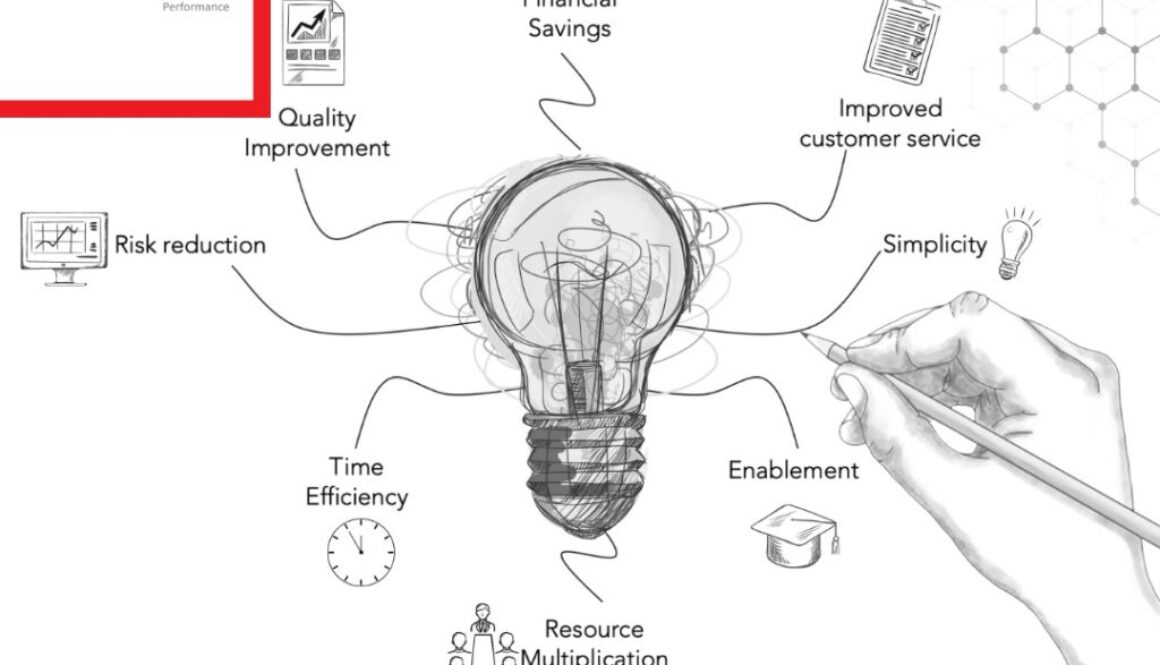
Overview of High Level Value Adds
Over the last few weeks, we have walked in many different shoes, understanding how Novus3 can help your municipality. Using our combination of CP3 and our consultants experiences in municipality processes, we can ensure that you’re enabled to make better strategic decisions with all the data and information at the click of a button. Novus3 together with the bespoke software, CP3 and their consultants, makes all the difference when it comes to :
• Money efficiency (Savings)
• Time efficiency
• Resource multiplication
• Convenience
• Improved customer service
• Risk reduction
• Quality Improvement
• Simplicity
• Enablement
The above are just some of the value adds Novus3 brings to the table. We encourage you to get in touch with us, to understand your needs and customise a package to suit your needs. We’re in the business of making a difference, where and when it matters!
#Novus3 #AdvisoryServices #CP3 #Budgets #SoftwareSolutions #PeopleOrientated #LetsMakeADifference #CEF #Capex #ValueAdd
Adding value to a Citizen
When a municipality has Novus3 by its side, it will positively impact several processes and outcomes. It means that capital projects will be chosen based on a prioritisation model, ensuring that projects are not implemented on a hap hazard scale but rather through a scientific based approach. This process is transparent and will ensure that money is spent in the right places without any external influences.
What this means for you as a citizen, is your council is being equipped to make strategic decisions with the help of reliable data and support. Using CP3 in your municipality also means that data and knowledge is no longer held by one person but is rather decentralised. Ensuring that your municipality is ALWAYS equipped with the information it needs, in order to make strategic decisions. This will enable the IDP processes, Budget Adjustments and Planning to run smoothly due to the various modules on CP3.
Contact us for more information and we can set up time together to discuss ways in making your municipality run more efficiently and transparent.
#Novus3 #AdvisoryServices #CP3 #Budgets #SoftwareSolutions #PeopleOrientated #LetsMakeADifference #CEF #Capex #ValueAdd

2022 Intermediate City Municipal Infrastructure Development Seminar
Novus3 was proud to be a key contributor and presenter at the COGTA hosted and SALGA facilitated Intermediate City Municipal Infrastructure Development Seminar held on 24 June 2022 at the University of Cape Town. The purpose of the seminar was to explicitly unpack how the Integrated Urban Development Grant can be applied to support spatially aligned public infrastructure investment that will lead to functional and efficient urban spaces and ultimately unlock growth through the provision of funding for public investment in infrastructure, improving municipal own sources of capital financing, securing public investment in areas of high spatial priority and to promote sound management of the asset delivery lifecycle.
Using the local government accountability lifecycle as a base framework, Novus3 – supported by INCA Portfolio Managers and BCGA – provided insights on how smart tools are currently applied in the local government arena to align infrastructure planning, spatial planning, financial planning and ultimately improve service delivery through the implementation of capital budgets.
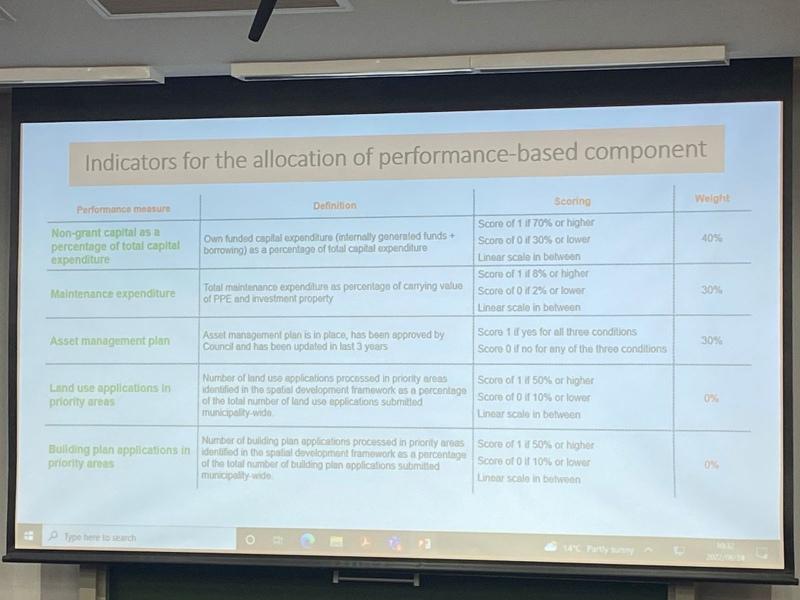
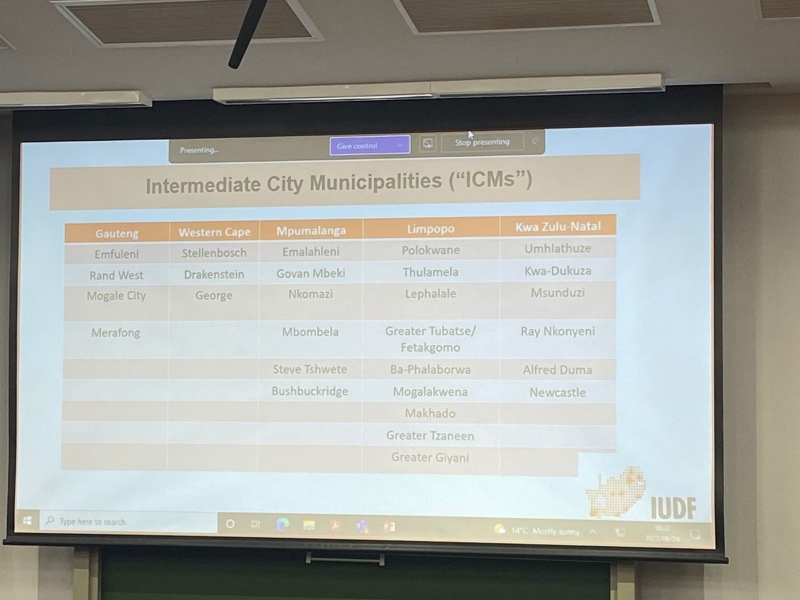
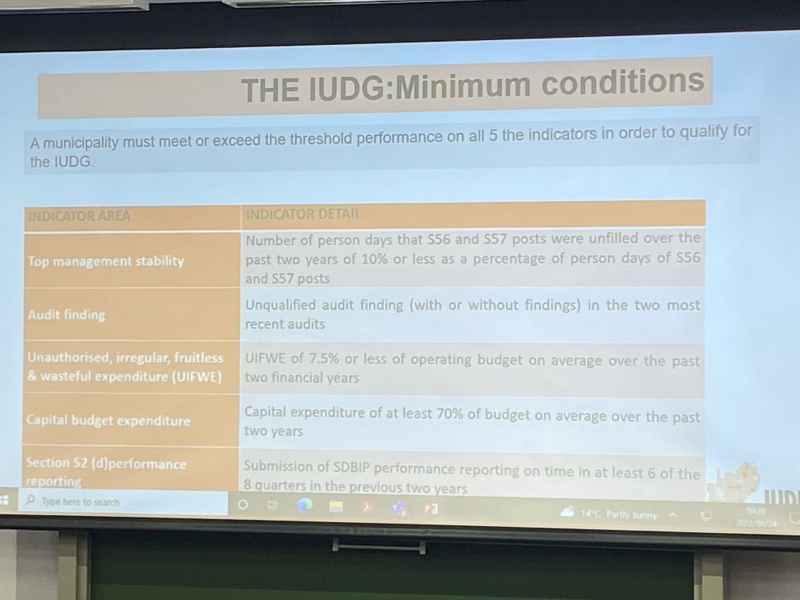
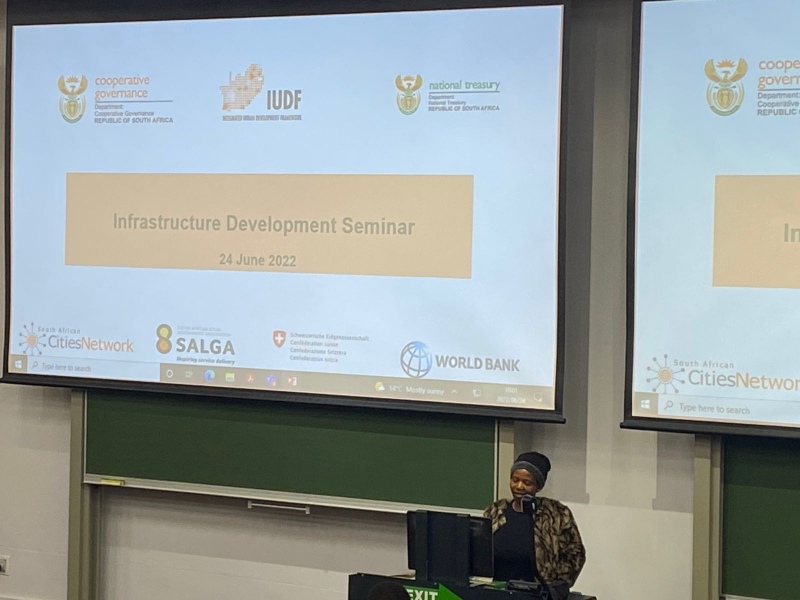
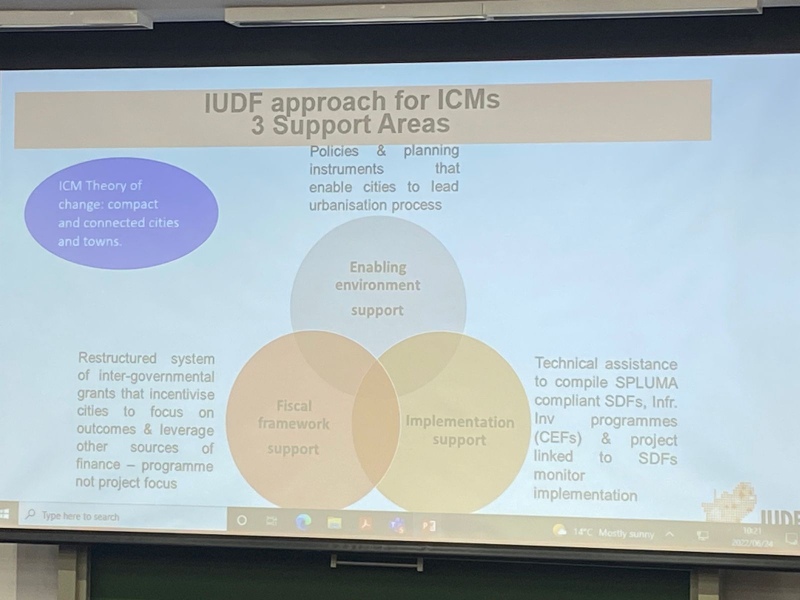
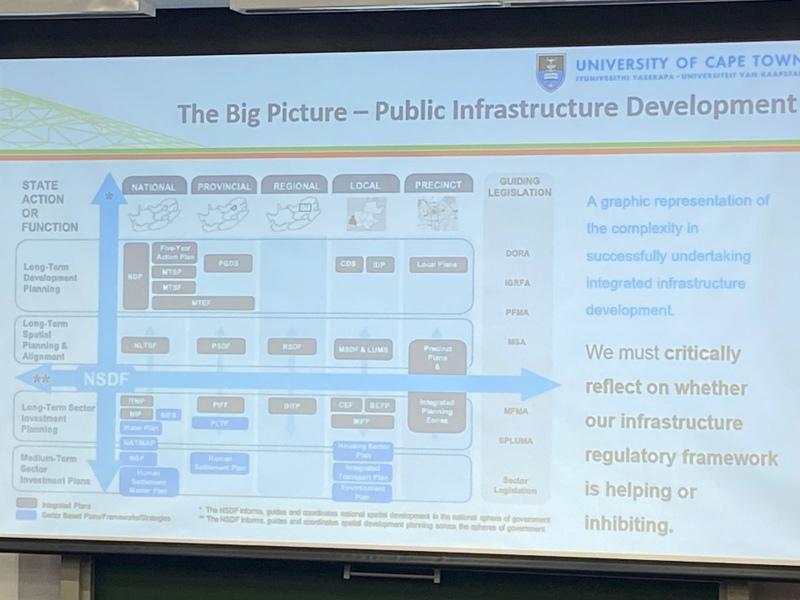
For more information, find our details at www.novus3.co.za or www.cp3systems.com
#COGTA #DCOG #SALGA #Urban&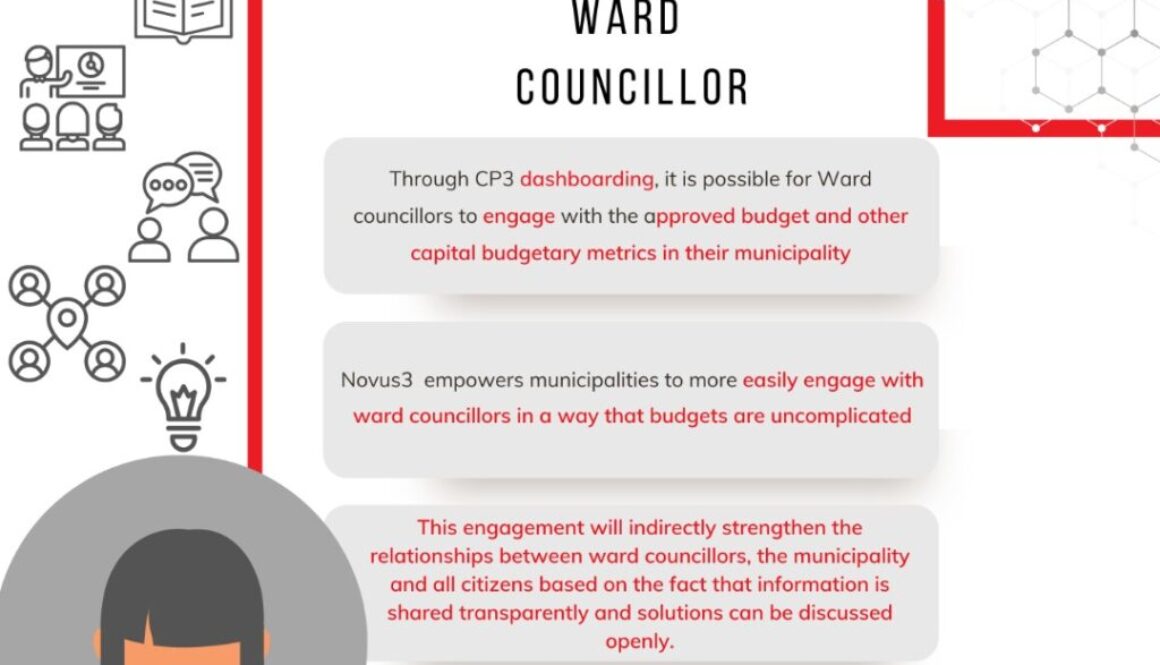
Adding value to the Ward Councillor
Ward councillors are a representative conduit between the communities they represent and the respective municipal council. One of the main tasks of a ward councillor is to provide feedback from ward meetings to citizens and assist the community to identify needs and priority areas of development.
Through CP3 dashboarding, it is possible for Ward councillors to engage with the approved budget and other capital budgetary metrics in their municipality. In addition to this, Novus3 empowers municipalities to more easily engage with ward councillors in a way that budgets are uncomplicated. This engagement will indirectly strengthen the relationships between ward councillors, the municipality and all citizens based on the fact that information is shared transparently and solutions can be discussed openly.
Contact us for more information and we can set up time together to discuss ways to enable your relationship between council and citizens, using CP3 dashboarding.
#Novus3 #AdvisoryServices #CP3 #Budgets #SoftwareSolutions #PeopleOrientated #LetsMakeADifference #CEF #Capex #ValueAdd
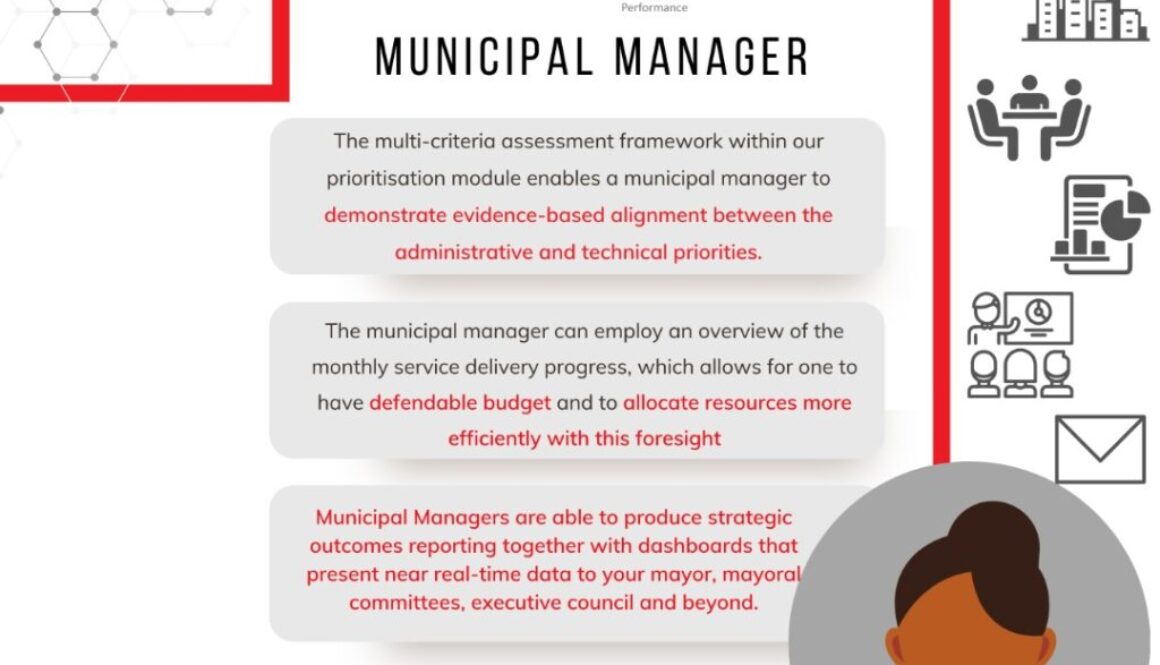
Adding value to the Municipal Manager
According to the Municipal Finance and Management Act, Municipal managers are to act as accounting officers, which simply means, they are responsible for managing the financial administration of the municipality. Municipal managers have to ensure that resources are used efficiently, proper financial records are kept up to date and standard, and are responsible for and must account for all bank accounts of the municipality.
The multi criteria assessment framework within our prioritisation module, enables a municipal manager to demonstrate evidence based alignment between the administrative and technical priorities.
By implementing CP3, the municipal manager can employ an overview of the monthly service delivery progress, which puts him/her in a position to not only have a defendable budget but also to allocate resources more efficiently with this foresight. With the oversight of this service delivery progress, you are in a position to produce strategic outcomes reporting together with dashboards that present near real time data to your mayor, mayoral committees, executive council and beyond.
Contact us for more information and we can set up time together to discuss ways in making your municipality run more innovatively!
#Novus3 #AdvisoryServices #CP3 #Budgets #SoftwareSolutions #PeopleOrientated #LetsMakeADifference #CEF #Capex #ValueAdd
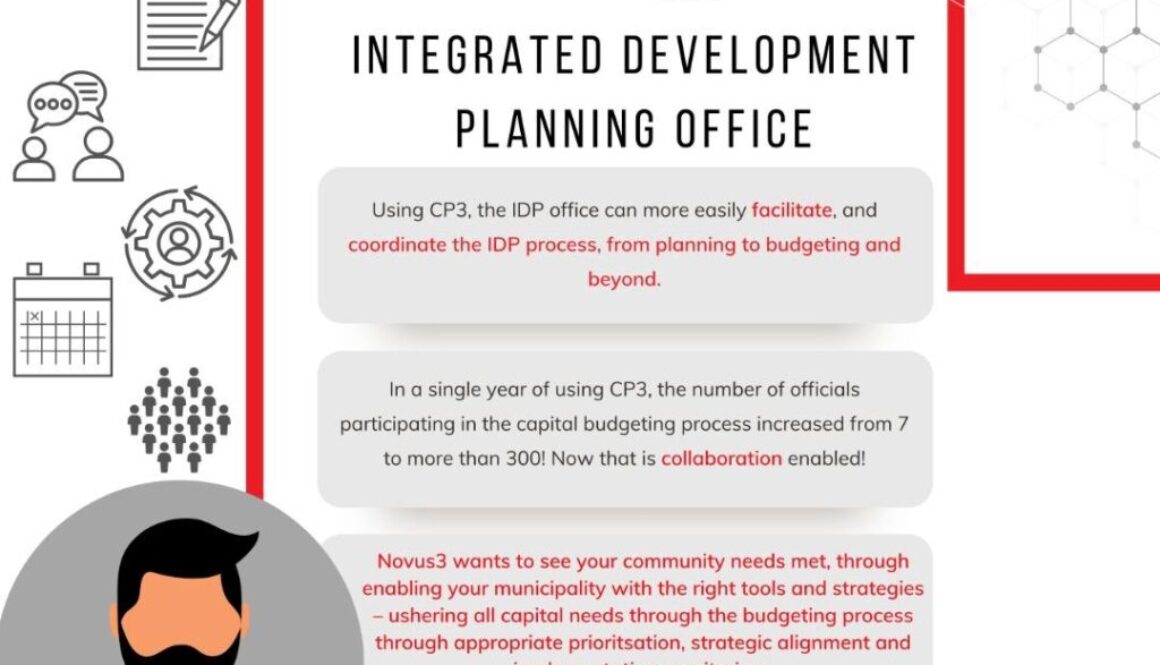
Adding value to the Integrated Development Planning Office
Local municipalities in South Africa use “Integrated Development Planning” as a method to plan future development in their respective areas. The IDP approach is an approach to planning that involves the entire municipality and its citizens in finding the best solutions to achieve good long-term development. In saying that, it is a requirement for all municipalities have to produce an Integrated Development Plan (IDP) – the single most important strategic document of a municipality.
Using CP3, the IDP office can more easily facilitate, and coordinate the IDP process, from planning to budgeting and beyond. Seeing that it is the single most important strategic process within the municipality, it is imperative for the process to run efficiently. In a single year of using CP3, the number of officials participating in the capital budgeting process increased from 7 to more than 300! Now that is collaboration enabled!
At the heart of its core, Novus3 wants to see your community needs met, through enabling your municipality with the right tools and strategies – ushering all capital needs through the budgeting process through appropriate prioritsation, strategic alignment and implementation monitoring.
Contact us for more information and we can set up time together to discuss ways in enabling your IDP office with CP3.
#Novus3 #AdvisoryServices #CP3 #Budgets #SoftwareSolutions #PeopleOrientated #LetsMakeADifference #CEF #Capex #ValueAdd
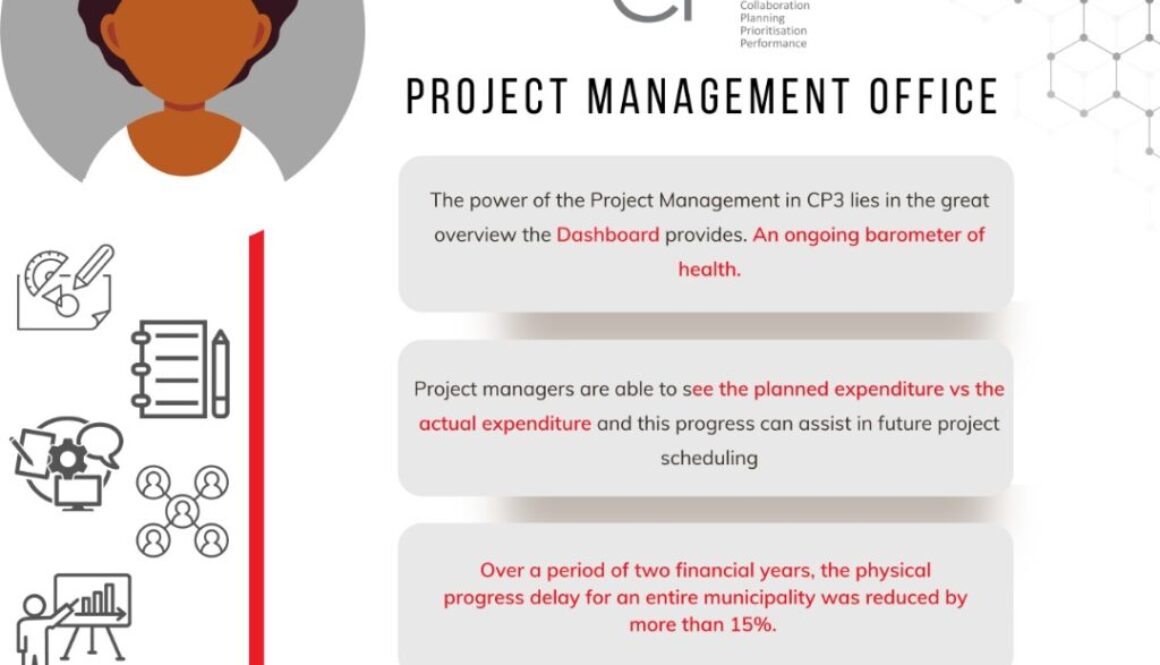
Adding value to the Project Management Office
The Project Management Office plans, organises and directs the completion of specific projects for the Municipality while ensuring that these projects are on time, on budget and within scope. Project managers report monthly on financial and physical progress made on capital projects; enabling a municipal wide view on progress made towards service delivery. Using both financial tracking and non-financial tracking on CP3, project managers gives insight on all capital expenditure relating to their projects, and all progress related to said expenditure. They are able to see the planned expenditure vs the actual expenditure and this progress can assist in future project scheduling. Using the Dashboard feature in CP3, project managers are able have an excellent overview of their respective projects, giving way to an ongoing barometer of health.
Over a period of two financial years, the physical progress delay for an entire municipality was reduced by more than 15%.
Contact us for more information and we can set up time together to discuss ways in enabling your Project Management Office with the correct tools to ensure all capital projects are on time, on budget and within scope.
#Novus3 #AdvisoryServices #CP3 #Budgets #SoftwareSolutions #PeopleOrientated #LetsMakeADifference #CEF #Capex #ValueAdd
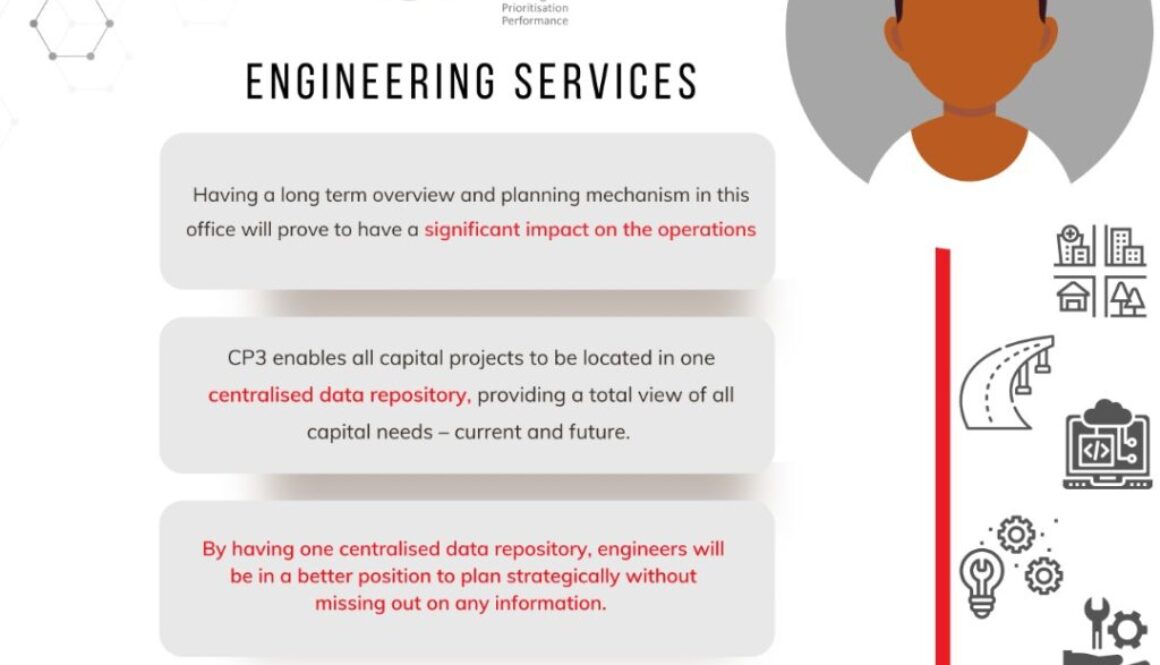
Adding value to Engineering Services
The Engineering Services Department is responsible for amongst others the planning, design, implementation, operations and maintenance of all municipal engineering services. The office of the Director of Engineering services performs an overarching function of directing the individual divisions to plan their business in such a way that it meets the department’s overall goal of fully integrated development and with clear outputs that satisfy the municipal strategies and objectives. Having a long term overview and planning mechanism in this office, will prove to have a significant impact on the operations. CP3 enables all capital projects to be located in one centralised data repository, providing a total view of all capital needs – current and future.
Engineering deadlines are critical and the consequences of missing these deadlines can be severe. It was observed in a metropolitan municipality that uses CP3, their data collection is standardised, resulting in an overall time reduction of 36%. This means that the same amount of work can be done in a month, by only 64% of the workforce, ensuring that deadlines are met.
Engineers need to have the an oversight on long term planning and the project pipeline to ensure that they can adhere to the municipal’s infrastructure growth. By having one centralised data repository, engineers will be in a better position to plan strategically without missing out on any information.
Contact us for more information and we can set up time together to discuss ways in making your municipality run more efficiently to provide excellent service delivery.
#Novus3 #AdvisoryServices #CP3 #Budgets #SoftwareSolutions #PeopleOrientated #LetsMakeADifference #CEF #Capex #ValueAdd
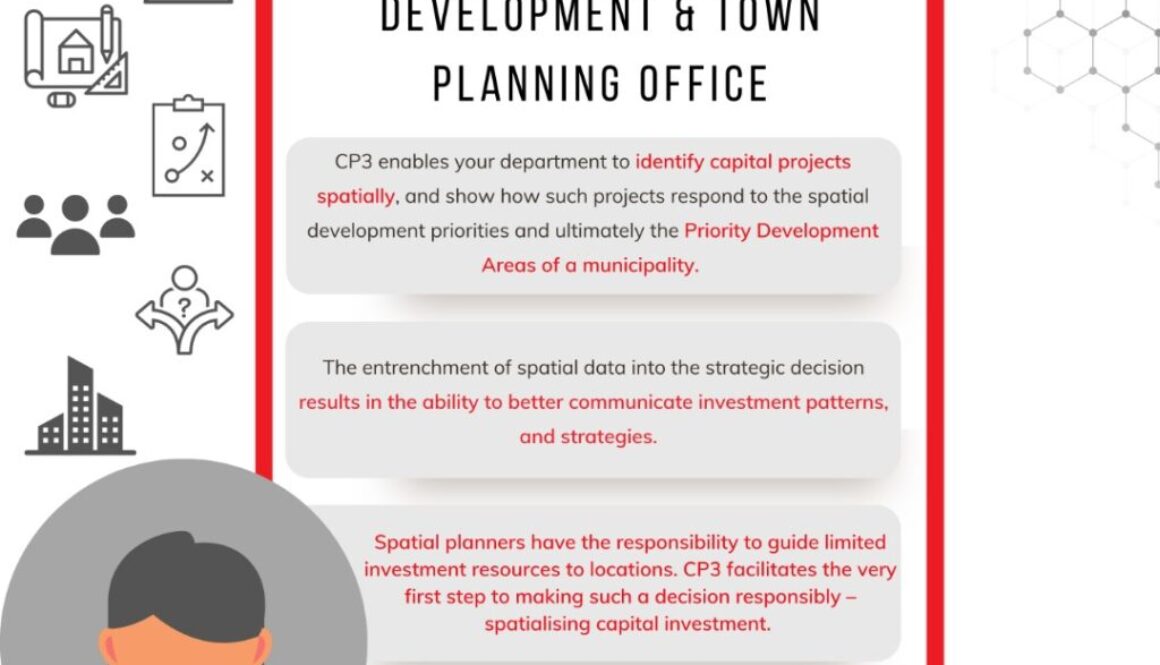
Adding value to the Development and Town Planning Office
Spatial Planning (spatial targeting) in South Africa is intimately linked to urbanisation and infrastructure development. Spatial planners are responsible, amongst others, for the development of Spatial Development Frameworks; a core component of the Integrated Development Plan, but more so, the spatial representation of how municipalities will guide development, service delivery and economic growth.
The spatialisation of capital projects is a key component to give context to the qualitative and quantitative responses to the spatial priorities – a vital function that the SDF is responsible for. CP3, our bespoke software, enables your department to identify capital projects spatially, and show how such projects responds to the spatial development priorities and ultimately the Priority Development Areas of a municipality.
The incorporation and entrenchment of spatial data to the strategic decision making process allows for evidence based spatial targeting leading to more accurate and logical decision making, resulting in the ability to better communicate investment patterns, strategies.
Spatial planners have the responsibility to guide limited investment resources to locations which will boast the most impactful results. CP3 facilitates the very first step to making such decision responsibly – spatialising capital investment.
Contact us for more information and we can set up time together to discuss ways in enabling your Department with a spatial lens, equipping you to make the right decisions.
#Novus3 #AdvisoryServices #CP3 #Budgets #SoftwareSolutions #PeopleOrientated #LetsMakeADifference #CEF #Capex #ValueAdd

Adding value to the Budget Office
Budgets, balancing and working with money isn’t an easy feat, especially in a municipal office. Traditionally, the role of the budget office has been to function as a central command post. This means the Budget Office is responsible for the items of expenditure, monitoring compliance with regulations, ensuring that the inputs are those agreed in the budget, and intervening as deemed appropriate.
Using our bespoke software, CP3’s budget scenario tool enables the Budget Office to easily optimise funding source allocation to capital projects, within the municipality’s available budget. This tool makes a significant time difference during the Budget Adjustment Process and the Capital Budgeting Process. The time efficiency insures that the municipal officers focus their time on the results and make more effort on the allocations then having to deal with multiple excel sheets. Plus with the MSCOA standardisation, all projects will have the relevant information!
The time efficiencies unlocked by CP3 allows for multiple budget scenarios and in so doing, allows for making better decisions. This results in the Budget office make an even more positive difference through their operations.
Contact us for more information and we can set up time together to discuss ways in making your municipality operate more productively, giving you more time to make strategic decisions.
#Novus3 #AdvisoryServices #CP3 #Budgets #SoftwareSolutions #PeopleOrientated #LetsMakeADifference #CEF #Capex #ValueAdd
mSCOA News Update
Novus3 is proud to announce that CP3 is mSCOA 6.6.1 compliant and has simplified and integrated complex mSCOA budgeting requirements into the CP3 capturing module. This means that all our clients are mSCOA 6.6.1 compliant in terms of their capital expenditure budgeting process.
What is mSCOA?
MSCOA (Municipal Standard Chart of Accounts) is part of the National Treasury’s ongoing budget and reporting reforms aimed at improving financial reporting, and is a mandatory requirement of National Treasury.
Essentially, mSCOA enables a municipality to capture standardised project level detail pertaining to the location of a project, the funding source of a project, the asset type, and the nature of the project.
With this information CP3 is able to amongst other things, prioritise projects in terms of the above-mentioned details. To find out more about the CP3 mSCOA update, feel free to reach us at info@novus3.co.za
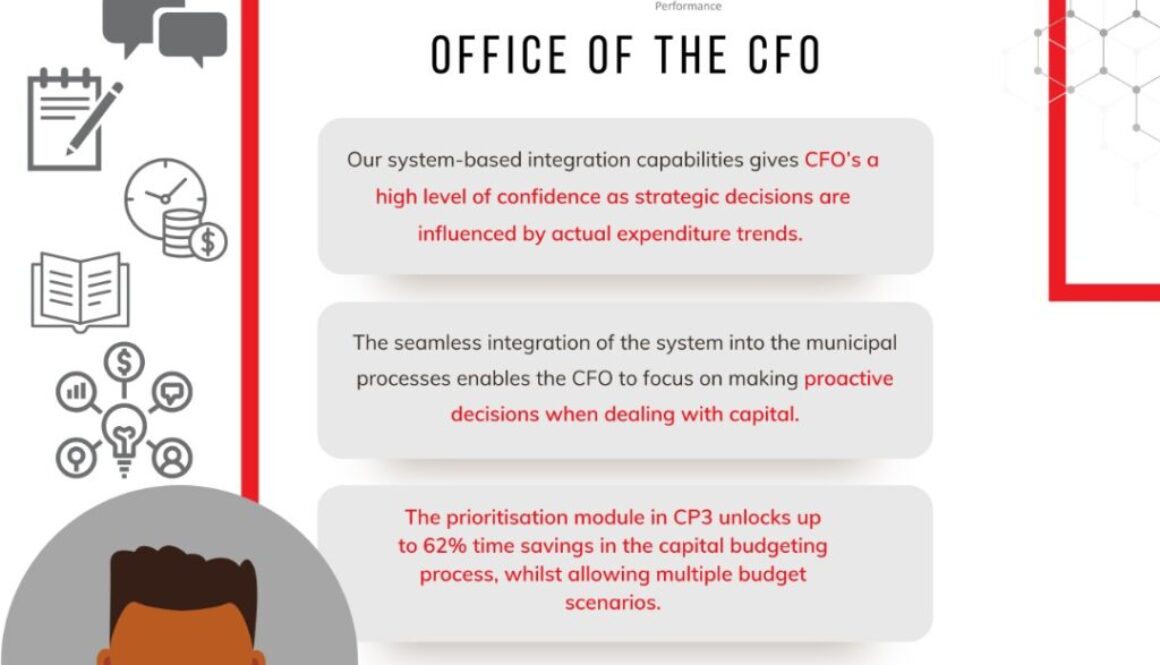
Adding value to the Office of the CFO
Being in the Office of the CFO proves to be one of the most important positions in a Municipality. Holding the position of the CFO means you are responsible for financial planning, cash flow planning, expenditure tracking and ultimately realising the strategic direction of the municipality.
Using our bespoke software, CP3, the prioritisation model enables the CFO to implement a defendable and transparent capital budget. The prioritisation module in CP3, unlocks up to 62% time savings in the capital budgeting process, whilst allowing multiple budget scenarios.
Our system based integration capabilities, gives CFO’s a high level of confidence as strategic decisions are influenced by actual expenditure trends. The seamless integration of the system into the municipal processes, enables the CFO to focus on making proactive decisions when dealing with capital.
The budget scenario tool allows for multiple iterations and ultimately testing of several policy choices; furthermore assist the municipality in optimising on resource allocation – making sure the correct projects are funded by the correct funding sources, whilst optimising strategic alignment of his/her municipality.
Saving time, saves money and this makes the world of a difference during planning budgets and adjustment budgets. Contact us for more information and we can set up time together to discuss ways in making your municipality run more cost effectively.
#Novus3 #AdvisoryServices #CP3 #Budgets #SoftwareSolutions #PeopleOrientated #LetsMakeADifference #CEF #Capex #ValueAdd
Adding Value, where it Matters!
Novus3 adds value to your municipality and strives toward building a more functional local government. In the following few posts we will focus on how our services impact different role players and stakeholders, from the CFO who has to make significantly important decisions, to the ward councillor, who has to ensure that their interactions are transparent and factual. We will also explore when our services make the most difference and why having Novus3 behind you, will be the best strategic decision you have ever made!
Don’t forget to turn on your post notifications, to ensure you stay up to date with all our content. We wouldn’t want you to miss what’s coming next!
#Novus3 #AdvisoryServices #CP3 #Budgets #SoftwareSolutions #PeopleOrientated #LetsMakeADifference #CEF #Capex #ValueAdd

Let’s Chat?
Feel free to engage with us on any of our social media platforms by linking up with us on LinkedIn , twitter or Facebook . Whether it’s a conversation about how we can get more people thinking about capital budgets and prioritisations or you would like to enquire about how we can help your company prioritise, please feel free to reach out to us.
#Novus3 #Consultants #AdvisoryServices #CP3 #Budgets #SoftwareSolutions #PeopleOrientated #LetsMakeADifference #CEF #Capex

A very special[ist] Team!
The core management team of Novus3 has been working as a team for more than a decade, supported by a dynamic group of young professionals. We protectively build on our progressive company culture that embraces the diversity of the country we love.
We’re a bunch of professionals in diverse fields, ranging from engineers, planners, accountants, data analysts and IT experts.
We are bonded by our collective strengths and motivated by our common goals, making a difference to our clients and the work they do.
#Novus3 #Consultants #AdvisoryServices #CP3 #Budgets #SoftwareSolutions #PeopleOrientated #LetsMakeADifference #CEF #Capex

Haven’t you heard
When it comes to exceptional client services and consultations, don’t take our word for it, hear it from our clients directly. Here is what a Chief director in infrastructure planning said:
“The Novus3 team excelled in planning, prioritisation and capital project management as part of the capital budgeting cycle and ten year planning horizon”
#Novus3 #Consultants #AdvisoryServices #CP3 #Budgets #SoftwareSolutions #PeopleOrientated #LetsMakeADifference #CEF #Capex

Bespoke
When it comes to exceptional client services and consultations, we understand that large organisations, cities and government departments have different requirements that are time-based and contextual to the particular circumstances and responsibilities. This understanding enables us to provide our clients with appropriate solutions to their unique environments, without losing sight on their deadlines and requirements – ensuring that what we offer is tailored for your needs. A senior manager in the Governance sector elaborates on this:
“Just want to let you know that during our update of our CEF, your team at Novus3 went out of their way to comply with the IUDF grant conditions.”
#Novus3 #Consultants #AdvisoryServices #CP3 #Budgets #SoftwareSolutions #PeopleOrientated #LetsMakeADifference #CEF #Capex

Our Sibling Company – Munsoft
Together with our sibling company Munsoft, we provide a full range of specialised financial services to local government in Southern Africa. This complimentary partnership provides both companies the ability to deliver a wide range of comprehensive solutions to our existing and prospective clients. The Munsoft and Novus3 partnership provides one of the most unique approaches and to municipal budgeting and planning.
Together with Munsoft we are currently operational several metropolitan, district and local municipalities – testimony that our combined service offering brings value to municipalities regardless of their size.
#Novus3 #Consultants #AdvisoryServices #CP3 #Budgets #SoftwareSolutions #PeopleOrientated #LetsMakeADifference #CEF #Capex
About your capital needs
The collaborative planning, prioritisation and performance platform (CP3) is our flagship software service. It provides a catch‐net where all of our client’s capital needs are registered, prioritised, budgeted and tracked whilst it gets implemented.
CP3 software as a service provides one portal where capital needs are standardised, planned for and managed. It gives the ability for innovative prioritisation of these needs and aligning short, medium and long term actions with the organisations strategy.
CP3 is also available as an individual, licensed SaaS product. To find out more about CP3 software visit www.cp3systems.com
#Novus3 #Consultants #AdvisoryServices #CP3 #Budgets #SoftwareSolutions #PeopleOrientated #LetsMakeADifference #CEF #Capex

How do we do it – a nic[h]e approach
We have an unique approach to capital expenditure planning, prioritisation and ultimately implementation tracking. It is of utmost importance to monitor implementation after significant planning has been done as it creates measurable efficiencies and direct financial benefits. Our innovative, software based solutions harvest significant insights from existing data and extrapolate such insight to benefit your whole organisation.
Our flagship software solution, CP3 (www.cp3systems.co.za) for instance, recognised that the budgeting process in a public sector environment is complex, onerous and heavily legislated. For this reason it is usually relegated to the domain of a small grouping of financial specialists requiring sign-off by mostly non-financial executives at the end of what appears to be a mostly exclusive process.
Our bespoke product known as CP3 is a collaborative planning, prioritisation and performance tracking tool – we will chat more about CP3 in our next post, so keep your notifications on to find out more or go to www.cp3systems.com for more information.
#Novus3 #Consultants #AdvisoryServices #CP3 #Budgets #SoftwareSolutions #PeopleOrientated #LetsMakeADifference #CEF #Capex

What we do, matters
Novus3 has a deep-rooted understanding of the built-environment and the complex financial environment in the public sector that stems from a strong advisory back-bone bolstered by a team of highly talented, specialised professionals. With this armoury, Novus3 uses its advisory experience to propel our clients forward by simplifying the domains of prioritisation and budgeting. This creates value for our clients, and ultimately benefits the rate payers who entrusts these complexities to the various levels of government.
Our end goal is provide solutions that are of a lasting and sustainable nature and more importantly, specifically to the client’s needs. Simply put, we empower our clients to deliver optimally using new and relevant approaches to solve old and persistent challenges – in so doing, making a difference!
#Novus3 #Consultants #AdvisoryServices #CP3 #Budgets #SoftwareSolutions #PeopleOrientated #LetsMakeADifference #CEF #Capex

About us
Novus3 differentiates itself as innovators in the development of bespoke software solutions that addresses the exclusivity of specialised business processes and renders it accessible to a wider spectrum of users.
Novus3 has a deep-rooted understanding of the built-environment and the complex financial environment in the public sector that stems from a strong advisory back-bone bolstered by a team of highly talented, specialised professionals. With this armoury, Novus3 uses its advisory experience to propel our clients forward by simplifying the domains of prioritisation and budgeting. This creates value for our clients, and ultimately benefits the rate payers who entrusts these complexities to the various levels of government.
We are situated in the capital of South Africa – the City of Tshwane and our approach attracted the interest and exciting opportunities from private, public, local and international clients.
Through this channel we will continue sharing our insights, reminders, and thought provoking articles. We’re looking forward to interacting with you on our social media platforms, let us know in the comments what you’d like to see or hear from us!
To all of our new followers, remember to turn on post notifications to not miss out on any of our posts. Watch this space!
#Novus3 #Consultants #AdvisoryServices #CP3 #Budgets #SoftwareSolutions #PeopleOrientated #LetsMakeADifference #CEF #Capex
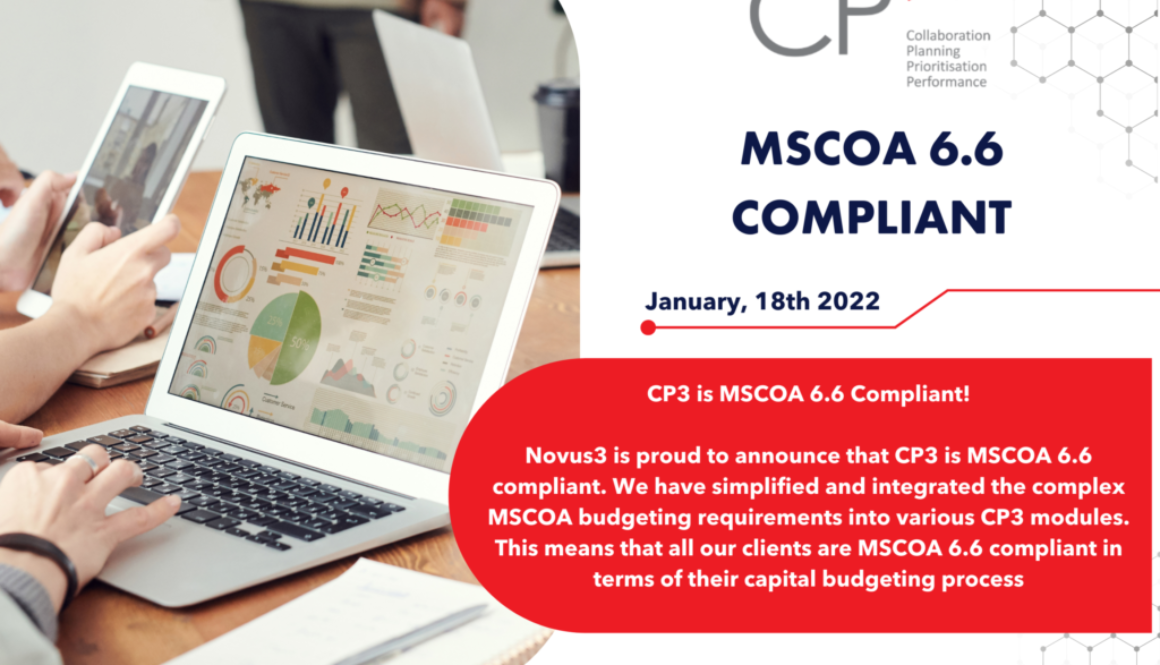
CP3 is MSCOA 6.6 Compliant!
Novus3 is proud to announce that CP3 is MSCOA 6.6 compliant and has simplified and integrated complex MSCOA budgeting requirements into the CP3 capturing module. This means that all our clients are MSCOA 6.6 compliant in terms of their capital expenditure budgeting process.
What is MSCOA?
MSCOA (Municipal Standard Chart of Accounts) is part of the National Treasury’s ongoing budget and reporting reforms aimed at improving financial reporting, and is a mandatory requirement of National Treasury. Essentially, MSCOA enables a municipality to capture standardised project level detail pertaining to the location of a project, the funding source of a project, the asset type, and the nature of the project.
With this information CP3 is able to amongst other things, prioritise projects in terms of the above-mentioned details.Novus3 is proud to announce that CP3 is MSCOA 6.6 compliant and has simplified and integrated complex MSCOA budgeting requirements into the CP3 capturing module.

Novus3’s Approach to the New IDP Guideline for Metropolitan Municipalities
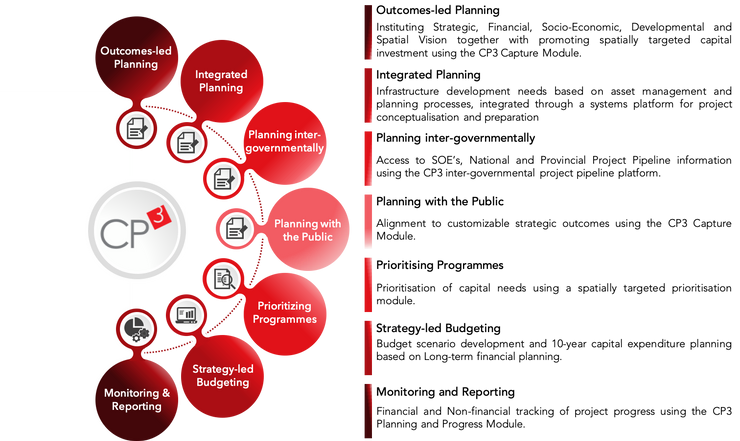
The South African National Department of Cooperative Governance and Traditional Affairs (CoGTA) has released a new version of the Integrated Development Plan (IDP) Guideline for Metropolitan Municipalities. This guideline builds on the recognised IDP process and incorporates planning reforms identified through the Built Environment Performance Planning (BEPP) process.
To achieve a sound IDP process in line with good practice, CoGTA has identified nine priority focus areas to promote transversal and integrated planning together with an outcomes‐led planning and budgeting response to the National Development Plan (NDP). These focus areas include:
- Outcomes‐led planning;
- Integrated planning;
- Planning inter‐governmentally;
- Planning with the public;
- Planning and strategy‐led budgeting;
CP3 celebrates that good news comes in 3’s!
Insights from our annual user survey.
We are proud how we have played an important role in the city government space.
Contact us at info@cp3systems.com for more information or to book a demo!
Facebook: https://lnkd.in/g_ynRd4
Linkedin: https://lnkd.in/gbd9kd7
Twitter: https://lnkd.in/giy852m
How big are the mountains that are moved by CP3?
In our next video, we will be showing you how cities are using CP3. Please like our page and follow us, or visit our web-site at https://cp3systems.com/. Brought to you by Novus3 (Pty) Ltd (https://novus.optogmedia.com/) – a licensed reseller and supporter of CP3.
Go https://www.facebook.com/novus3consulting/ for more infromation.

Data driven insights, evidence based planning
“It is a capital mistake to theorise before one has data.” – Sherlock Holmes. “The goal is to turn data into information, and information into insight.” – Carly Fiorina
Visit www.cp3systems.com to see how you can acquire better data about your organisation, in order to make effective strategic decisions. www.cp3systems.com

CP3 integrates successfully with ESRI
Esri is an international supplier of geographic information system software, web GIS and geo-database management applications which is widely used by some of our clients.
It is of great value to our clients if they don’t have to worry about the integration of their various solutions. For this reason, we endeavour to ensure optimal integration between CP3 and any other solutions, wherever it is widely used. CP3 can now proudly announce that we have tested and deployed a fully functional new version of the system, that integrates with the ESRI platform. The integration involves the co-sharing of geo-spatial data with financial data between the systems, where required. The resultant outcome is less effort for our clients and more intrinsic value in using the CP3 platform.
This enhancement assisted us in investigating and employing several new integration methods, such as an automated data change identification bot, continuous VPN security verification, seamless integration protocols, etc. We are very proud of this milestone and look forward to apply this to other integrations as well.
If you need any more information or if you want to learn more about CP3, please visit our CP3 website at www.cp3systems.com or www.novus3.co.za.


Novus3 supporting the City of Tshwane Built Environment Performance Plan 2020/21
The Built Environment Performance Plan (BEPP) aims to achieve an alignment between various built environment grants assigned to the municipal space, together with enhancing the capital planning and implementation of targeted urban investment. One of the key processes within the BEPP includes the annual capital expenditure planning and budgeting process, which is facilitated by means of the City of Tshwane Capital Planning System (CAPS) – a configured and rebranded version of the Novus3 Capital Planning Prioritisation Performance system (CP3).
During 2019/20 National Treasury announced the termination of the BEPP. In light of this, the City will be submitting the last BEPP for the 2020/21 financial year with a particular focus on establishing a transitioning out of BEPP framework. This is to ensure that institutional and planning reforms identified through the process of the BEPP strengthens the range of plans with specific reference to the SDF; IDP and the annual budgeting process.
The key highlights of the 2020/2021 BEPP include:
- The current alignment of the BEPP to municipal process, together with promoting intergovernmental planning which aligns to the Inter-Governmental Framework Act (IGRFA) and the District Coordination Model declared by The President of the Republic of South Africa;
- Determining a Theory of Change which guides the City’s various planning and budgeting processes through the establishment of a desired set of long-term goals and strategies;
- Instituting a transition out of BEPP framework and a detailed work plan to guide the annual IDP and budgeting process. This ensures the actioning of BEPP principles through existing legislated processes followed within the City;
- An innovative approach to the establishment of a spatial planning and targeting profile of the City. This includes a clear understanding of the current spatial structuring matrix; priority development areas (PDA’s) and the alignment of human settlement (housing) together with transport planning and investment initiatives;
- How the City is aligning its capital expenditure with respect to the Urban Network Structure, Priority Investment Areas, MSDF Nodal and Corridor programmes and catalytic land development programmes;
- The inclusion of a Long-Term Financing Strategy and Model to allow for sustainable resourcing of capital investment;
- Determining affordable funding envelopes spanning over a 10-year period and understanding the City’s capital demand in line with sustainable investment principles; and
- How the City has matured in the institutional process through the establishment of the capital budget and BEPP-related steering committees and task teams;
By utilising the true potential of CP3-CaPS, through institutional wide buy-in of the software as a service, it was possible to effectively navigate the budgeting and planning cycle.
This empowered the City to respond successfully to the 2020/21 BEPP Framework as established by National Treasury.
#CoT #BEPP #CP3 #Novus3 #SpatialTransformation #UrbanPlanning #C40 #ClimateChange #CapitalInvestment #CSP #NationalTreasury #TheoryofChange #TransitioningoutofBEPP

CP3 is MSCOA 6.4 Compliant
MSCOA (Municipal Standard Chart of Accounts) is part of the National Treasury’s ongoing budget and reporting reforms aimed at improving financial reporting and is a mandatory requirement of National Treasury. MSCOA enables a municipality to capture standardised project level detail pertaining to the location of a project, the funding source of a project, the asset type, and the nature of the project. With this information CP3 is able to amongst other prioritise projects in terms of the above-mentioned details. Novus3 is proud to announce that CP3 is MSCOA 6.4 compliant and has simplified and integrated complex MSCOA budgeting requirements into the CP3 capturing module. This was done within the same budgeting cycle that MSCOA 6.4 was released. This means that all our clients are MSCOA 6.4 compliant in terms of their capital expenditure budgeting process.


Novus3’s Covid-19 response
Novus3 is deeply concerned for the well-being of our country and indeed humanity in the face of the dramatic challenges that are faced by society as a result of the Covid-19 pandemic.
We sought ways in which we can play our part in bringing about a solution. Novus3 has implemented a “work-from-home” month. Our physical office will therefore be closed until the 14th of April 2020, where after we will reappraise the situation to see whether we can return to the office. Fortunately, the technology choices we have made as a company allow us to work remotely without compromising on our client centric approach. We have a virtual receptionist, cloud-based file server and all of our staff have high-speed internet access at their homes. Novus3 therefore remains fully functional to perform our duties without any disruption.
We express our sincere hope that everyone can stay safe and healthy and extend our best wishes to all of our clients and our collaborators.

Novus3 – 2020: From Strength to Strength
A very rewarding way to start 2020! One of many strength awareness sessions towards building a strength-based organisation and harnessing our complimentary and collective talents to serve our clients better.
Thank you Dries Lombaard for your expert guidance!
#Gallop #StrengthFinders #StrategicLeadershipInstitute
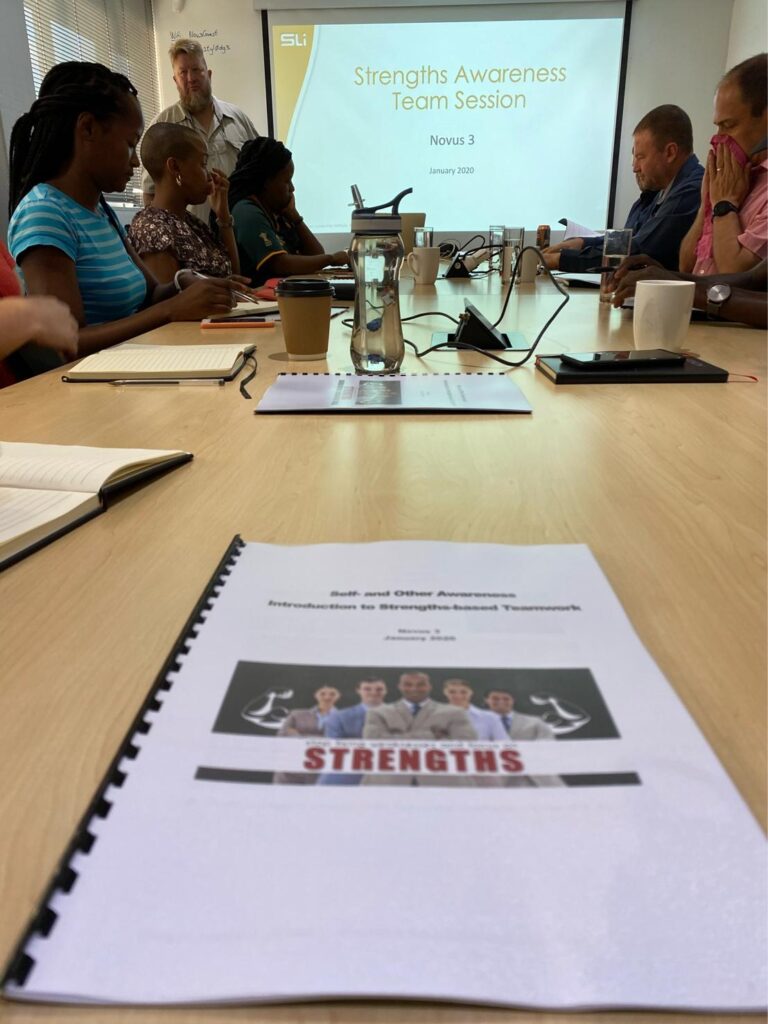
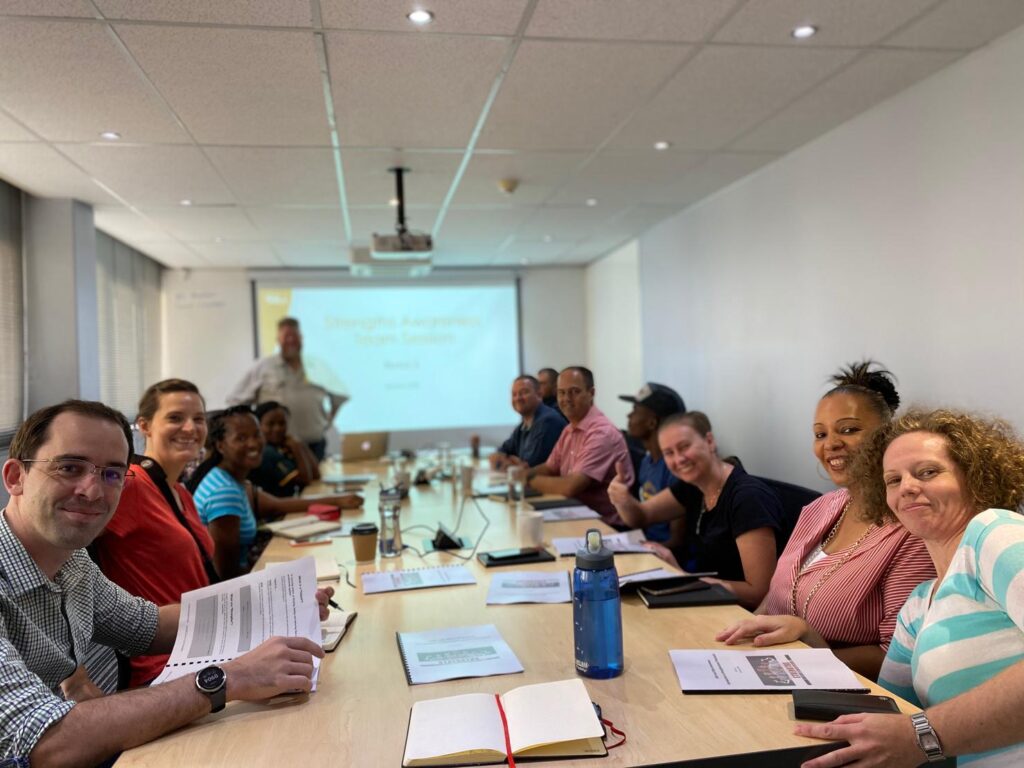

CIGFARO National Budgeting Workshop: Municipal Standard Chart of Accounts (MSCOA)
Novus3, are proud to exhibit our flagship municipal budgeting platform, CP3, at the CIGFARO and National Treasury National Budgeting Workshop – “Budgeting in an MSCOA Environment”, at Birchwood Conference Centre from 6 – 8 November 2019.
CP3 (Collaboration, Planning, Prioritisation, Performance) assists our public sector clients to prepare MSCOA 6.3 compliant capital budgets with simplicity and ease, ensuring that all approved capital budget items are compliant with the regulated MSCOA segments.
CP3 facilitates all three capital budgeting processes and output data strings throughout the financial year as prescribed by National Treasury, namely TABB (Draft / Tabled budget), ORGB (Original / Approved Budget) as well as ADJB (Adjustment Budget).
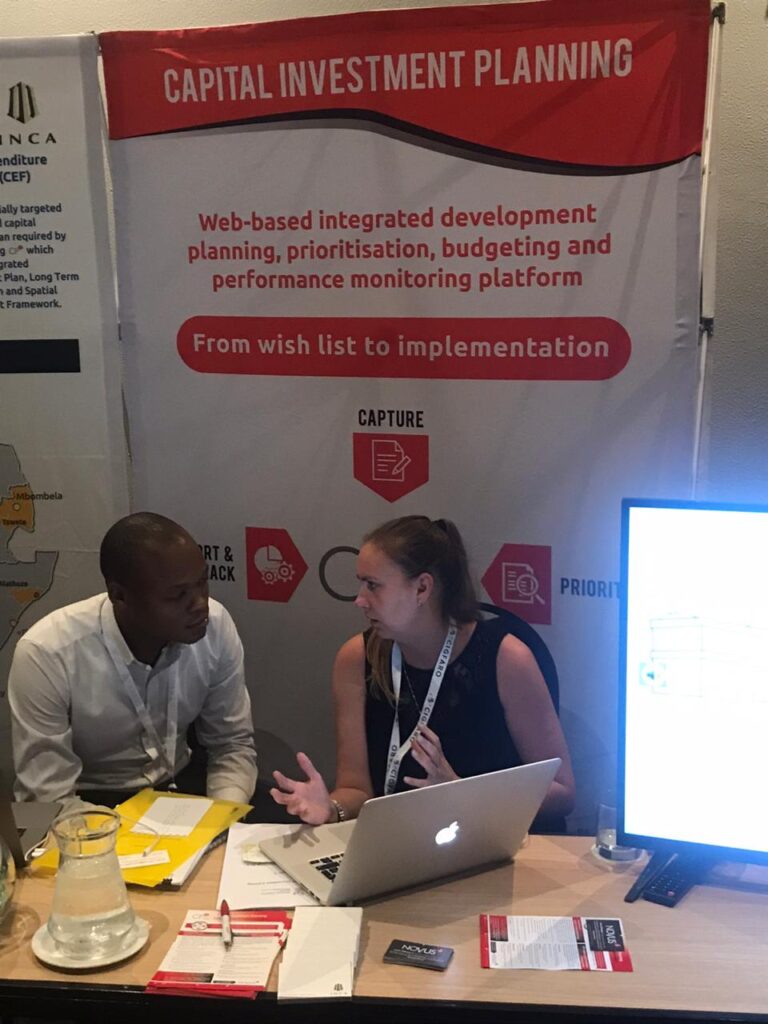
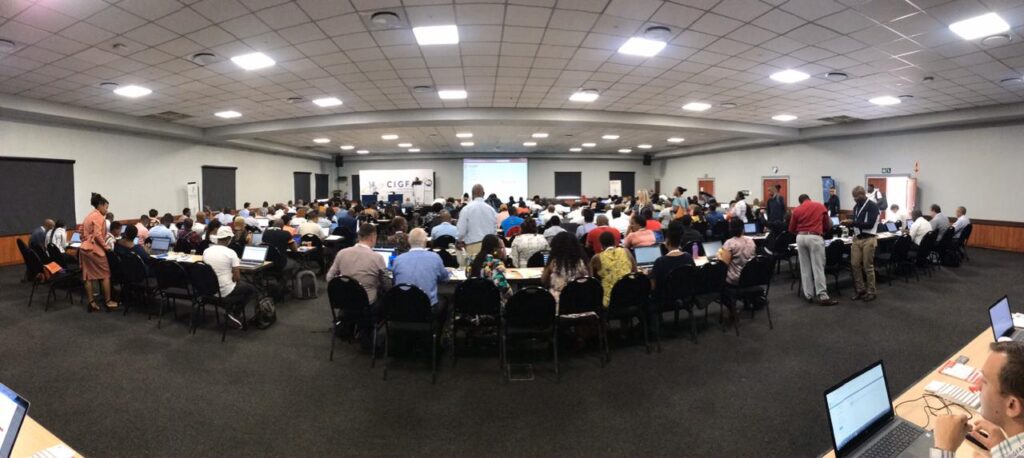
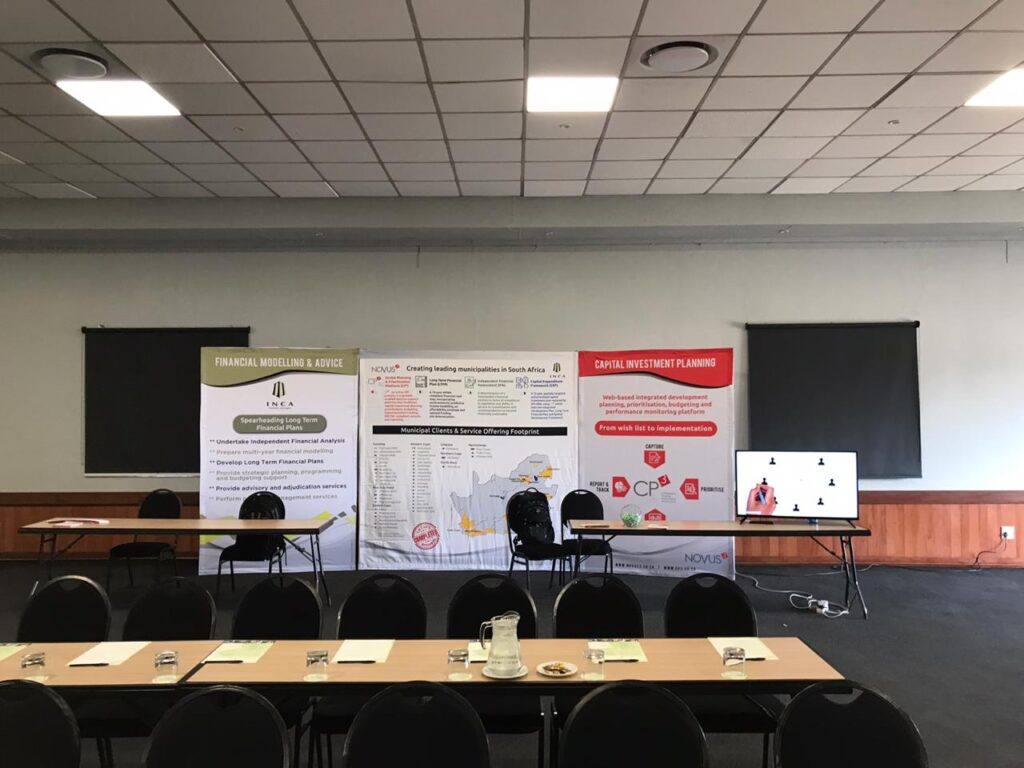
#CP3 #Novus3 #CP3Systems #NationalTreasury #CIGFARO #MSCOA #MunicipalBudgeting #CapitalInvestmentPlanning #CEF #BEPP
1st in South Africa: Novus3 registered by SACPLAN as a Capital Investment Planning Service Provider
On International World Town Planning day, we were honoured to receive the news that Novus3 has been recognised, and accordingly registered, by the South African Council for Planners (SACPLAN) as the first company that provides Capital Investment Planning services.
Novus3 provides a range of professional Capital Investment Planning services to the public sector by making use of the well-established and innovative CP3 system deployed at various clients – a solution that facilitates a process of informed decision making, spatial targeting and budgeting.
CP3, an affirmed Smart City solution, has become a trusted solution to some of South Africa’s major municipalities.
Click here to our link on SACPLAN’s website.
Click here for more information on Novus3.
Click here for more information on CP3.
#WorldTownPlanningDay #CP3 #SACPLAN #CapitalInvestmentPlanning #Novus3 #SmartCity #ISOCARP #SAPI #RTPI #APA
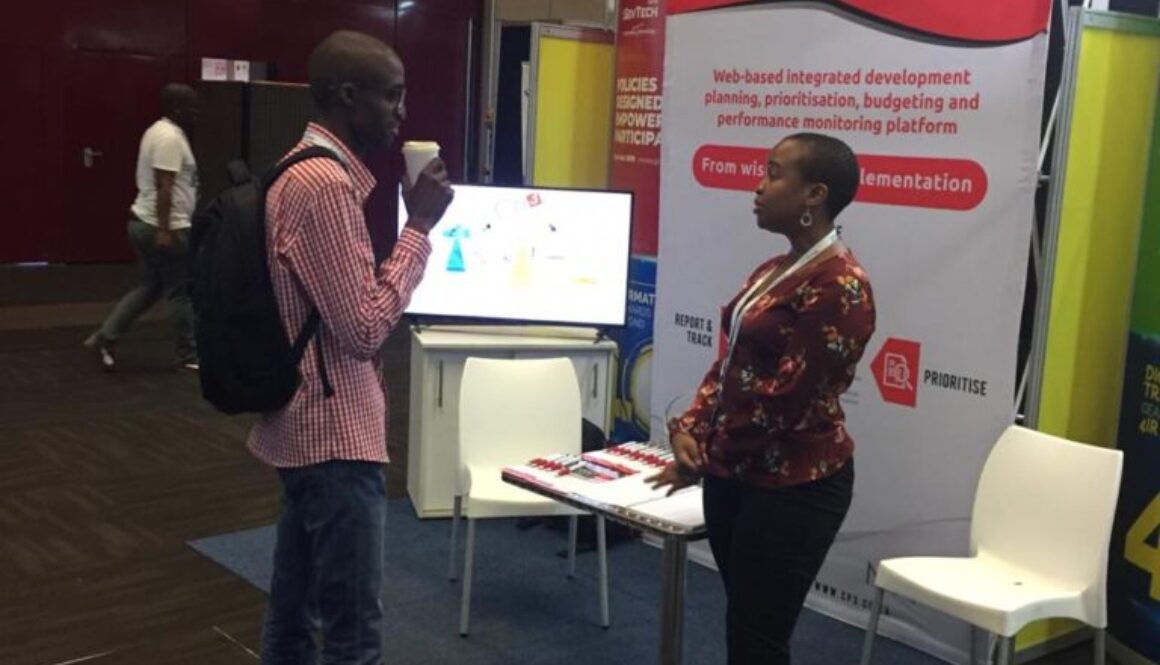
The application of CP3 in various sectors – Contributing to the 4IR and the 2019 GovTech Conference
Today marks the last day of the Gov-Tech Conference 2019! Novus3 was very privileged to be able to exhibit our services and innovative fin-tech tools in support of our public sector.
The interest that CP3 got at the conference was very insightful. It confirmed that CP3 addresses a need that translates into a benefit for all South Africans. Capital management, decision support, budgeting and performance monitoring are essential tools in the decision-maker’s armoury. If wielded with diligence, the benefits of responsive and targeted investment of public capital start yielding tangible benefits – some of our biggest clients can attest to that.
The benefits of optimised decision-making, resource multiplication and strategic prioritisation are obvious – yet there preciously little on offer in this area. CP3 was one of (if not) the only strategic planning system that comprehensively and pragmatically addresses infrastructure service delivery, with a strong foundation built on an understanding of public sector processes, planning, budgeting and legislation.
The prospect of applying CP3 in various other sectors became obvious at GovTech 2019, as it addresses a fundamental question: How do we optimise our limited financial resources to yield the best returns in terms of transformation, social upliftment and good governance?
CP3 incorporates the consideration of economic impact, social inequality, spatial transformation, financial prudence, addressing backlogs, climate change, environmental impact and much more. An acknowledgement of this was seen in the interest that we have garnered at the GovTech conference.
We look forward to the next steps in our journey, that was made possible by this conference.
#GovTech #CP3 #Novus3 #StrategicDecisionMaking #CapitalInvestmentPlanning #4IR

Co-ordinating Complexity and Prioritising Spatial and Socio-Economic Need by Talking Transformation
How the public sector spends its money is increasingly being scrutinised by the public and private sectors alike.
Limited funds, flatlined economy, austerity: increasingly there’s a need to do more with less and demonstrate tangible value for money and impact within our communities. To achieve this, and to address the complexity and the variables impacting on decision-making requires institutional co-ordination, inter-disciplinary approaches and inter-governmental cooperation. It means a collective effort with the limited funds at hand to achieve the transformation of our landscapes, maximise service delivery and maintain the economic foundations of the cities and country.
Novus3 have a wealth of experience in developing methods and tools to support decision-making, assist the technical and political prioritisation processes and to demonstrate the spatial and socio-economic impacts of public spending.
Our expertise and insights are derived from almost two decades of service, understanding and developing approaches to support these challenges.
Our insights and approaches have served a diversity of clients including Development Finance Institutions (DFIs), a number of Metros, National Departments and SOEs.
#Prioritisation #SpatialTransformation #SpatialTargeting #CapitalInvestmentPlanning #TalkingTransformation #DecisionMaking #Budgeting #NationalTreasury #COGTA #DRDLR #SACPLAN #CEF #IUDF #BEPP #Novus3 #CP3
World-class fintech innovation
Novus3 is humbled by the CP3 journey so far and to have shared it with a world-class business partner. We look forward to pioneering further in this exciting space.
CP3 | Decision Support
CP3 is a decision support tool that unlocks collaboration, enhances efficiency, enforce transparency, and guide change management whilst using (currently under utilised) data within an organisation in order to make an impact.
For more information on any of the subjects above, the capabilities of the CP3 Software-as-a-Service (SaaS) platform and the capital investment advisory services offered by Novus3, please visit www.novus3.co.za
#CP3 #Novus3 #Decisionmaking #Collaboration #Prioritisation #Performance #Progress

Novus3 is a proud service provider to Midvaal Local Municipality
This week marks the kick-off of the working relationship between Novus3 and Midvaal Local Municipality. We are proud to provide capital budget planning and prioritisation services to small, intermediate and metropolitan municipalities.

Achieving a Climate Responsive and Resilient City through Capital Investment Planning
Climate Change and its inherent impact on society has become an increasing concern within the built environment. Continued urban growth creates the need for an urgent focus on infrastructure investment which aims to reshape cities towards becoming more climate responsive and resilient.
The allocation of financial resources towards climate change infrastructure directly impacts the financial sustainability of cities, which in turn creates the need for cities to consider climate sensitive infrastructure investment planning.
CP3 allows users to integrate climate change principles within the annual capital expenditure planning process by:
- Incorporating climate risk and vulnerability assessments as part of the CP3 prioritisation platform;
- Identifying climate responsiveness and resilience portfolios, which provides the ability to ring-fence financial resources for climate specific infrastructure investment;
- Aligning existing and planned capital expenditure to climate change intervention or adaptation programmes, and;
- Creating a link between spatial targeting and targeted climate intervention zones.
The ability of CP3 to facilitate and allow for climate change principles, aids users with the identification and prioritisation of climate responsive infrastructure investment projects. In addition to the above, CP3 serves as a powerful analytical and reporting tool for purposes of securing additional funding opportunities made available through climate finance mechanisms.
#ClimateResilience #ClimateChangeBudget #ClimateResponsiveness #ClimateInfrastructure #Sustainability #SpatialTargeting #BEPP #CSP #NationalTreasury #UNFCCC #ParisAgreement
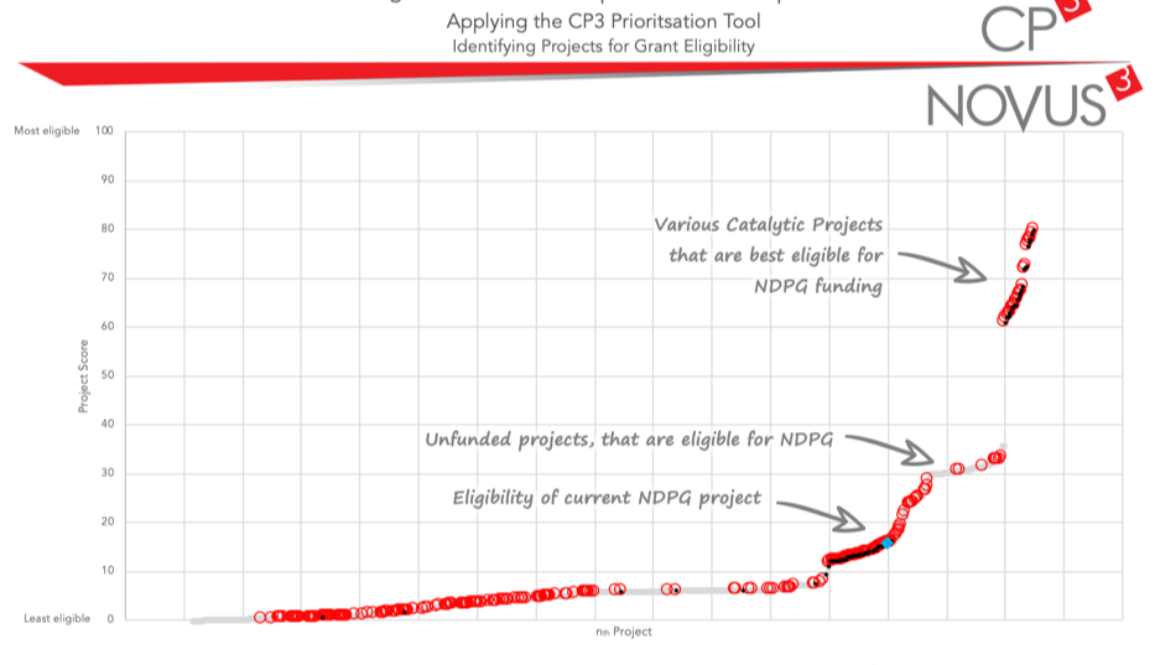
Grant Eligibility Identification: Applying CP3 to identify NDPG project suitability
Context: The National Development Partnership Grant (NDPG) aims to fund projects which are directed towards the creation of liveable, sustainable, resilient, efficient and integrated towns and cities while simultaneously eradicating spatial inequality. It targets projects which:
- fall within spatially targeted areas;
- upgrade and refurbish existing assets;
- align with specific National Development Plan (NDP) Outcomes;
- culminate in an infrastructure asset, and;
- improves the quality of life of communities.
Result: CP3 was used to create a prioritisation model which scored projects in terms of their eligibility for the NDPG. The output, as shown above, is a relative ranking between a sample of municipal projects whereby the highest scoring project is most eligible for NDPG. The results show that the most eligible projects are already identified by the municipality as catalytic projects, and are also currently being funded by the 2019/20 MTREF. The key finding of this analysis shows that the CP3 model can identify projects which best align with the outcomes of the NDPG grant framework.
Conclusion: The results shows that there are mechanisms available to scientifically and rationally identify project suitability with respect to the specific outcomes of a grant, private fund, venture capital or investment initiatives of the like.

Calculating a Poor/Non-Poor Capital Expenditure Ratio: Applying a generalised hexagon model zone
Calculating a Poor/Non-Poor Capital Expenditure Ratio: Applying a generalised hexagon model zone
Spatial targeting refers to the deliberate focus of particular actions on a particular spatial area in order to achieve desired outcomes or objectives. This concept is a recent, but essential, addition to the traditional planning approach followed by municipalities in delivering on their mandate and can easily be identified in legislative and policy documents such as the Spatial Planning and Land Use Management Act of 2013 (SPLUMA), The Integrated Urban Development Framework (IUDF), and the Capital Expenditure Framework (CEF) guidelines.
The CEF guideline requires municipalities to report on capital expenditure towards poor and non-poor households within the municipality – from here on referred to as the Poor/Non-Poor Capital Expenditure Ratio.
Various attempts were made to determine the Poor/Non-Poor Capital Expenditure Ratio. Three of these attempts worth mentioning, which are still useful but in a different context, includes the Deprivation Index, Indigent Index, and the municipally adjusted Gini-Coefficient.
The Deprivation Index is a spatial index which identifies the most deprived areas within the municipality using household income, size, dwelling type, access to water, access to energy, access to refuse removal, and access to sanitation. This however was done using the Small Area Layer (SAL) and was not related to the actual dwelling structure distribution within the analysis area.
The Indigent Index took a similar approach than the Deprivation Index in using the SAL as the spatial representation of the data, however accessing data as defined by the National Framework for Indigent Policies is not an easy task – with some data sets not publicly available.
The Gini-Coefficient shows how much a specific zone within the analysis area varies from the norm within the analysis area making it difficult to differentiate between a high income classes and a low income class as they both vary from the norm to the same degree. Additionally, how the query zones were defined was also dependant on the SAL – thus not reflecting a true spatial distribution of households.
An alternative solution to calculating the Poor/Non-Poor Capital Expenditure Ratio is represented in the figure attached to this article – Calculating a Poor/Non-Poor Capital Expenditure Ratio: Applying a generalised hexagon model zone .
The first step is to generate a 500m hexagon grid within the analysis zone. The second step is to identify the household distribution by disaggregating household data as per SAL to the dwelling frame data – data which is also accessible from Mapable (Pty) Ltd. The thirds step is then to aggregate the number of households per hexagon zone in order to standardise the analysis zones. At this point in the calculation process the analyst identified the number of households per hexagon zone, together with the household attributes linked to that hexagon. The fourth step is then to identify the household income ratio per hexagon, using an income of less than R5000 per month as an identifier for poor households, and more than R5000 per month as an identifier for non-poor households. The next step in the calculation process is to identify the proportion of capital expenditure per hexagon. This is done by splitting the capital per project according to the proportion of which the project intersect with each hexagon using the reporting module of CP3. The result is thus the amount of capital spent per hexagon. The last step in the analysis is to multiply the household income ratio per hexagon of step four with the capital expenditure per hexagon. A future article will deal with the output of this process and how it can be interpreted.
This method of identifying the Poor/Non-Poor Capital Expenditure Ratio is but one approach towards measuring a municipality’s intent towards spatial transformation. It attempts to take into consideration the spatial reality to an above normal level of accuracy, whilst at the same time utilising relatively easily accessible tools and data sets.
#CP3 #CEF #CapitalInvestmentPlanning #Novus3 #TownPlanning #IUDF #CapitalExpenditure #SpatialTargeting
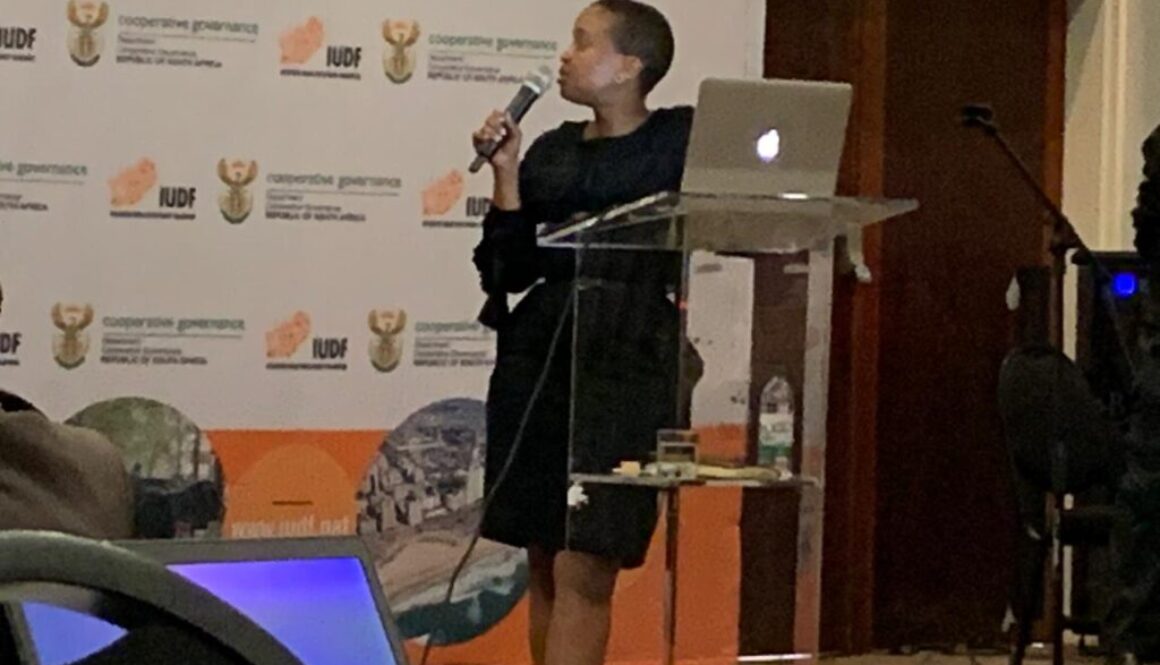
National Department of Cooperative Governance Workshop: Towards Integrated Planning
The past two days Novus3 attended the first National Department of Cooperative Governance (DCoG) Capital Expenditure Framework (CEF) Appraisal Workshop. It is the start of truly integrated planning where the effect of long-term financial planning together with spatial development planning result in effective infrastructure implementation. The CEF is instrumental in realising collaborative planning and implementation resulting in the spatial vision of the Integrated Urban Development Framework (IUDF).
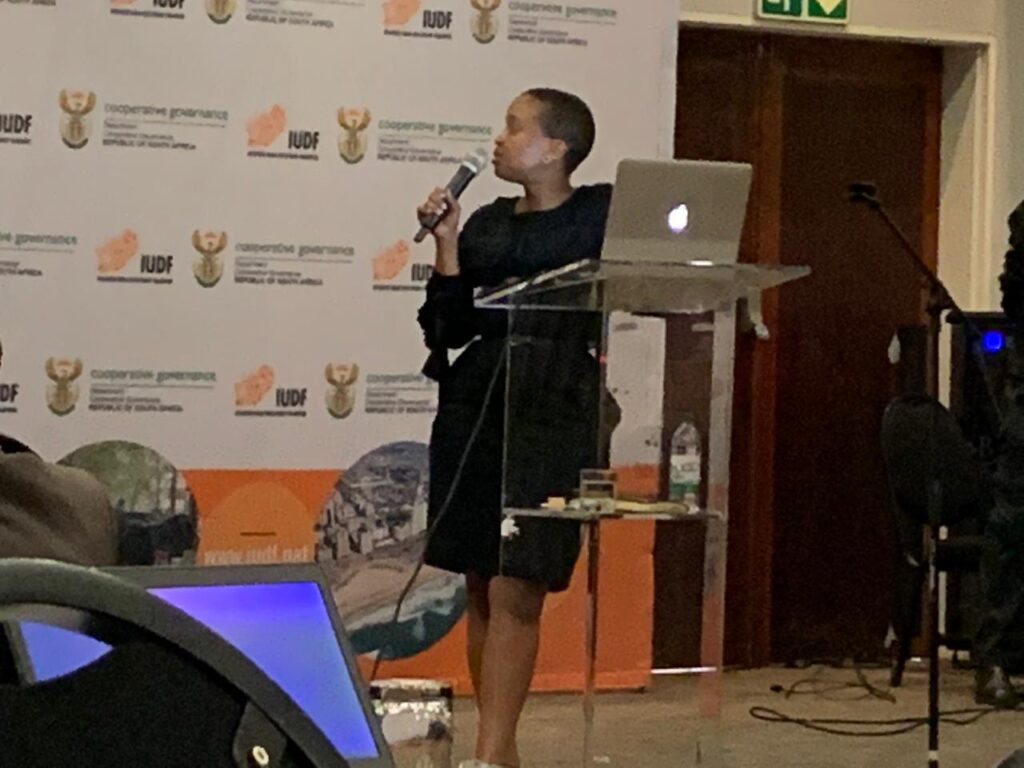
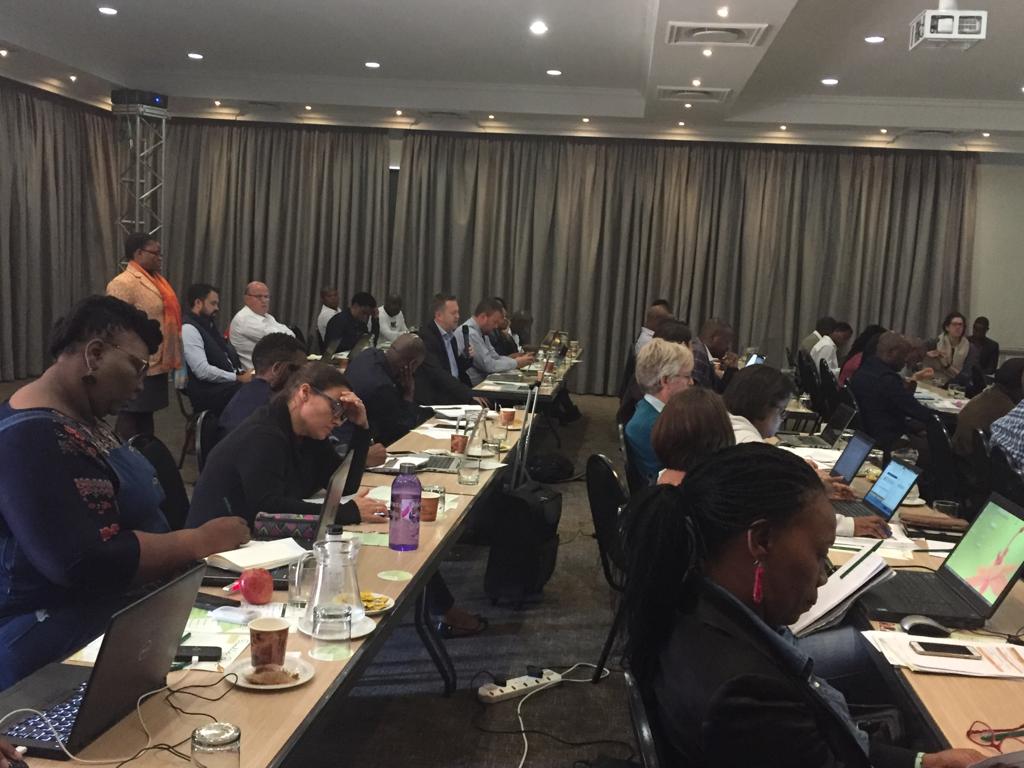
#CEF #CP3 #COGTA #IntegratedPlanning #EvidenceBasedPlanning #SpatialTargeting

Capital Expenditure Frameworks: First draft submission milestone
Novus3 successfully submitted Capital Expenditure Frameworks (CEFs) for four intermediate city municipalities (ICMs) that qualified for the Integrated Urban Development Grant (IUDG). The draft CEF’s submitted are some of the first in the country, and will pave the way towards spatially transformed and financially sustainable municipalities, as envisaged by the Integrated Urban Development Framework (IUDF) . The key to successfully submitting the CEF’s was to draw from the strengths of a multi-disciplinary team – supported by a range of municipal planning tools namely, CP3 capital planning and prioritisation tool, long-term financial modelling, socio-economic profiling and infrastructure investment demand modelling.
#COGTA #IUDF #IUDG #CEF #CP3 #Novus3 #Stellenbosch #MogaleCity #SolPlaatje #uMhlathuze

Optimized decision making in the municipal space: Urban Settlements Development Grant
Context: As per the Division of Revenue Act, act 2 of 2013, each grant has a defined grant framework which states amongst others the criteria for eligible (capital) projects.
Process: Novus3 has interpreted the criteria of the USDG Framework and put together a USDG-eligibility Prioritisation Model using CP3. This enables the identification of the most eligible and least eligible capital projects within a municipality for USDG. This model was applied to a Metropolitan Municipality – which previously used human judgement to identify the most suitable projects for USDG funding.
Results: The results show that the USDG projects as identified by human judgement scores lower in terms of the USDG-eligibility model. If the USDG-eligibility model is used optimally, the municipality can fund projects with much higher alignment to the USDG framework than they are currently funding which impacts the municipality’s funding envelope and also have a variety of socio-economic spin-offs when considering the rest of the municipality’s capital expenditure budget.
Conclusion: This is one of a multitude of applications of the CP3 suite which can be used to optimize decision making within the municipal space.
#CP3 #USDG #Decision-making #Municipalities

“Boomers, Gen X, Gen Y, Gen Z… “ and “Behaviour, Values, Believes and the World View. “
Bewildering and confusing? Well, it shouldn’t be! As a small, energetic and growing company, Novus3 will not be spared when it comes to understanding and leveraging on the strengths and differences of our different generations. Every generation wants to know, “How will the company help me to achieve my goals?”.
An understanding of the dynamics of each generation, and an in-depth introspection and analysis of our own behaviour is the harbour from which we will set sail. The first and most important step in this journey, was to on-board the “Generation Index” assessment to create a healthy and multigenerational work environment.
“Many companies are acknowledging the importance to include younger people in their workforce, yet few are succeeding to positively engage with younger people in their workforce, yet few are succeeding to positively engage with younger people, let alone ensuring that they stay with the company for an extended period of time. It wat because of this exact reason that the Generational Engagement Index was developed.” – Generation Index (November 2018).
Novus3 is looking forward to gaining a deeper understanding of what needs to be done to future proof our company and to leverage on the understanding of intergenerational strengths.

Stellenbosch Capital Expenditure Framework
Novus3 are proud to be associated with the first Capital Expenditure Framework prepared for Stellenbosch Municipality under the Integrated Urban Development Framework.
Please click here for a direct link to the National Department of Cooperative Governance and Traditional Affairs’s (COGTA) article on the Stellenbosch Capital Expenditure Framework (CEF).
#CP3 #IUDF #CEF #CapitalInvestmentPlanning#LongTermFinancialPlanning
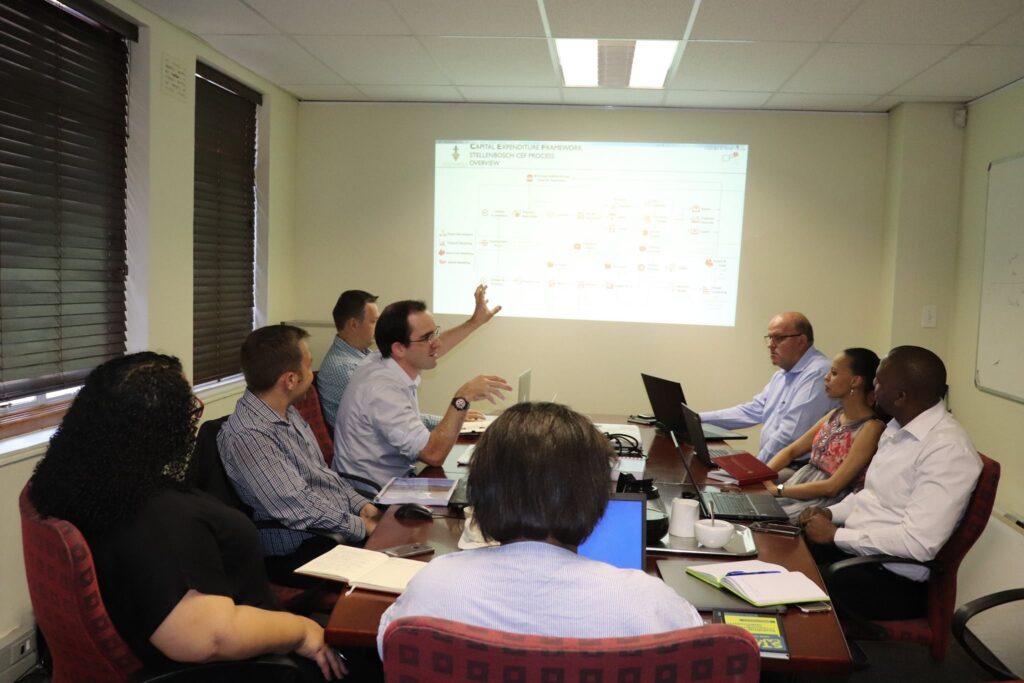


Season’s Greetings
The festive season is a time for reflection and rejuvenation. 2018 was a challenging yet rewarding business year and we wish to thank our clients and network partners for their continued support over the past year. We look forward to working together with you all again in 2019.
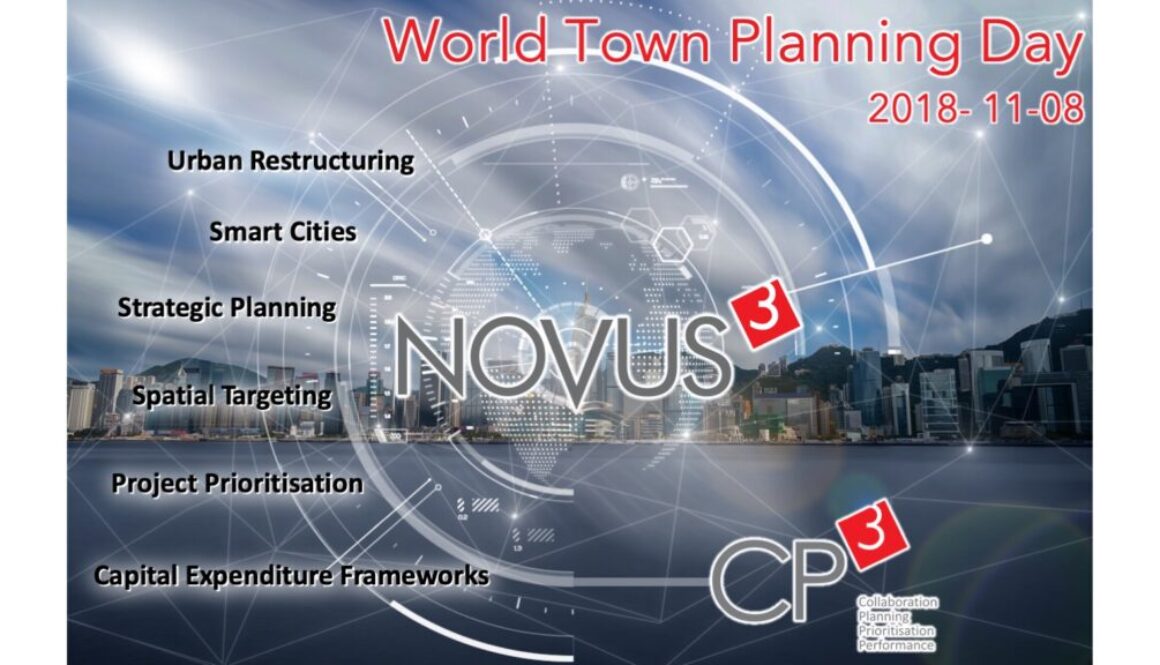
Novus3 turns 5! Happy birthday Novus3!
Today marks the fifth and proud birthday of Novus³ (Pty) Ltd. It is indeed a happy day in many respects – even mother nature is celebrating with a light morning drizzle over Pretoria. Over the past five years, Novus³ established itself as a specialist company that has undertaken a number of high-profile studies both locally and internationally and are looking forward to staying on this growth path. Furthermore, Novus³ has developed elegant software solutions that continue to propel some of the most dynamic public sector entities forward.
Novus³’s ethos is to understate and over deliver on everything we get involved with. Even outside of our working hours, we remain ambassadors of our brand. We are proud to be associated with our clients, we are proud to be associated with our partners, we are proud to be associated with our collaborators and we are proud to be associated with the Novus³ team members.
We believe we have cemented a firm foundation over the past five years that will facilitate significant growth and an exciting journey over the years to come. Thank you to all who have supported us thus far. Today we raise a glass to all of you!

2018 Medium Term Budget Policy Statement: How to Re-prioritise
The 2018 Medium Term Budget Policy Statement talks about re-prioritisation of public spending. To allocate spending in a #sustainable manner, whilst still effectively dealing with pressing issues in infrastructure provision, housing backlogs, and agricultural development require a scientifically based approach that allows #prioritisation towards economic growth and job creation. Novus3 is one of the few companies in the country that has successfully facilitated this process.


City of Tshwane: Capturing season starts
Today marks the beginning of project capturing for the 2019/2020 budget cycle. We are excited to facilitate this process for the fifth consecutive year.


Spatial risk analysis towards informed capital investment decisions
Police Minister Bheki Cele and the South African Police Service’s released of the latest crime statistics for South Africa on Tuesday 11 September 2018. Modelling and understanding risk in the urban environment is a key determinant to informed capital investment planning and decision-making.
CP3’s powerful spatial analysis engine allows our clients to evaluate capital investment decisions against composite or multi-layered spatial risk indexes in order to ensure that capital investment contributes towards safer and more secure liveable urban spaces.
For more information regarding spatial modelling, prioritisation and decision making, please contact us at www.novus3.co.za.
#CP3 #RiskModelling #SpatialModelling #Prioritisation #DecisionMaking #CapitalInvestment #CrimeStats #SAPS

Municipal Capital Investment Planning
Municipal Capital Investment Planning: Capital Best Practice Guidelines for Aligning Planning, Budgeting & Capital Expenditure. As industry leaders in collaborative capital investment planning and prioritisation in the local government space, Novus3 was privileged to present at The Institute of Municipal Engineering of Southern Africa (IMESA) Annual General Meeting (AGM).

Woman’s Month Edition: Promises regarding the socially vulnerable
Women’s Month Edition
To say is one thing, to do another. To say capital expenditure should be directed towards the socially disadvantaged is in line with the fundamental principles of democracy and human rights, its manifestation in space is however sparse. To ensure that expenditure is directed towards socially deprived areas, is one of the biggest challenges that faces decision makers today and often leads to analysis paralysis.
Socio-economic profiling is one of the most important components of developing any plan that affects the strategy and vision of a municipality. The Deprivation Index is one such profiling tool that assist municipalities to prioritise capital expenditure towards the socially disadvantaged and vulnerable portion of the population.
According to the London Poverty Research Centre, Women’s rights activist Tahira Abdullah said “Poverty has a women’s face”. This is reflected in a United Nations’ Human Development Report which noted that 70% of the worlds impoverished are women. As we near the end of Woman’s month, it is useful to reflect on how the targeting of capital expenditure towards the socially vulnerable, will also improve and benefit the lives of countless women worldwide and specifically in our country.
For more information on the CP3 platform and how Novus3 can assist your organization to target social spending through their capital investment strategy, please visit www.novus3.co.za.
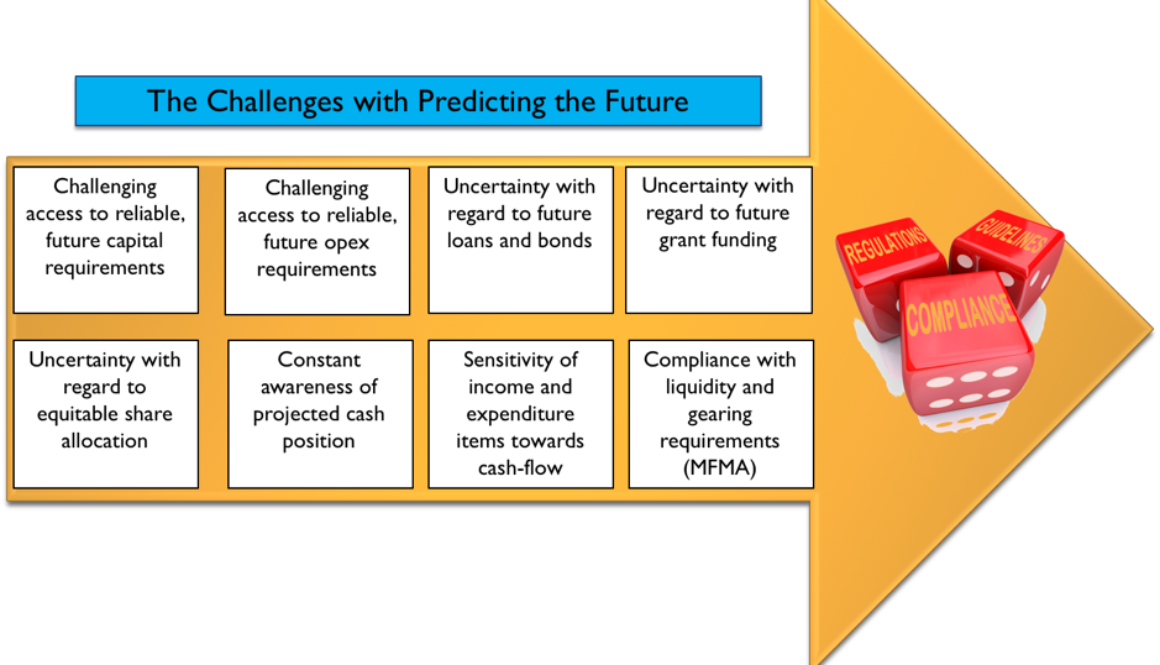
Medium- to long term financial planning in the municipal sector is challenging
“Some SA Cities are on the brink of collapse.” – Minister Nhlanhla Nene (April, 2018).
Novus3 has developed a Budget Impact Simulator (BIS) to provide welcome perspective and assistance in this space.
What will happen to our financial position as a municipality if we approve our current capital budget? Can we afford it? What funding sources will we be using? Should I take up any loans? What should the conditions of our loans be? What exactly is my current financial position in terms of the relevant legislation? What will happen to my cash-flow? These are among the many fundamental questions that our municipal CFOs are faced with. Prudent and responsible decision-making at local government level is a veritable mine-field of challenges.
A reliable analysis of the combined financial impact of the operational and capital budgets is required to enable our Municipal Managers to answer some of these questions. All of this needs to happen in an environment where the goal-posts keeps on moving and the inputs and outputs keep on changing, month-to-month. In order to answer “what-if” scenario questions or perform goal-seeking analysis on a medium-term budget, the Budget Impact Simulator (BIS) module has been developed for our CP3 clients. CP3 is our online capital management system – CP3 stands for “Collaboration, Planning, Prioritisation, Performance.
Utilising a standardised financial model, the BIS empowers our municipal decision-makers to test the effect of budget approval scenarios by adjusting any of the BIS’s “levers”. This scenario testing is used to develop financial strategies, in order to achieve specific financial goals. The typical scenario outcomes from the BIS, are expressed in terms of the following indicators:
· Operating cash flows;
· Net cash flow position;
· Liquidity position;
· Borrowing position;
· Operating budget funding envelope; and
· Capital budget funding envelope.
Get in touch with us or visit our website (www.novus3.co.za) to find out more.

Novus3 assists local government with defendable capital investment planning
“There is no universal approach to Capital Investment Planning by Local Governments, not least because the frameworks for local financial management vary greatly from country to country, and even within one country.” – Guidebook for Capital Investment Planning, World Bank (October 2011).
Within the public sector environment, the cycle of infrastructure planning and prioritisation has many challenges. The merit of infrastructure projects (capital projects) competing for priority and subsequent capital investment is usually determined through tried and tested financial methods, such as the calculation of a benefit-cost ratio, the internal rate of return (IRR) or other related financial methods.
The short-comings of this clinical and somewhat aged approach create a number of challenges. Politicians and executive leadership often take issue with the disjoint between politics, strategy and the way that infrastructure investments sometimes fail to align with their objectives, strategies and commitments. Furthermore, spatial priorities, economic impacts, social impacts, environmental impacts, perspectives on affordability, perspectives on the project preparation process, and a host of other important considerations are mostly ignored.
The complexity of the process is compounded by the diversity of sources from which the infrastructure needs originate. This diversity of important considerations in the project preparation journey, renders the required process to evaluate and appraise projects across a spectrum of seeming unrelated needs extremely challenging. Some projects have an impact where it gets implemented whilst others may have a wider impact, unrelated or only partially related to the actual location of the infrastructure investment (or social investment). Without an appropriate solution to this issue, reporting on how the capital relates spatially, remains largely inaccurate.
Depending on the context, the CP3 (Comprehensive Programme Prioritisation & Implementation Platform) process can deliberately be tweaked towards favouring topical pain points such as stimulating the economy, job-creation, social issues, financial prudence or a weighed combination of such metrics. The CP3 Capture module facilitates the process of capital project needs solicitation and ushering such projects through the project preparation process. The process continues with a flexible prioritisation process (CP3 Prioritise module) that draws on a range of metrics such as spatial alignment, qualitative or quantitative considerations. The prioritisation process culminates in a defendable and accountable process, that reflects the needs, objectives and priorities of the organisation/government department/municipality. A tried and tested budgeting process follows prioritisation. The CP3 Budgeting module has been used over the past four years to develop and finalise draft budgets for some of South Africa’s largest cities. This dynamic budgeting tool combines a configurable, rule-based process and a multitude of conditional funding sources.
All inputs and outputs culminating from this process are set up to align seamlessly with the local standard accounting charter rules. Lastly, the tracking of project implementation is accommodated with the CP3 Tracking module to ensure that the accountability and project governance loops are closed. Reporting and dash-boarding allows for executive and technical leadership to access instant insights into possible areas of concern that may require intervention.
Get in touch with us for additional information.

Novus³ contributes to the reduction of road fatalities in South Africa
Novus³ presented a Road Safety Audit course in Cape Town from 16 to 20 July 2018.
According to the World Health Organisation, without sustained action, road traffic crashes are predicted to become the seventh leading cause of death by 2030. Approximately 0,016% of the world population dies in road crashes annually. The United Nations therefore launched the Decade of Action in 2011 with the aim of reducing the current 1,25 million road fatalities per annum worldwide by 50% by 2020.
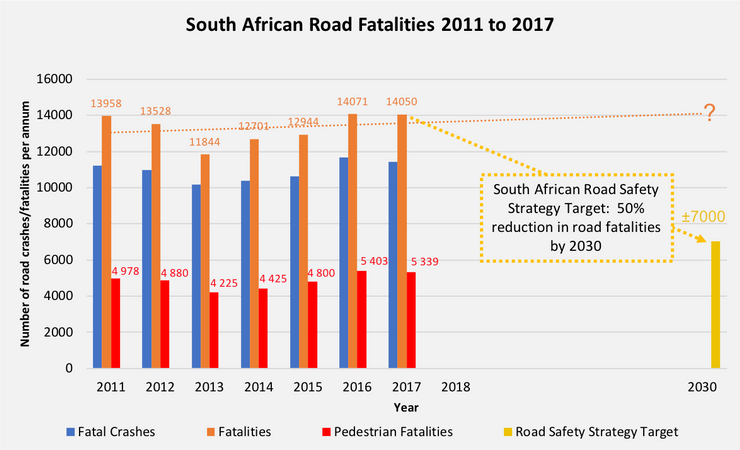
South African Road Fatalities from 2011 to 2017 and the impact of the targeted 50% reduction in fatalities as proposed by the South African Road Safety Strategy of 2016.
In South Africa 14 000 or 0,026% of the South African population dies due to road crashes annually. This is approximately 50% higher than the worldwide annual population fatality rate. The current trend in South Africa is that road fatalities are on the increase with no indication that there are any sustained reduction in fatalities. The South African Road Safety Strategy launched in 2016 sets a target of the reduction of road fatalities by 50% in the year 2030.
Well-documented experience in Europe and Australia show that Road Safety Audits are both effective and cost beneficial as a proactive safety improvement tool. Consequently a growing number of countries, both developed and developing, introduced Road Safety Audits.
Novus³ developed a Road Safety Audit and Appraisal course on behalf of the South African Road Federation, supported by the South African National Roads Agency. The course is presented by Messrs Jaco de Vries and Bernard van Biljon, with the support of Dr. Louis Roodt. A two day introductory course has been presented three time since July 2017, whilst a five day road safety audit course aimed at road safety practitioners have been presented four times during the past 12 months. The most recent course was presented to road design engineers and road safety practitioners from 16 to 20 July 2018 in Cape Town.
Through our practical approach to road safety audits and appraisals we are contributing to a better understanding of the need for and the contribution of road safety audits to improved road safety thinking during the planning and design stage of road projects. An objective review of the likely causes of crashes and the type of injuries which are likely to occur during road crashes, enables road designers to amend their designs before construction commences. Reducing cost of road safety improvements, saving lives and reducing severity of road crash injuries.
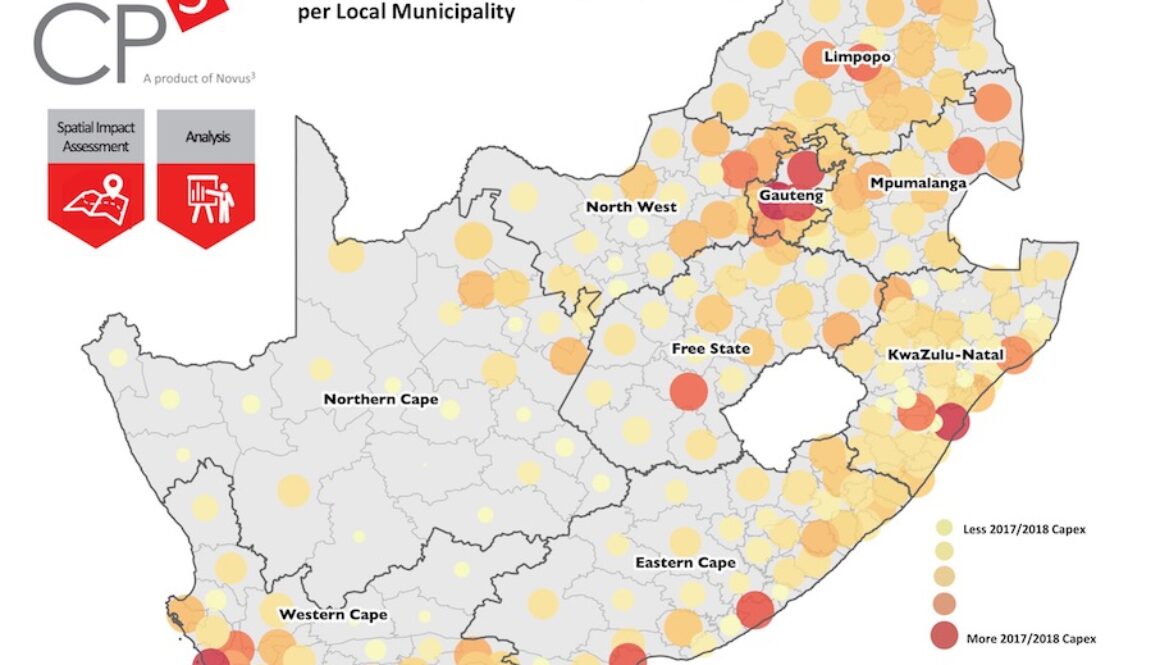
CP3 facilitates 29% of South Africa’s Local Municipal Capital Budget during 2017/18
South Africa approved R213 billion capital expenditure projects across all local municipalities during the 2017/18 Medium Term Expenditure Framework (MTREF). The Novus3 Comprehensive Programme Planning, Prioritisation and Implementation System (CP3) facilitated the planning, prioritisation, budget fitting and reporting of approximately R62 billion (29%) capital budgets during South Africa’s 2017/18 MTREF local municipal budget cycle.
For more information on the capabilities of the CP3 Software-as-a-Service (SaaS) platform and the capital investment advisory services offered by Novus3, please visit www.novus3.co.za

2018 Mandela Day Charity Drive
“There can be no keener revelation of a society’s soul than the way in which it treats its children”
Nelson Mandela
Novus3 were privilege to be hosted by the Home of Hope for Girls as part of the 2018 Mandela Day charity drive. We were inspired by the dedication and commitment of the caregivers in the execution of their day-to-day activities of rescuing exploited, trafficked and abused girl children from a life on the streets of Johannesburg and fostering them towards completing their education and becoming independent and self-sustaining.
We applaud Mam Khanyi and her team for their exemplary efforts over the past 18 years.

Budget Impact Simulator
Our Budget Impact Simulator (BIS) is flexing its muscles. The BIS tool is once again providing valuable insight into the financial planning decisions that need to be made by our key CP3 clients. Many South African municipalities are currently under financial duress. The budget impact simulator assists with sustained, updated and informed decision-making in line with legislated compliance requirements.

National Treasury Planning Reform Seminar
Novus3 was proud be invited to submit a paper by the National Department of Treasury as part of their planning reform seminar that was held in Centurion on the 13th and 24th of June 2018. The Novus3 paper titled “Best Practice for Aligning Planning, Budgeting and Capital Expenditure” was well received.
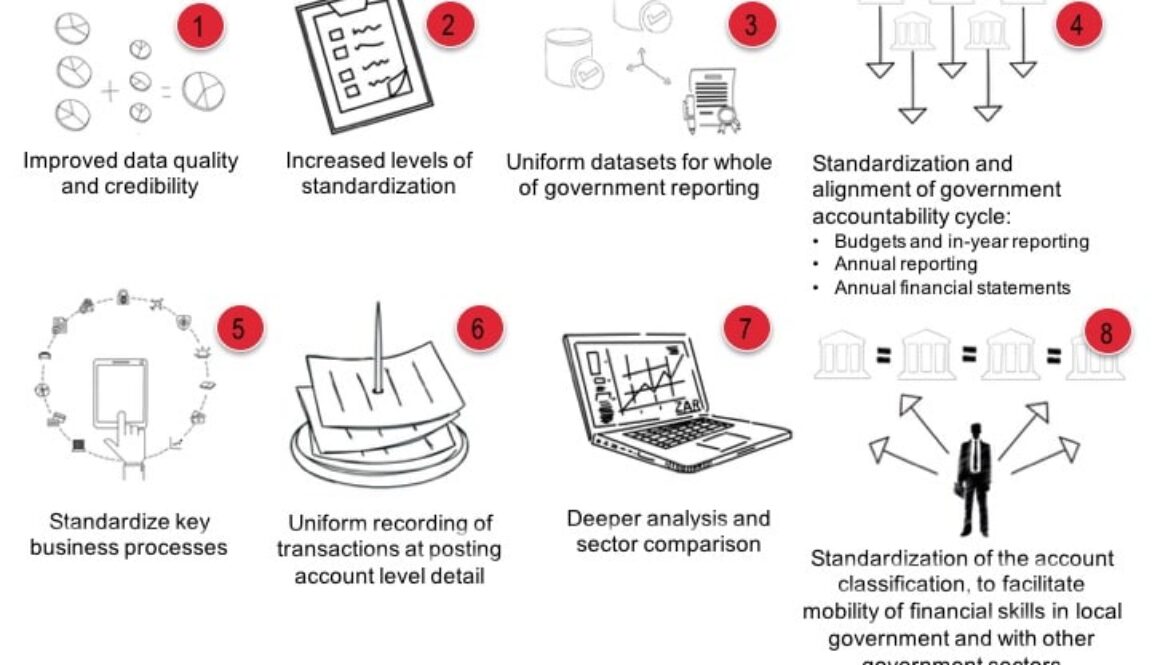
CP3 facilitates mSCOA compliant local municipal capital investment planning
mSCOA is the acronym which stands for the Municipal Standard Chart of Accounts which was introduced by National Treasury in 2014, which became mandatory for all local municipalities from 1 July 2017. The primary objective of mSCOA is to achieve an acceptable level of uniformity and quality from the collection of data from the Integrated Development Plan (IDP) process to Annual Reporting.
The key objectives of mSCOA are:


The mSCOA chart consists of seven (7) reporting segments and all local municipal budget items and financial transactional elements must reflect these segments:


The Novus3 CP3 comprehensive program prioritisation and implementation platform is compliant with the most recent version (6.2) of the mSCOA chart and facilitates local municipal capital investment planning, budgeting and data-string reporting in accordance with the mSCOA global unique identifier codes prescribed by National Treasury.
Please visit www.novus3.co.za for more information.

BCX, our new channel partner!
A teaming agreement between Novus3 and BCX was signed which enables BCX to add Novus3’s Software solutions to its clients as a vetted supplier. Novus3 is extremely proud of our partnership with BCX as a world class business solutions service provider.

BBD is our new software developement partner!
Novus3 has a new software development partner. We look forward to leverage of the skills and experience of BBD!

City of Cape Town Technical Assistance Workshop on Impact Analyses for Catalytic TOD Projects
Novus3 was proud to be invited to partake in the technical assistance workshop on impact analyses for catalytic TOD projects that was hosted by the City of Cape Town and the World Bank on the 12th of June 2018. The Novus3 presentation was received with appreciation and it was great to learn from a variety of industry players in the process.